DbcultAccessing Vault...
Cult Review
Senior Film Conservator
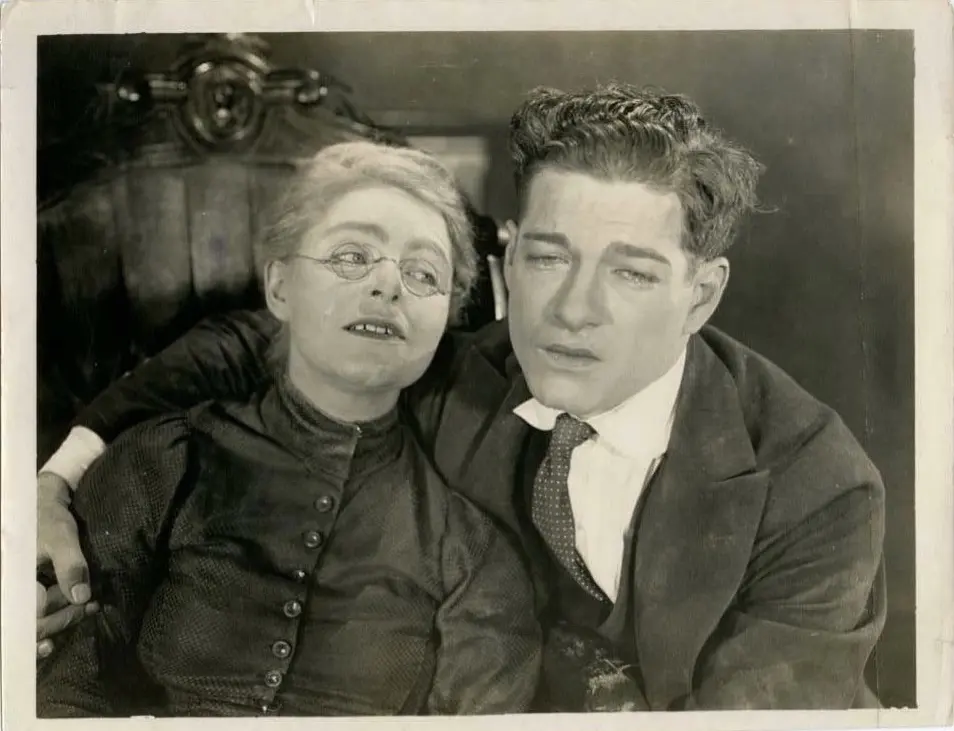
The silent era of cinema, often dismissed by casual viewers as a quaint relic, frequently gifted us with narratives of profound emotional depth and visual storytelling prowess. Among these, 'A Girl of the Limberlost' (1924), an adaptation of Gene Stratton-Porter's immensely popular novel, stands as a testament to the power of human resilience, the intricate web of familial love, and the redemptive solace found in nature. This film, a poignant melodrama, delves into the life of Elnora Comstock, a young woman burdened by the irrational resentment of her mother, Kate, a resentment born from tragedy and perpetuated by a hardened heart. It's a journey through the verdant, mystical Limberlost swamp, a character in itself, and through the complex emotional landscapes of its inhabitants.
The Limberlost, more than merely a setting, functions as a living, breathing entity within the narrative. It is simultaneously the site of tragedy, where Elnora's father, Robert, met his untimely demise in the quicksands, and a haven for Elnora herself. For Elnora, the swamp is a source of both livelihood and spiritual nourishment. Its dense foliage and hidden wonders become her classroom, her sanctuary, and her confidante. This symbiotic relationship with nature is beautifully underscored by her mentorship under the 'Bird-Woman,' a figure of wisdom and connection to the natural world. The Bird-Woman not only teaches Elnora the delicate art of capturing moths and butterflies for sale, providing an essential income, but also imparts a deeper understanding of life's cycles and the interconnectedness of all things. This connection to the Limberlost is crucial; it grounds Elnora, offering her a sense of belonging and purpose that is cruelly denied to her within the confines of her own home.
The visual language of the film, though constrained by the technology of its time, likely leveraged the natural beauty of the swamp to great effect. One can imagine sweeping shots of the diverse ecosystem, contrasting the vibrant life with the ominous quicksands, mirroring the dual nature of human existence—its beauty and its perils. This environmental backdrop provides a compelling counterpoint to the domestic drama, suggesting that while human emotions can be volatile and destructive, nature offers a constant, albeit sometimes harsh, form of solace and renewal.
Elnora Comstock, portrayed with quiet grace by Gloria Grey, is the emotional fulcrum of the film. Her longing for her mother's affection is palpable, a constant ache beneath her otherwise bright demeanor. Yet, despite this profound maternal deprivation, Elnora flourishes. She is loved by nearly everyone else: the steadfast neighbors Wesley and Margaret Sinton, who offer a surrogate family, and the enigmatic Bird-Woman. Her academic success in high school further highlights her inherent strength and intelligence, proving that a lack of familial love, while scarring, does not define her potential. Elnora's character embodies a powerful message about intrinsic worth and the capacity for self-actualization even in the face of profound emotional neglect.
The performance of Emily Fitzroy as Kate Comstock is pivotal. Portraying a mother consumed by a grief that metastasizes into resentment is a challenging feat, especially in the silent era where nuanced emotion relied heavily on facial expression and body language. Fitzroy would have needed to convey Kate's hardened exterior, her deep-seated bitterness, and the gradual thawing of her heart, making her eventual transformation believable. This dynamic between mother and daughter forms the core dramatic tension, a struggle not against an external antagonist, but against the very bonds of family warped by tragedy.
The arrival of Philip Amon, played by Raymond McKee, introduces the romantic element, a gentle counterpoint to the domestic strife. Philip, seeking restoration of health in the Limberlost's restorative environment, finds something more profound in Elnora. Their burgeoning love story is a tender affair, characterized by mutual respect and a shared appreciation for the natural world. However, their path to happiness is complicated by Philip's prior engagement to Edith Carr, a character brought to life by Ruth Stonehouse. Edith is depicted as high-spirited but also possessive and jealous, creating a classic romantic triangle that adds significant narrative tension.
Elnora's initial response to this conflict—retreating to the Limberlost to stay with Freckles and his wife—speaks volumes about her character. She is not one to instigate confrontation but rather seeks peace and avoids causing pain. This selflessness, however, ultimately paves the way for her true happiness. When Philip falls ill again, Elnora's compassionate nature compels her to nurse him back to health. This act of selfless devotion, witnessed by Edith, becomes the catalyst for the resolution of the romantic entanglement. Edith's decision to release Philip, freeing him to marry Elnora, is a moment of mature understanding and a testament to the undeniable power of true love. It's a refreshing departure from typical melodrama, where rivals often remain bitter. For a contemporary comparison, one might consider the resolute female protagonists in films like Sunshine Nan or Bobbie of the Ballet, who, like Elnora, navigate personal trials with grace and an unwavering spirit, often finding their own paths to happiness despite societal pressures or romantic complications.
The film's climax, and arguably its most potent emotional moment, arrives with the revelation of Robert Comstock's infidelity with Elvira Carney, played by Myrtle Vane. This long-buried secret shatters Kate Comstock's carefully constructed narrative of victimhood and blame. The discovery that her husband was not the faultless figure she had enshrined, but a flawed human being who had betrayed her, forces Kate to re-evaluate her entire life. It is in this moment of devastating truth that her hardened heart finally breaks open, not to further bitterness, but to a profound and long-overdue love for her daughter. The object of her resentment is suddenly seen through a new lens, no longer a symbol of loss, but a living connection to a shared, albeit complicated, past.
This redemptive arc is a powerful one, suggesting that true healing can only begin when one confronts uncomfortable truths. Kate's transformation is not merely about accepting Elnora, but about expanding her capacity for affection to encompass others. Her decision to adopt the orphaned boy Billy, played by Baby Pat O'Malley, and his loyal dog, signifies a complete spiritual rebirth. It's a beautiful metaphor for overcoming personal demons and embracing a wider, more inclusive definition of family. This thematic thread of past secrets impacting present lives and leading to eventual redemption resonates with other silent dramas of the era, such as Convict 993, where characters often grapple with the consequences of past actions and seek a path to moral absolution.
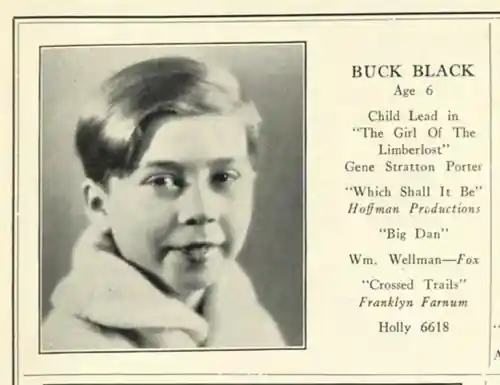
Analyzing 'A Girl of the Limberlost' requires an appreciation for the unique artistry of silent film. Without dialogue, the burden of conveying emotion, character development, and narrative progression falls heavily on visual cues. The performances of the cast, including supporting actors like Arthur Currier, Lisamae Grey, Buck Black, Newton Hall, Cullen Landis, Alfred Allen, Virginia True Boardman, Arthur Millett, Gertrude Olmstead, and Jack Dougherty, would have been amplified through exaggerated gestures, expressive facial work, and precise blocking. Intertitles, the textual inserts that provide dialogue or exposition, would have been strategically employed by the film's creators, based on Gene Stratton-Porter's original work, to guide the audience through the story's intricacies without overwhelming the visual flow.
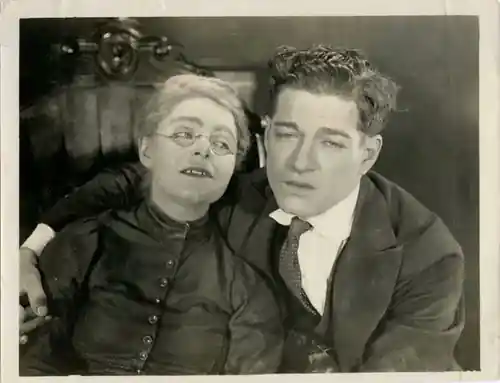
Cinematography, too, played a crucial role. The use of lighting to create mood, the composition of shots to emphasize character relationships or the vastness of the Limberlost, and even the pace of editing would have contributed significantly to the film's emotional impact. Imagine tracking shots following Elnora through the dense swamp, or close-ups capturing the subtle shifts in Kate's expression as she grapples with her past. These techniques, though rudimentary by today's standards, were incredibly sophisticated for their time, allowing filmmakers to craft compelling narratives that resonated deeply with audiences. The film's ability to translate the rich descriptive prose of Stratton-Porter's novel into a visually compelling format speaks to the ingenuity of silent era directors and cinematographers.
Gene Stratton-Porter, the esteemed writer whose novel served as the bedrock for this film, was renowned for her vivid descriptions of nature and her deeply moralistic, often sentimental, narratives. 'A Girl of the Limberlost' perfectly encapsulates her literary style, bringing to the screen a story that champions resilience, celebrates the beauty of the natural world, and ultimately advocates for empathy and forgiveness. The film's themes—the struggle for self-worth, the complexities of family dynamics, the healing power of nature, and the journey to redemption—are timeless. They transcend the specific historical context of the silent era, continuing to resonate with audiences who grapple with similar emotional challenges.
In an age of rapid industrialization and societal change, Stratton-Porter's work, and by extension this film, offered a comforting return to simpler values and the profound wisdom found in the wilderness. While other films like Der weisse Pfau might explore similar themes of innocence and societal pressures from a different cultural lens, 'A Girl of the Limberlost' firmly plants its roots in a distinctly American pastoral tradition. It reminds us that even in the darkest corners of human emotion, there is always the potential for light, growth, and the blossoming of a love that can heal even the deepest wounds.
The film's enduring appeal lies not just in its dramatic plot, but in its unwavering belief in the human spirit's capacity for good. Elnora's journey, from a child starved of maternal affection to a woman who finds love, purpose, and ultimately, a complete family, is an inspirational one. It underscores the idea that one's circumstances do not dictate one's destiny, and that kindness, perseverance, and an open heart can ultimately triumph over bitterness and sorrow. This powerful narrative, brought to life by a talented cast and the evocative storytelling of the silent screen, ensures 'A Girl of the Limberlost' remains a significant piece of cinematic history and a touching exploration of the human condition.
In conclusion, 'A Girl of the Limberlost' is more than just a silent film; it is a profound meditation on the transformative power of love and forgiveness. It invites us to consider the intricate ways in which our past shapes our present, and how, through acts of courage and compassion, we can ultimately forge a future defined by hope and connection. The film, a product of its time, nevertheless offers insights that remain remarkably relevant, reminding us of the timeless nature of human emotion and the enduring allure of a narrative where redemption, however hard-won, ultimately prevails.

IMDb 5.7
1930
Community
Log in to comment.