DbcultAccessing Vault...
Cult Review
Senior Film Conservator
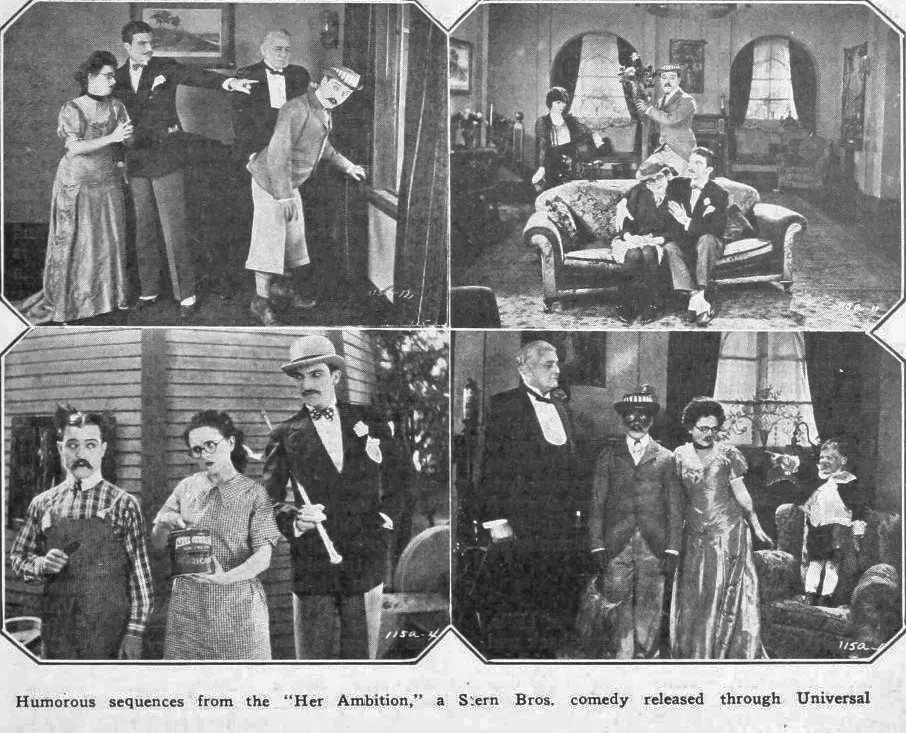
Is 'Her Ambition' worth your time a century after its release? Short answer: Yes, but only if you view it as a historical blueprint for the 'accidental star' trope rather than a narrative powerhouse. This film is specifically for those who enjoy the kinetic energy of early slapstick and students of silent-era character archetypes. It is decidedly NOT for anyone looking for a nuanced exploration of female agency or a complex plot; this is a comedy of errors, plain and simple.
This film works because it leans into the absurdity of its central misunderstanding. The climax doesn't rely on Jane's actual acting ability, which the film established as mediocre at best, but on the chaotic intervention of the hired man. This film fails because its secondary characters are little more than props for the plot to move forward. You should watch it if you want to see the exact moment the 'country bumpkin in the city' trope was being refined into a reliable comedic engine.
For the casual viewer, 'Her Ambition' might feel like a relic, but for the enthusiast, it provides a punchy, 15-minute window into the transition of American comedy from the stage to the screen. It is worth watching for the chimney sequence alone. While it lacks the emotional weight of something like A Boy of Flanders, it compensates with a cynical view of the entertainment industry that feels surprisingly modern. The idea that a manager would hire two people because they made a mess of an audition is a biting commentary on the fickle nature of fame.
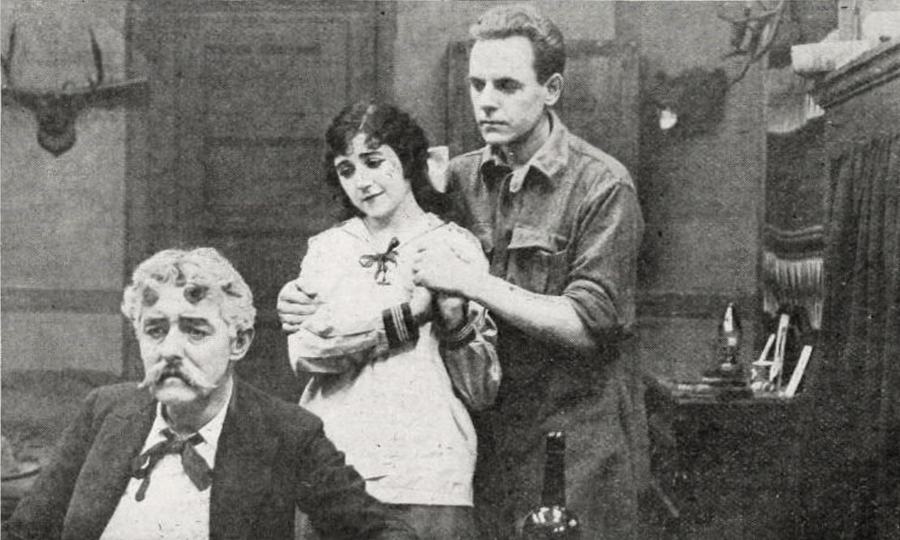
Bartine Burkett plays Jane with a frantic energy that was common for the era but feels particularly intentional here. She isn't just a girl who wants to act; she is a girl who is constantly acting, even when her only audience is a cow. This creates a meta-commentary on performance. When she finally gets to the city, her 'real' acting is ignored, while the 'real' accident of the hired man falling through the chimney is celebrated as 'acting.' It is a clever, if unintentional, subversion of the craft.
The hired man, played by Frank Earle, represents the protective, albeit intrusive, rural morality. His motivation is framed as 'saving' Jane from ruin, but the film treats his heroism as a joke. He isn't a knight in shining armor; he’s a man who gets stuck in a flue. This shift from melodrama to farce is where the film finds its pulse. Unlike the more traditional heroics found in The Field of Honor, Earle's character is a catalyst for comedy through incompetence.
The direction by Roy Evans is utilitarian. The farm scenes are shot with wide angles that emphasize Jane’s isolation and the 'dumb animals' she performs for. Contrast this with the tight, claustrophobic framing of the city office and the fireplace. The chimney sequence is the highlight. The way the soot is used as a physical gag—transforming the hired man into a visual punchline—is handled with decent timing. It’s not as sophisticated as the later works of Buster Keaton, but the DNA is there.
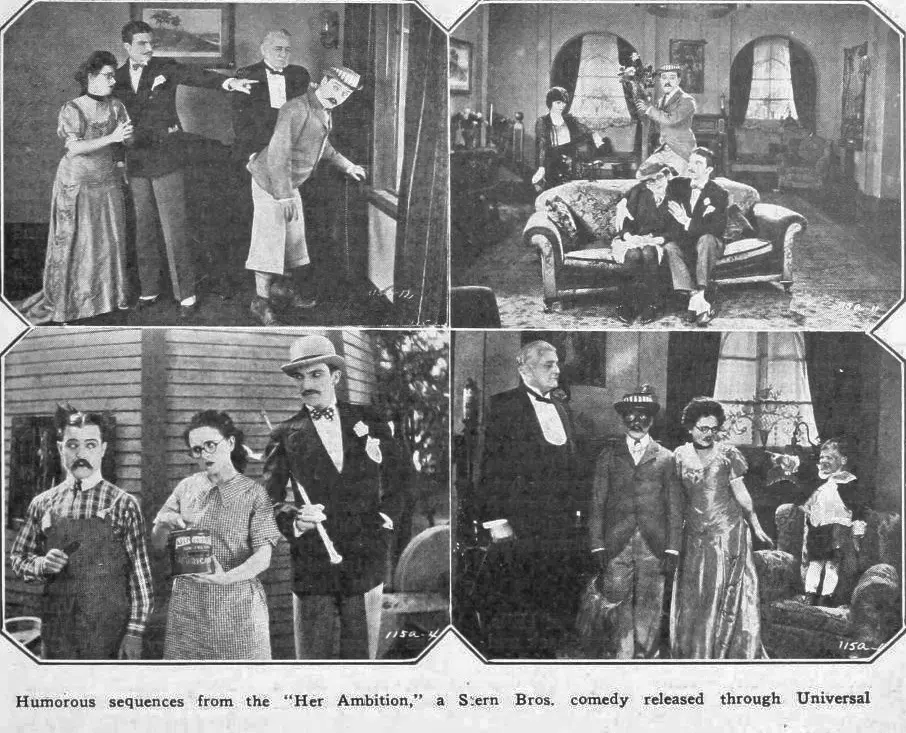
The pacing is brisk. It moves from the farm to the city with a speed that suggests the filmmakers knew the setup was just a hurdle to get to the physical comedy. Compared to the more deliberate pacing of Behind the Front, 'Her Ambition' feels like a sprint. There is no room for character development, only for the next gag. It works. But it’s flawed.
The inclusion of the 'smart car' as a plot device is a fascinating touch. In 1921, the automobile was the ultimate symbol of the city’s intrusion into the rural landscape. It represents the fast-paced, dangerous allure of the theatrical world. When the manager whisks Jane away, the car isn't just transportation; it’s a predatory force. This makes the hired man’s pursuit on foot (or by simpler means) even more pathetic and, consequently, more humorous.
We see similar themes of rural characters struggling with the onset of modernity in The Chauffeur. However, 'Her Ambition' chooses to resolve this conflict not through tragedy, but through a shared paycheck. The city doesn't corrupt Jane; it rewards her for the chaos she brings with her. It’s a surprisingly optimistic, if cynical, conclusion.
The film’s brevity is its strength. It doesn't overstay its welcome. The physical comedy, particularly the soot-covered hired man, still elicits a chuckle. Bartine Burkett’s over-the-top performance is a perfect parody of the 'histrionic' acting style that was already becoming dated in 1921.
The 'morality' of the hired man feels incredibly dated and borderline stifling. The resolution—where they are hired as a duo—feels rushed and relies on the manager being a complete caricature of an 'enterprising' businessman. The film lacks the visual flair of more ambitious silents like Romeo and Juliet.
'Her Ambition' is a minor but entertaining entry in the silent comedy canon. It doesn't reinvent the wheel, but it uses the wheel to run over a few farm animals and crash into a fireplace, which is entertaining in its own right. It takes a hard stance on the absurdity of the 'big break' in show business. Fame, the film suggests, isn't about how well you can recite a monologue; it’s about how much of a mess you can make while trying to do it. It is a cynical, messy, and ultimately charming short that deserves a look from anyone interested in the roots of the American sitcom.
IMDb —
1934
Community
Log in to comment.