DbcultAccessing Vault...
Cult Review
Senior Film Conservator
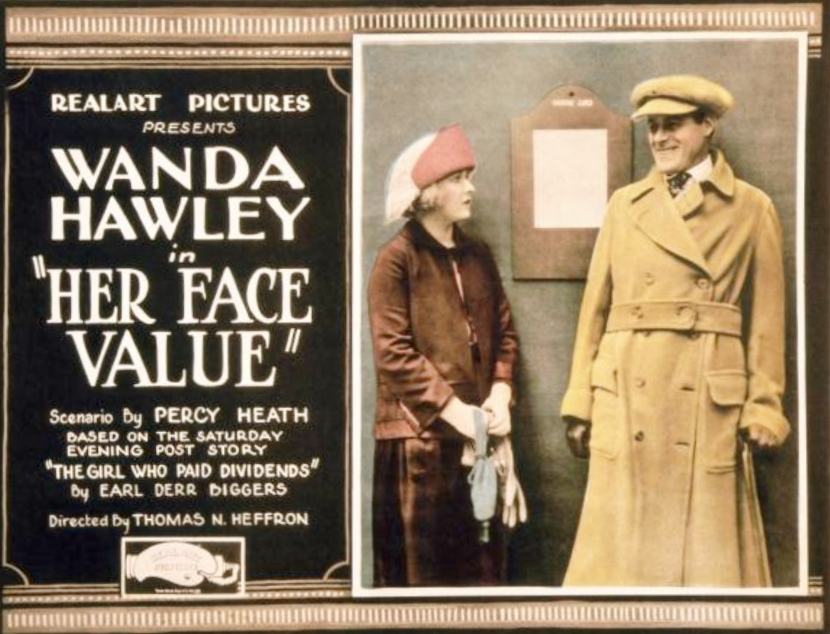
The first time we see Peggy Malone she is only a ripple of calves and confetti beneath a proscenium arch that could collapse from indifference. Director George L. Cox tilts the camera upward so the chandeliers look like decapitated suns, and the gesture announces the film’s thesis: stardom is a cold constellation you reach by climbing over people who claim to love you.
What follows is a 65-minute silent cyclone whose every intertitle could double as ransom note. Earl Derr Biggers and Percy Heath pen dialogue cards that snap like mousetraps—“I married a press agent, not a boarding house,” Peggy spits, her ink-stamped words flickering against a blackout of jealousy. The line lands harder than any gunshot in The Bells, because the assault here is metabolic: relatives devour their host in slow motion.
Harvey Clark’s Pop Malone swaggers with the rubbery amorality of a barfly who has memorized the exact angle to tilt when cadging nickels. He never raises a fist; he doesn’t need to. His mere breath in the hallway is a foreclosure notice. Beside him, George Periolat’s Eddie lounges like a half-inflated daybed, whistling off-key through teeth that seem borrowed from a horse. Together they form a black-hole binary, suctioning every watt of Peggy’s spotlight.
Cox blocks their domestic scenes like a surveillance reel: deep-focus two-shots where Peggy’s silhouette shrinks between ballooning male shadows. The visual algebra is merciless—every inch the men expand corresponds to a vertebra she will later crack on a film set. It’s the same suffocation charted in True Blue, yet here the enemy wears the mask of blood, not cavalry blue.
T. Roy Barnes plays Jimmy as a kinescope of kinetic anxiety—his eyes perform calisthenics even when the rest of him is declawed by tuberculosis. Note the sequence where he rehearses press copy while Peggy’s kin rearrange his furniture into a flophouse. Barnes lets the cigarette tremble exactly three frames longer than comfort allows; the audience hears lungs flooding even in utter silence. When he finally hacks scarlet into a handkerchief, the color card is hand-tinted Pompeian red, a florid telegram from the interior that screams: your masculinity is a lease, and eviction is due.
The westward train is shot from a low rumble-cam; the rails look like sutures closing the continent’s wound. Upon arrival, Los Angeles is not a city but a weather pattern of flash powder and real-estate euphoria. Peggy’s screen test occurs inside a soundstage draped with black velvet—Cox saves the first close-up for the exact moment she realizes the camera is a carnivore. Winifred Bryson’s pupils dilate until the iris becomes a halo of terror; the lens swallows her, and the audience tastes copper.
Compare this to the frontier optimism of The Romance of the Utah Pioneers where landscape promises Manifest Destiny. In Her Face Value geography promises only a more glittering cannibalism.
Once contracted, Peggy is rechristened “The Girl Who Cannot Die,” a cynical sobriquet that studio publicists emboss on cigar bands. Her first assignment: leap a 40-foot ravine on horseback while fireworks detonate beneath the hooves. Cox intercuts actual location footage with rear-projected close-ups of Bryson’s face, the mismatch in grain creating a stutter of reality. When the stunt cable snaps, the film itself seems to fracture—frames buckle, perforations tear, and for eight seconds the screen goes white, as if even nitrate refuses to commodify agony.
In that whiteout lies the movie’s radical heart: it acknowledges that female labor in Hollywood was literal labor—sinew, synovial fluid, calcium. Far from the pastoral fatalism of The Trail of the Lonesome Pine, here nature does not kill; the assembly line does.
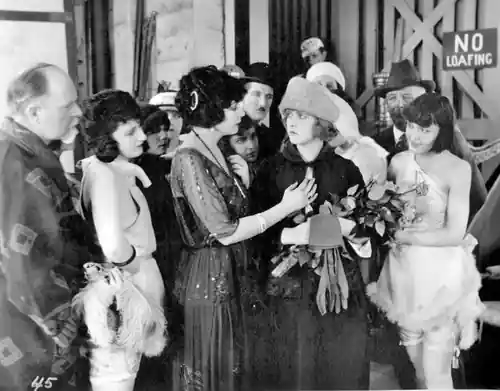
Donald MacDonald saunters in wearing a cream blazer that appears liquid under tungsten light. His Fox never petitions; he acquires. In the hospital corridor he offers Peggy a contract inked on parchment so thick it could be skin. Note Cox’s visual rhyme: Fox’s signet ring catches the same highlight as the surgeon’s scalpel seconds earlier. The implication—wealth performs surgery with cleaner incisions but leaves identical scars.
Yet the screenplay refuses to caricature him. During the pivotal seduction scene, Fox confesses his own origin myth: a tenement adjacent to a slaughterhouse where dreams were seasoned by blood particulate in the air. For a flicker we sense that exploiters are merely the exploited wearing newer suits, an echo of the underworld poignancy found in The Regeneration.
Jimmy returns, no longer tubercular but bronzed by desert suns and armed with a screenplay titled—without irony—“My Wife’s Face Value.” In the last scene he waits on a backlot street mocked up to resemble Dodge City, a metafilm within a metafilm. Peggy emerges from her dressing bungalow still wearing the fracture brace hidden under a sable coat. The camera tracks backward as they advance, a reverse duel. When they kiss, Cox cuts to a high-angle shot revealing the set’s scaffolding—two lovers framed by hollow lath and canvas, the whole of Hollywood a pop-up mirage.
The iris closes, not on a wedding ring, but on Peggy’s hand crumpling Fox’s parchment contract, the ink smearing into black bile. It is the rare silent film whose resolution feels neither like triumph nor defeat, but like an armistice signed between personhood and predation.
Surviving prints are 35mm, struck from the 1924 re-release that trimmed two subplots involving a Chinese houseboy (Ah Wing, credited but excised by censors). Even in truncated form, the tinting schema astounds: Arizona sequences bathe in amber so sulphurous you can smell creosote; Los Angeles nightlife glimmers in selenium blue, the color of cellphone screens not yet invented; hospital corridors drip green like oxidized coins. These chromatic beats anticipate the symbolic palettes later fetishized by Sirk and Wong Kar-wai.
Winifred Bryson’s Peggy is a masterclass in calibrated vulnerability—watch her fingers fret the air a half-beat before her face registers panic, a musicality of gesture that rivals any opera diva. T. Roy Barnes counterbalances with vaudeville snap, his double-takes so elastic they seem rotoscoped. Together they generate the same combustible chemistry that ignited Salomy Jane, but with urban angst replacing Gold Country dust.
A century on, when influencer economies monetize every pore and streaming services auction viewer data by the millisecond, Her Face Value feels less antiquated than prophetic. Its warning is evergreen: when your existence becomes currency, love is the only transaction that can bankrupt you back into humanity.
Seek it out in 16mm alleyway screenings, in university vaults where archivists splice acetate like surgeons tying veins. Watch it through the prism of 2020s gig culture, and hear the echo of every rideshare driver bankrolling art on borrowed time. The film’s final intertitle reads: “She cashed in her face for a future, then bought it back at face value.” We are all still counting that debt.
Verdict: A fever dream of celluloid and calcium, Her Face Value is the missing link between Mrs. Plum’s Pudding domestic farce and Potop’s historical sprawl. See it before the last print dissolves into vinegar and ghosts.
IMDb 7
1931
Community
Log in to comment.