DbcultAccessing Vault...
7/10
Senior Film Conservator
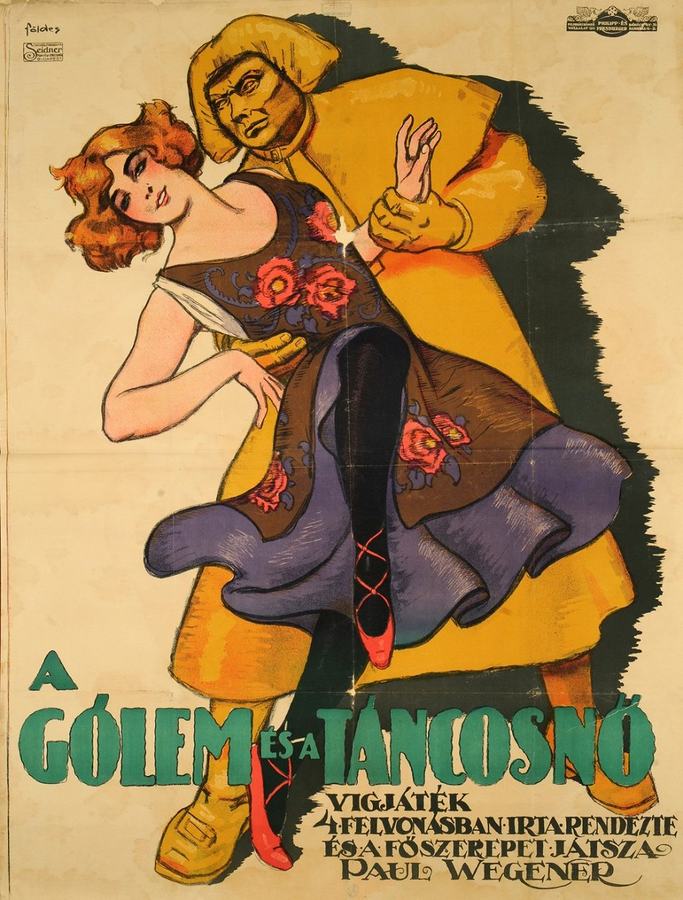
A definitive 7/10 rating for a film that redefined the boundaries of cult cinema. The Golem and the Dancing Girl remains a cornerstone of transgressive art.
In the annals of early cinema, few figures loom as large and as multifaceted as Paul Wegener. A true pioneer, Wegener was not merely an actor or a director, but a visionary who understood the nascent medium's power to conjure myth, explore the uncanny, and, perhaps most surprisingly, to tickle the funny bone. While his name is most famously linked to the brooding, expressionistic horror of The Golem: How He Came into the World, it is in a lesser-known, yet equally fascinating, earlier work that we find Wegener delving into a different facet of the Golem legend – one steeped in delightful satire and a surprisingly modern commentary on celebrity culture and the nature of performance itself. Released in 1917, The Golem and the Dancing Girl (Der Golem und die Tänzerin) is a comedic gem, a playful meta-narrative that sees Wegener—or rather, a character very much like him—grappling with the very monster he helped bring to life on screen.
The premise is disarmingly simple, yet pregnant with possibility: an actor, renowned for his portrayal of a monstrous creature, decides to play a practical joke by impersonating his famous screen persona. Complications, as one might expect, delightfully ensue. This seemingly straightforward plot, however, serves as a rich tapestry upon which Wegener weaves a nuanced exploration of identity, the blurred lines between art and life, and the often-absurd public perception of celebrity. It’s a film that, even a century later, feels remarkably prescient in its observations about the masks we wear, both literally and figuratively, and the power of illusion to shape reality.
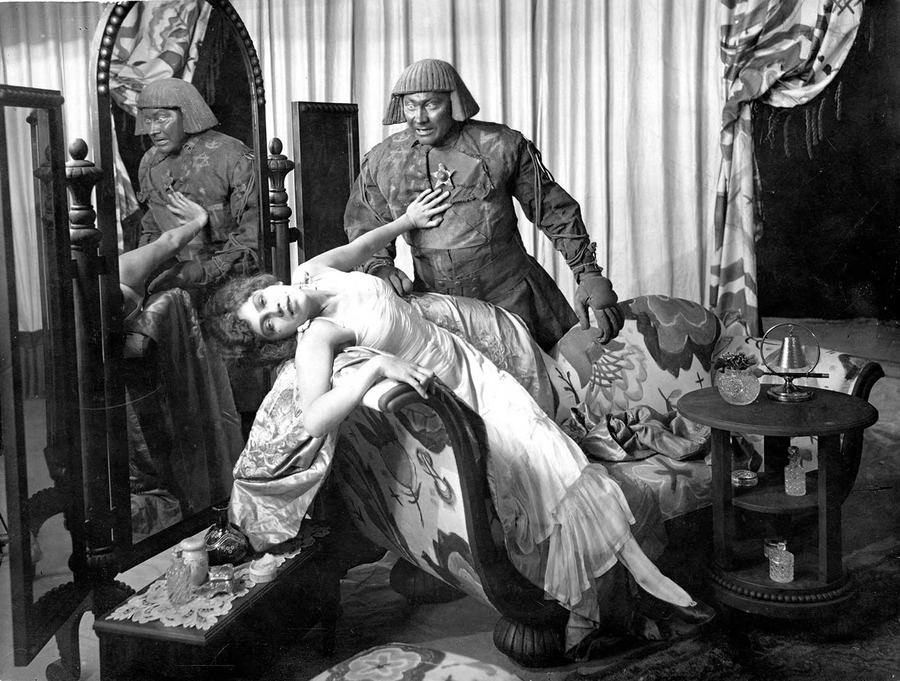
At the heart of this cinematic caper is Ernst Waldow, portraying the actor whose fame is inextricably linked to his monstrous role. Waldow, a capable performer of the era, embodies the character with a blend of theatrical flourish and a mischievous glint in his eye. His decision to don the Golem costume for a prank is not just a plot device; it’s a profound statement on the burdens and opportunities of an iconic role. How does one escape the shadow of a character so indelibly etched into the public consciousness? For this actor, the answer is not to shed the skin, but to wear it in a new, subversive context. This act of impersonation is a direct challenge to the audience's suspension of disbelief, forcing them to confront the artifice inherent in performance, even as they are asked to believe in the comedic chaos that unfolds.
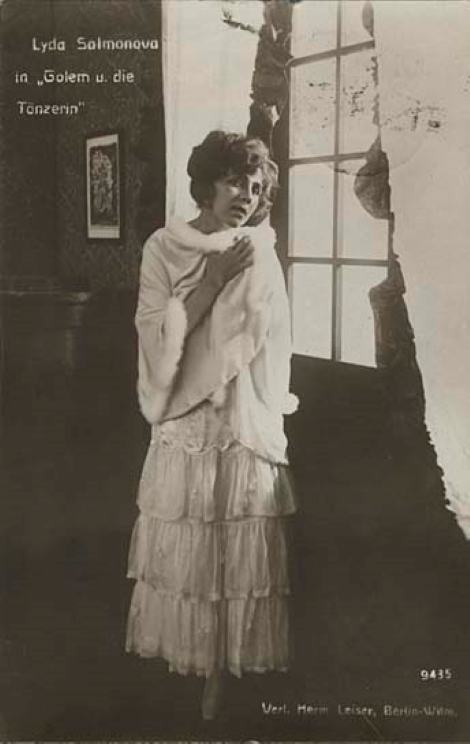
Lyda Salmonova, who plays the titular dancing girl, provides a crucial counterpoint to Waldow’s performance. Often seen as Wegener’s muse and frequent collaborator, Salmonova brings a lightness and charm that anchors the film’s comedic energy. Her character’s involvement in the prank, and her reactions to the escalating absurdity, serve as a barometer for the audience’s own amusement and apprehension. The dynamic between the actor and the dancer, their shared secret and the subsequent unraveling, forms the emotional core of the film, providing moments of genuine warmth amidst the farcical proceedings.
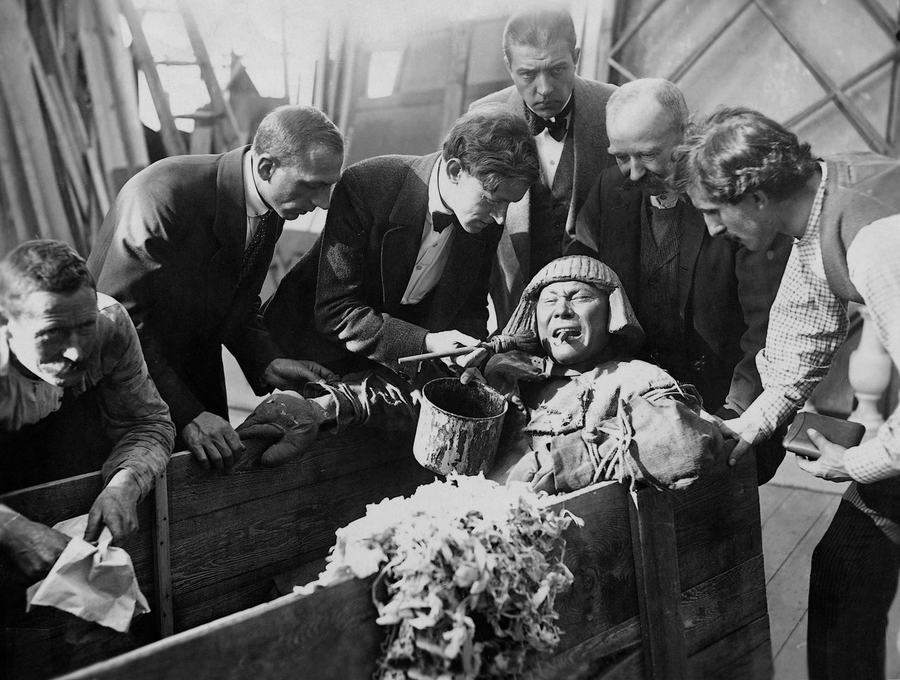
It’s essential to view The Golem and the Dancing Girl within the broader context of Paul Wegener's career and the burgeoning German film industry of the 1910s. Having already established the Golem as a formidable cinematic presence in films like The Golem (1915), Wegener (who also co-wrote this film) demonstrates a remarkable willingness to deconstruct his own creation. This film isn't merely a sequel; it's a playful commentary on the very act of myth-making and the relationship between a creator and his most famous work. It’s a self-aware piece, almost postmodern in its approach, long before the term existed. The very act of the actor impersonating the Golem is a nod to the audience's familiarity with the character, inviting them into an inside joke that transcends the screen.
The comedic structure of the film relies heavily on mistaken identity and the ensuing chaos. As the actor, in his Golem guise, interacts with an unsuspecting public, the film mines humor from the dissonance between their expectations of a mythical monster and the actor's very human, albeit disguised, intentions. This creates opportunities for both broad physical comedy and more subtle situational irony. The screenplay, co-written by Wegener, demonstrates an acute understanding of comedic pacing, building suspense and surprise before releasing it in a wave of laughter. The performances of supporting cast members like Erich Schönfelder, Emilie Kurz, and Wilhelm Diegelmann contribute to the rich tapestry of reactions to the 'resurfaced' Golem, from abject terror to bewildered curiosity, each adding a layer to the film's satirical edge.
As a silent film, The Golem and the Dancing Girl relies on exaggerated gestures, facial expressions, and visual storytelling to convey its humor. The actors, particularly Waldow in his Golem persona, masterfully employ the techniques of silent comedy, using their bodies to communicate fear, confusion, and the sheer absurdity of the situation. The cinematography, while perhaps not as overtly Expressionistic as some of Wegener's later works, effectively uses lighting and framing to enhance both the comedic timing and the occasional moments of genuine peril. The film's sets, designed by Rochus Gliese (who also served as co-director), contribute to the atmosphere, creating believable environments for the prank to unfold, from bustling streets to intimate interiors.
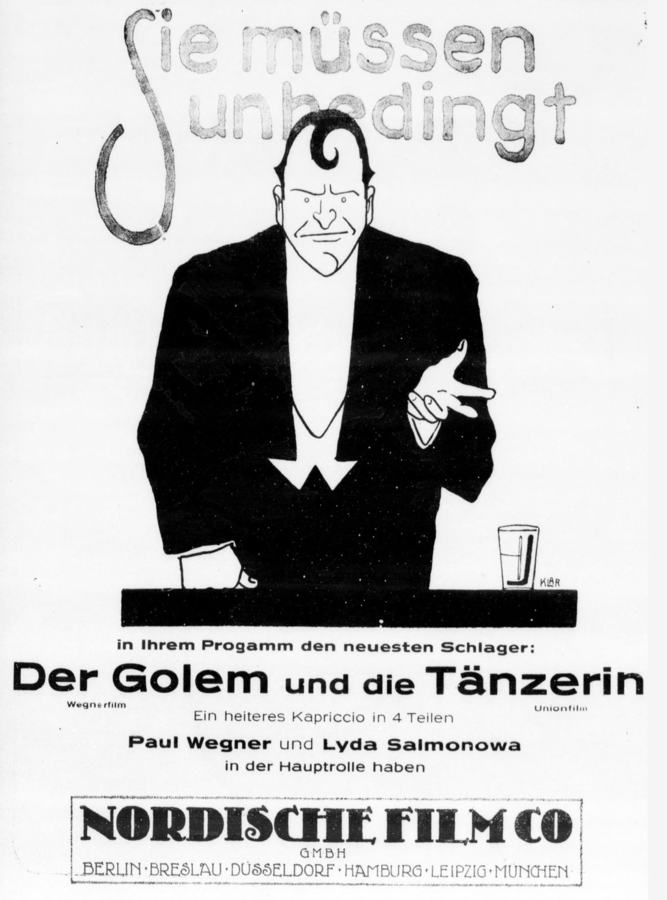
Considering other films of the period, the film's comedic approach stands out. While American cinema was producing delightful comedies like Charlie Chaplin's The Kid (released a few years later, but exemplifying the era's comedic brilliance), which often blended pathos with slapstick, The Golem and the Dancing Girl leans more into situational irony and the humor of intellectual play. It's less about the underdog's struggle and more about the absurdities of social interaction and constructed identities. There's a certain sophistication in its humor, a reliance on the audience's understanding of cinematic fame and their willingness to engage with a narrative that playfully critiques its own foundations. This makes it distinct from more straightforward melodramas like The Wrath of the Gods, which focused on intense drama rather than the lighter touch of satire.
The film's central conceit — the blurring of the Golem's fictional existence with its 'real-world' impersonation — is a fascinating precursor to later cinematic explorations of artifice. It questions what happens when the monster steps out of the frame, even if only as a joke. This idea resonates with themes found in films that explore the lives of artists and performers, such as La vie de Bohème, which, while dramatically different in tone, also delves into the interplay between performance, identity, and societal roles. However, The Golem and the Dancing Girl approaches this through the lens of lighthearted mockery, using the 'monster' as a vehicle for social commentary rather than tragic introspection.
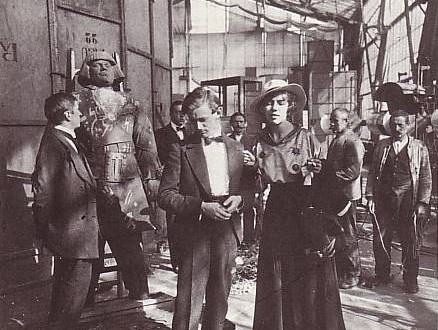
The 'complications' that arise from the practical joke are manifold and escalate delightfully. From panic in the streets to personal entanglements, the actor's prank takes on a life of its own, proving that once an illusion is set in motion, its control can be elusive. This narrative trajectory, where a seemingly innocent act leads to unforeseen consequences, is a common trope in comedy, but here it's imbued with a unique flavor due to the iconic nature of the Golem character. The film cleverly plays on the audience's existing knowledge of the Golem legend, adding layers of irony to the actor's predicament. This self-awareness is a hallmark of Wegener's genius, showcasing his ability to transcend simple narrative and engage with the very medium he was helping to define.
While perhaps overshadowed by its more famous horror brethren, The Golem and the Dancing Girl holds a significant place in cinema history. It’s a testament to Wegener’s versatility and his profound understanding of film as a medium capable of both terror and levity. It demonstrates an early instance of meta-commentary in cinema, a playful wink at the audience about the artifice of storytelling. For scholars and enthusiasts of early German cinema, it offers a crucial insight into the diverse output of the era, proving that not everything was grim or fantastical. There was room for sophisticated humor and social satire, even within the confines of a monster's mythology.
The film serves as a fascinating counterpoint to more dramatic contemporary works like Scandal or A Woman Wills, which often grappled with moral dilemmas and social transgressions in a serious vein. Instead, Wegener’s comedy uses transgression – the actor’s audacious prank – as a springboard for mirth and gentle critique. It reminds us that even in the nascent years of cinema, filmmakers were already experimenting with genre boundaries and pushing the envelope of narrative possibility. The film's relative obscurity today is unfortunate, as it offers a refreshing glimpse into a playful side of German silent cinema that is often overlooked in favor of its more somber, Expressionistic counterparts.
The performances of the entire ensemble, including Friedrich Veilchenfeld and Fritz Feld, contribute to the film's buoyant atmosphere. Each character, no matter how minor, reacts to the 'Golem's' presence with a distinct blend of fear, awe, or skepticism, painting a vivid picture of a society grappling with the intrusion of the fantastical into the everyday. This collective reaction is what truly amplifies the comedic effect, turning individual moments of confusion into a broader social farce. The brilliance lies not just in the prank itself, but in the chain reaction it triggers, exposing the gullibility and credulity of a public captivated by the very illusions it creates.
In conclusion, The Golem and the Dancing Girl is far more than a mere footnote in Paul Wegener’s illustrious career. It is a vibrant, witty, and surprisingly insightful film that challenges perceptions of identity, celebrity, and the power of illusion. It’s a testament to the boundless creativity of early cinema, demonstrating that even in its infancy, the medium was capable of producing sophisticated meta-commentary alongside thrilling spectacle. For anyone interested in the evolution of film comedy, the career of a true cinematic polymath, or simply a delightful romp through a unique corner of silent film history, this forgotten gem is well worth rediscovering. It’s a playful reminder that sometimes, the greatest monsters are the ones we ourselves create, and that even a terrifying legend can be the source of uproarious laughter.

IMDb 5
1931
Community
Log in to comment.