DbcultAccessing Vault...
Cult Review
Senior Film Conservator
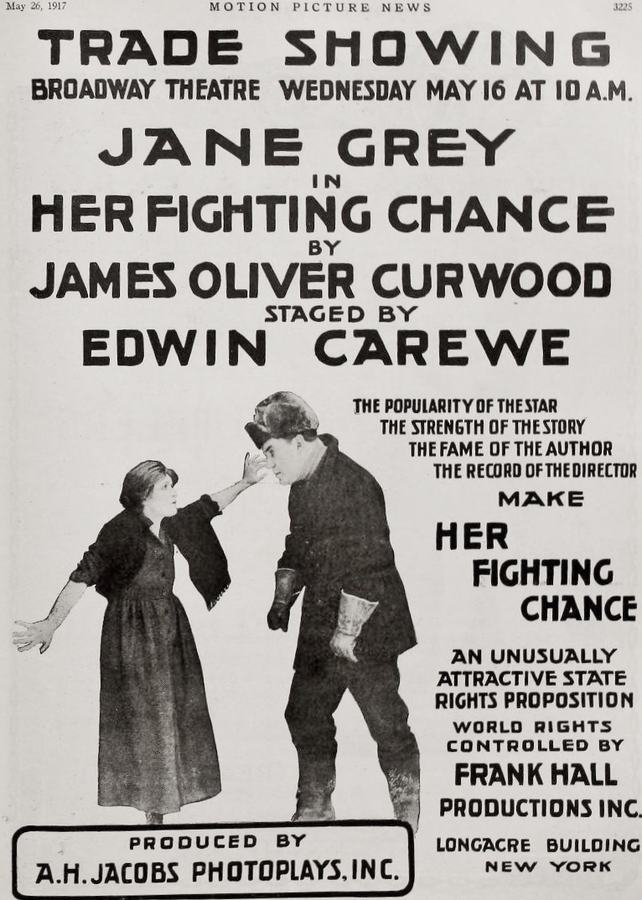
James Oliver Curwood’s Her Fighting Chance arrives like a frostbitten letter from 1917, brittle at the edges yet breathing a curious warmth. At a lean five reels, the picture refuses the flamboyance of melodrama, opting instead for the scalpel: a morality incision that leaves the viewer smarting long after the iris-in closes.
Corporal Blake—part lawman, part prowling id—embodies the collision between duty and appetite. Thomas Holding plays him with the coiled restraint of a man who has read the rulebook solely to discover which clauses he might transgress. Watch the micro-shift in his shoulders when Marie offers him coffee; the cup becomes chalice, steam becomes incense, and we sense the sacrament of coercion already forming.
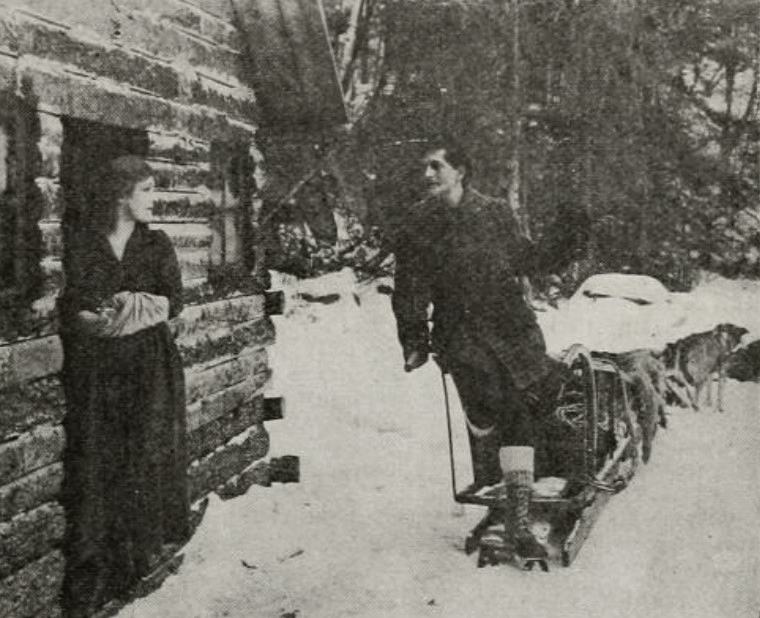
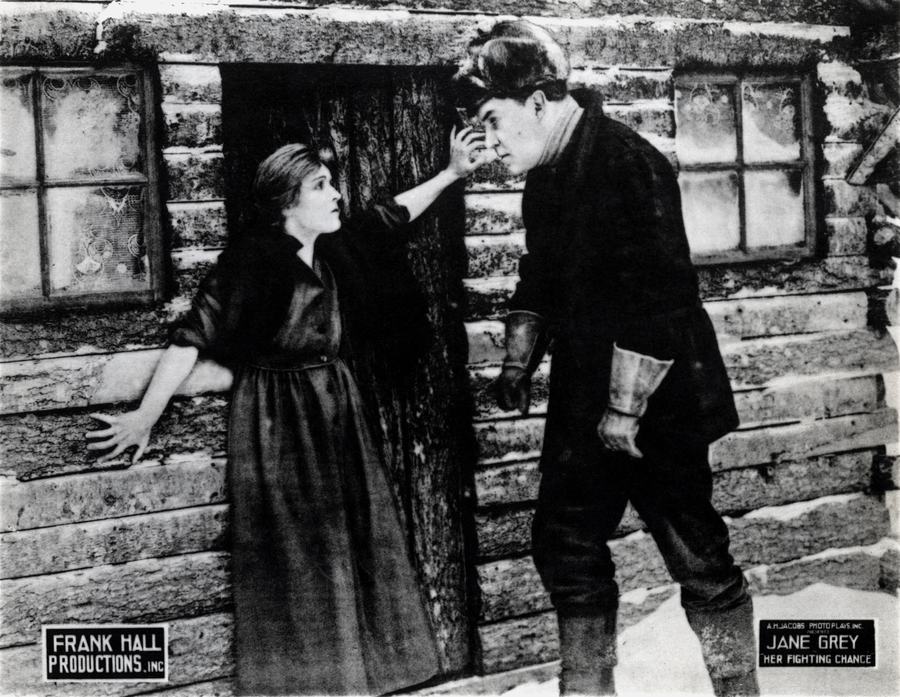
Jane Grey’s Marie refuses the era’s standard-issue martyred wife. Her eyes flicker with calculation, a silent ledger of costs: one night versus a lifetime widowhood. Grey lets the camera gorge on close-ups, yet her face never fully capitulates; even in submission there is a strategic withdrawal, a fortress left manned. The result is not erotic tension so much as ethical vertigo—every glance asks whether consent extorted can still be called consent.
Director Percy Standing (also essaying Jan Thoreau) stages interiors like Dutch still-lifes: kerosene glow slicing across hewn beams, rifle mounted above the hearth like a dormant household god. Note the blocking when Blake first proposes his sordid bargain: Marie pinned between cast-iron stove and doorframe, the camera stationary, forcing us to feel the room shrinking. No musical cue swells; the silence itself becomes a third character, tightening the garrote.
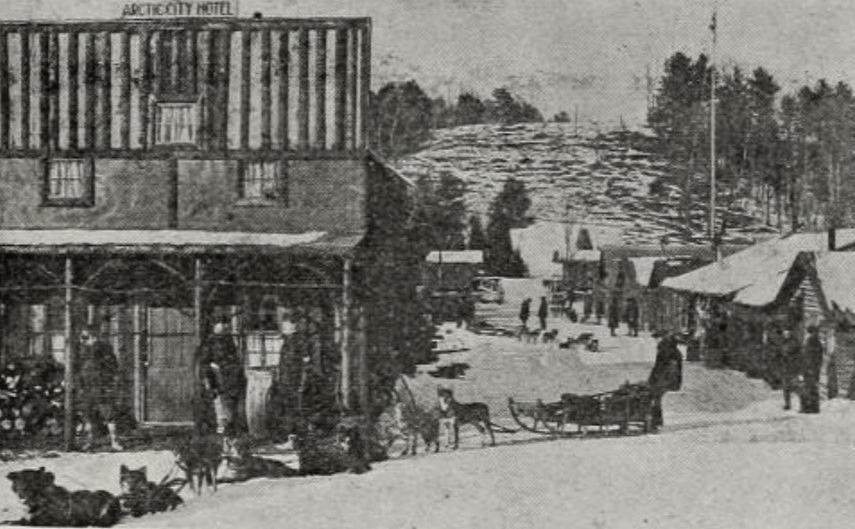
Curwood’s adaptation of his own pulp yarn sharpens the novella’s crude sexual economics into something almost Sartrean. The screenplay deletes three shootouts and a bear attack, substituting a single handwritten note delivered by sled dog—Pastamoo’s confession—proving that exposition, when whispered through winter, lands harder than any Gatling-gun finale.
Compare this with The Soul of Satan where temptation drips in lurid crimson intertitles; Her Fighting Chance achieves a chillier hue, closer to Assunta Spina’s bruised Neapolitan fatalism. Yet unlike those Mediterranean passions, the snow here blankets everything, muffling screams until they resemble sighs.
The chase sequence—ostensibly formulaic—turns topological marvel. Footprints circumscribe the cabin in a perfect ring, an ouroboros of guilt. Cinematographer William W. Cohill undercranks sparingly; when Blake’s sled vanishes into whiteout, the image stutters like a heart arrhythmia, foreshadowing the fatal misidentification to come.
Which brings us to the gunshot: not the cathartic crack of righteous comeuppance, but a tragic ellipsis. Blake mistakes the crimson-coated Mountie for his quarry—color symbolism inverted, the uniform of law now target. The return bullet punches a hole through authority itself; the corpse exhales steam, the sound of empire cooling.
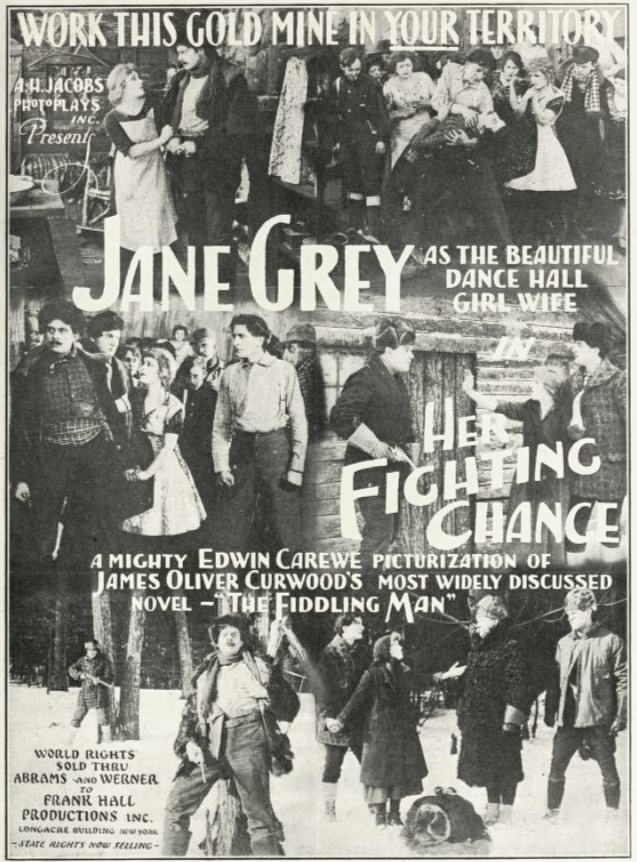
Contemporary critics dismissed the film as “a woman’s weeper with snowshoes.” A century on, the weeping feels ours: for every Marie cornered by transactional mercy, for every Jan railroaded by circumstantial glyphs, for every Blake devoured by the machinery he volunteered to grease.
Restoration-wise, the 2022 4K transfer from the Cinémathèque Québecoise master print salvages emulsion scratches that once resembled meteor showers. The tinting—amber interiors, cyan exteriors—obeys the original cue sheets, resurrecting emotional thermoregulation: warmth of desire, chill of consequence.
So where does it reside in Curwood’s cinematic menagerie? Leaner than The House of a Thousand Candles, less swashbuckling than Zigomar contre Nick Carter, yet more philosophically restless. It anticipates the post-war disillusionment that would later fertilize film noir, though here the femme fatale is victim-prosecutor-judge trinity, and the city’s labyrinthine alleys are replaced by the taunting infinity of evergreens.
Viewing tip: pair with Vendetta for a diptych on how 1910s cinema interrogates vendetta cycles; the Italian peninsula’s sun-drenched knives against Canada’s hypothermic ethics prove that guilt, like temperature, is merely a matter of scale.
Availability: streaming on MUBI USA through August, DCP rentals via Kino Lorber Edu. Beware the 59-minute bootleg on certain tube sites—missing Reel 3, rendering Marie’s decision abrupt rather than agonizing.
Final verdict: not a curio to be ticked off some silent-cinema scavenger hunt, but a nerve that still twitches. The ice has not yet melted around its questions: What is the exchange rate of flesh for freedom? Who authors absolution when the only witness is a dying killer too late to speak? And how does a gunshot echo differently when the target wears the same uniform as the shooter? Her Fighting Chance offers no answers—only a clearing in the woods, a crimson stain on alabaster, and the echo of your own moral footfalls crunching back to you.
IMDb —
1926
Community
Log in to comment.