DbcultAccessing Vault...
3.9/10
Senior Film Conservator
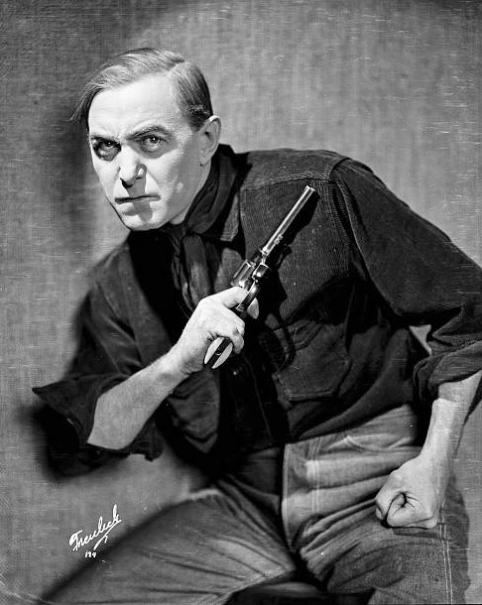
A definitive 3.9/10 rating for a film that redefined the boundaries of cult cinema. The Wallop remains a cornerstone of transgressive art.
In the pantheon of early American cinema, specifically the burgeoning Western genre of the 1920s, few collaborations resonate with as much authentic grit as the union between actor Harry Carey and the prose of Eugene Manlove Rhodes. In The Wallop, directed by John Ford (credited as Jack Ford), we are treated to a narrative that eschews the simplistic 'white hat vs. black hat' dichotomy in favor of something far more psychologically textured. This is not merely a tale of gunfights and gallantry; it is a meditation on the obsolescence of the frontier hero and the painful transition from personal justice to institutional law.
To understand The Wallop, one must first acknowledge the literary pedigree of Eugene Manlove Rhodes. Unlike many pulp writers of his era, Rhodes lived the life he depicted, and his characters, particularly John Wesley Pringle, possess a weary wisdom that transcends the screen. When Carey’s Pringle returns to his home soil, he isn't the conquering hero of a typical melodrama. He is a man who has traded his sweat for gold, only to find that the currency of his heart—his relationship with Stella (played with a delicate earnestness by Mignonne Golden)—has been devalued by his absence.
The film establishes a palpable sense of place, a dusty, sun-bleached purgatory where political ambitions and personal vendettas collide. Pringle’s realization that Stella is engaged to Christopher Foy (William Steele) provides the emotional anchor for the film. It sets up a triangle that is resolved not through jealousy, but through a rugged, almost masochistic form of altruism. Pringle’s decision to protect the man who replaced him is a thematic precursor to the complex morality seen in later masterpieces like The Desire of the Moth, where the protagonist's internal code supersedes his own desires.
The antagonist, Matt Lisner (portrayed with a sneering, bureaucratic menace by Charles Le Moyne), represents a specific kind of Western villain: the corrupt incumbent. Unlike the bandits of Oh, You Kid or the more theatrical rogues of The Pousse Cafe, Lisner uses the machinery of the law to achieve his ends. His attempt to assassinate Foy is a desperate move to maintain a grip on a town that is slowly outgrowing his brand of tyranny.
The film’s middle act is a masterclass in tension. When Foy is framed for murder, the narrative shifts from a romantic drama to a high-stakes political thriller. The cinematography—primitive yet effective—utilizes the vast, indifferent landscapes of the American Southwest to emphasize the isolation of the characters. We see echoes of the sacrificial themes found in Sacrifice (1918), though here the sacrifice is grounded in the dirt and blood of the frontier rather than high-society melodrama.
The climax of The Wallop is where the film earns its title—and its place in history. Pringle’s 'capture' of Foy is a brilliant narrative pivot. By assuming the role of the bounty hunter, Pringle is able to infiltrate the circle of the posse and control the environment. The scene where he holds the group at gunpoint is not just an action beat; it is a rhetorical statement. He is showing the town that their 'justice' is a farce, a tool manipulated by men like Lisner.
This sequence demands comparison to the precision of Der Meisterschuß, where technical skill is used to navigate a moral maze. Pringle is the 'master shot' of this story, a man who knows exactly where to aim his influence to achieve the maximum effect with the minimum of actual violence. His explanation of his motive—the protection of an innocent man to ensure the happiness of a woman he still loves—is delivered by Carey with a stoic grace that defines his entire career.
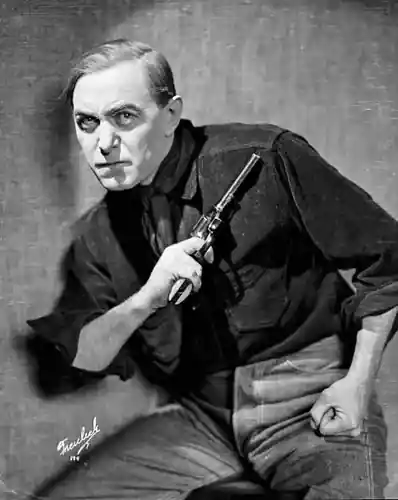
While The Wallop lacks the exoticism of The Call of the East or the heavy religious overtones of Hvor Sorgerne glemmes, it possesses a stark, visual poetry. The way the light hits the ridges of Carey’s weathered face tells a story that dialogue never could. The film utilizes its supporting cast effectively; Noble Johnson and Joe Harris provide a texture of rugged reality that makes the stakes feel genuine. There is a sense of community here, albeit a fractured one, reminiscent of the social tapestries in The Cloister and the Hearth, though transplanted to a world of sagebrush and revolvers.
The pacing is deliberate, allowing the audience to feel the weight of Pringle’s decision-making process. We are far removed from the frantic energy of One Hour or the explosive tension of Powder. Instead, The Wallop operates with the steady, inexorable rhythm of a man walking toward his own exile.
In analyzing The Wallop, one cannot ignore its position relative to other contemporary works. It lacks the cynical edge of Baccarat, yet it is far more sophisticated than the transactional romance of The Mail Order Wife. There is a spiritual purity to Pringle’s quest that almost touches upon the hagiographic, echoing the devotion seen in Die Legende von der heiligen Simplicia or the confessional intensity of A gyónás szentsége. Pringle is a secular saint of the West, a man who takes the sins of the town upon his shoulders and wanders back into the wilderness.
The resolution of Matt Lisner’s arc is satisfyingly swift. In the world of Rhodes and Ford, justice is a blunt instrument. Once the truth is revealed, the corrupt edifice crumbles. But the true 'wallop' of the film is the emotional one: the final shot of Pringle returning to his mine. He has won the battle, saved the girl’s future, and restored the law, yet he remains an outsider. He is a relic of an era where a man’s word and his gun were the only laws that mattered, now finding himself in a world where sheriff’s elections and legal maneuvers are the new frontier.
As a piece of cinematic history, The Wallop serves as a vital bridge. It shows a young John Ford honing his craft, learning how to frame the American landscape and the American hero. Harry Carey provides the template for the 'Good-Bad Man'—a character archetype that would be refined by John Wayne and James Stewart in the decades to follow. The film’s refusal to provide a standard happy ending for its protagonist elevates it above its contemporaries like The Hostage.
The lexical diversity of the visual storytelling here is profound. From the subtle shifts in Pringle’s posture to the way the posse moves like a single, mindless beast, the film speaks volumes about the human condition. It is a story about the cost of integrity. Pringle loses the girl, but he keeps his soul, and in the harsh light of the New Mexican sun, that is the only strike that truly matters.
For those seeking a Western that offers more than just the crack of a whip and the thunder of hooves, The Wallop is an essential viewing experience. It is a testament to a time when the West was still being written, and when men like Harry Carey were the ones holding the pen—and the gun.
IMDb 6
1935
Community
Log in to comment.