DbcultAccessing Vault...
Cult Review
Senior Film Conservator
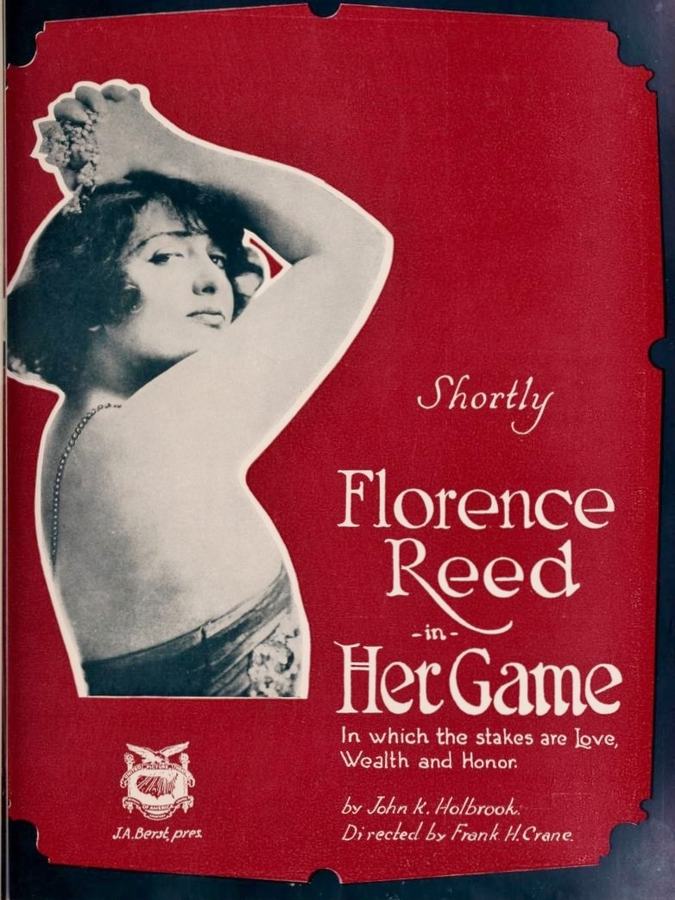
In the annals of early cinema, few narratives unfurl with the intricate psychological tension and sheer audacious plotting of Her Game (slug: her-game). This film, a compelling product of its era, transcends mere melodrama to offer a profound meditation on justice, identity, and the lengths to which a person, particularly a woman, will go to reclaim what was lost. Directed with a keen eye for suspense and propelled by a script from John K. Holbrook, it's a testament to the power of storytelling before the advent of synchronized sound, relying instead on the expressive prowess of its cast and the evocative language of visual narrative.
The premise itself is a masterstroke of dramatic irony. We are introduced to Carol Raymond, portrayed with a captivating blend of vulnerability and steel by Florence Billings, a woman whose world has been irrevocably shattered by the machinations of Wall Street titan John Rutherford. Her family, once comfortable in Virginia, is now financially ruined, their fortunes decimated by a lawsuit. This isn't just a plot device; it's a societal mirror, reflecting the anxieties of an age grappling with burgeoning industrial capitalism and its often brutal consequences. Carol's journey, therefore, is not merely personal revenge but a symbolic quest for redress against an impersonal, often unjust system. She leaves behind the familiar comforts of home, not in despair, but with a singular, unyielding purpose: to 'set matters straight.' This seemingly simple phrase belies a complex, morally ambiguous plan that forms the very backbone of the film's narrative.
The film’s genius lies in its narrative structure, delivered primarily through a letter Carol pens to her father, a clever framing device that allows for a retrospective unveiling of events, heightening both suspense and character introspection. Three weeks after her departure, Carol is now married to Bruce Armitage, John Rutherford's nephew and, crucially, his heir. The deceased Rutherford's legacy is now intertwined with Carol’s destiny, a twist that immediately signals the depth of her strategic thinking. This marriage is not one of convenience in the traditional sense, but one of calculated necessity, a means to an end that she believes justifies the elaborate deception.
Carol's letter details her initial triumph: she successfully engineered a scenario where Bruce Armitage, played with compelling duality by Conway Tearle, falls deeply in love with her. This isn't mere seduction; it's a testament to Carol's formidable intellect and her ability to manipulate social situations to her advantage. However, the plot thickens, as all good thrillers must. Bruce's twin brother, Alan Rutherford, a character steeped in resentment and avarice, emerges as the true antagonist. Disinherited and consumed by bitterness, Alan, alongside a shadowy adventuress, orchestrates a cunning trap. They lure Carol to a secluded roadhouse, a setting ripe with illicit undertones and moral ambiguity. The scene, charged with a palpable sense of dread, sees Carol plied with champagne, her senses dulled, her guard lowered. It's a classic noir setup, even before the genre fully coalesced, showcasing a woman's vulnerability in a predatory world.
What follows is perhaps the most audacious sequence in the film: Alan Rutherford, exploiting his uncanny resemblance to his twin, attempts to assault Carol, masquerading as Bruce. The psychological horror of this deception is profound; it's not just a physical threat but a violation of trust, a perversion of the love Carol believed she had cultivated. Florence Billings' portrayal of Carol's terror and defiance in this moment is particularly poignant, culminating in her desperate threat to leap from a balcony, choosing death over dishonor. This act of self-preservation, however, leads to the climactic reveal: both Rutherford and Armitage appear simultaneously, shattering the illusion and exposing Alan's malevolent scheme. It is in this moment of stark clarity that Carol comprehends the full extent of the disinherited twin's vindictive pursuit of the lawsuit that ruined her family. Her initial target, John Rutherford, was merely a proxy for Alan's deeper, more personal vendetta. This revelation shifts the entire dynamic of the narrative, transforming Carol's quest from simple revenge to a battle against a more insidious, familial evil.
The success of Her Game rests heavily on the shoulders of its lead actors, particularly Conway Tearle and Florence Billings. Tearle, in the dual role of Bruce Armitage and Alan Rutherford, delivers a performance that is nothing short of mesmerizing. His ability to convey distinct personalities and moral compasses for the twins, often with subtle shifts in posture, gaze, and expression, is a masterclass in silent film acting. Bruce is presented as the earnest, somewhat naive romantic lead, while Alan seethes with a simmering, predatory malice. The contrast is stark, yet believable, allowing the audience to fully grasp the psychological torment Carol endures. One might draw parallels to the complexities of identity explored in films like The Mysterious Mr. Tiller, where hidden identities drive the narrative forward, though Her Game takes this concept to a more intimate and sinister level.
Florence Billings, as Carol Raymond, is equally compelling. She navigates the emotional landscape of her character with remarkable depth, transitioning from a woman driven by cold calculation to one genuinely caught in a web of affection and peril. Her strength, particularly in the roadhouse scene, is palpable, making her a formidable heroine for her time. The supporting cast, including Jed Prouty, Florence Reed, and Mathilde Brundage, provides solid grounding for the central drama, each contributing to the film's rich tapestry of characters. John K. Holbrook’s screenplay is remarkably sophisticated for its period, weaving together themes of revenge, mistaken identity, and female agency with a narrative precision that keeps the audience enthralled.
Her Game is more than just a thrilling tale of deception; it's a fascinating commentary on the societal anxieties and gender roles of the early 20th century. Carol Raymond embodies a nascent form of female empowerment, taking direct action in a world where women were often relegated to passive roles. Her decision to actively pursue justice, even through morally ambiguous means, challenges conventional expectations. This resonates with other films of the era that explored complex female protagonists, such as The Sin of a Woman or Tangled Lives, though Carol's calculated coldness sets her apart. She is not merely reacting to circumstances but actively shaping them, making her a proto-feminist figure in a compelling, albeit flawed, way.
The theme of financial ruin also speaks volumes about the precariousness of economic stability in that period. The Wall Street lawsuit isn't just a plot catalyst; it represents the pervasive fear of sudden destitution, a fear that could drive individuals to desperate measures. The film subtly critiques the ruthless world of high finance, personified by the original John Rutherford and amplified by Alan's greed. This undercurrent of class struggle and the pursuit of wealth at any cost adds a layer of social commentary that elevates the film beyond a simple thriller. The notion of inheritance and disinheritance, central to Alan's motivation, further underscores the societal importance placed on lineage and material legacy.
Furthermore, the exploration of identity through the twin motif is psychologically rich. The film delves into the idea that appearances can be deceiving, that even the closest familial bonds can conceal profound malice. The horror of Alan impersonating Bruce is not just in the attempted assault but in the shattering of Carol's perception of reality and trust. It's a sophisticated exploration of psychological manipulation, predicting tropes that would become mainstays in later thrillers and psychological dramas. The lingering 'shadows from the past,' as one might title a related film like Shadows from the Past, are quite literal here, with Alan's past grievances dictating his present, destructive actions.
The film's climax, unfolding as Carol concludes her confessional letter, is a masterclass in tension building. Alan Rutherford, having bound Bruce in the cellar, makes his final, desperate move, entering Carol's bedroom. The sense of impending doom is palpable, amplified by the silent film's reliance on visual cues and the audience's understanding of the characters' plight. Just as Alan's embrace threatens to consume Carol, Bruce, having miraculously escaped his bonds, bursts onto the scene, saving her in the nick of time. This dramatic rescue not only provides a satisfying resolution to the immediate threat but also solidifies the genuine bond that has developed between Carol and Bruce, transcending the initial, cynical motivations of her 'game.'
Her Game, despite its age, retains a remarkable freshness and urgency. It stands as a testament to the sophistication of early cinematic storytelling and the enduring power of a well-crafted narrative. John K. Holbrook's writing, combined with the nuanced performances of Conway Tearle and Florence Billings, elevates what could have been a simple revenge tale into a complex psychological thriller. Its exploration of identity, vengeance, and the blurred lines between justice and retribution continues to resonate, making it a valuable piece for any cinephile interested in the evolution of dramatic storytelling. While it might not share the epic scope of a film like Attila, the Scourge of God, its intimate drama is no less impactful, proving that the human heart, with all its cunning and courage, can be the most compelling battleground of all. It reminds us that even in the silent era, films possessed a profound ability to explore the darkest corners of the human psyche and the most intricate designs of fate.
In an era often dismissed as primitive, Her Game emerges as a surprisingly modern narrative, particularly in its portrayal of a strong, resourceful female protagonist. Carol Raymond is not merely an object of desire or a damsel in distress; she is an architect of her own destiny, albeit one fraught with peril and moral compromise. Her journey from avenger to a woman genuinely in love, yet still haunted by the shadows of her past actions and the lingering threat of Alan, provides a rich character arc that holds up to contemporary scrutiny. The film is a fascinating artifact, not just for its historical context, but for its timeless exploration of complex human motivations and the intricate dance between love and vengeance. It truly is a compelling piece of cinematic heritage, deserving of its place in discussions of early film's psychological depth and narrative ambition.
IMDb —
1921
Community
Log in to comment.