DbcultAccessing Vault...
4.2/10
Senior Film Conservator
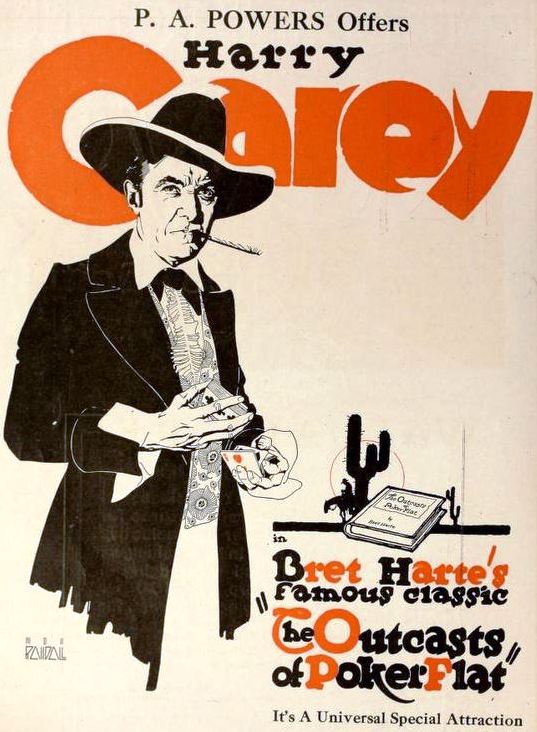
A definitive 4.2/10 rating for a film that redefined the boundaries of cult cinema. The Outcasts of Poker Flat remains a cornerstone of transgressive art.
Against the sawdust-strewn floors and whiskey-stained tables of Bret Harte's mythological West, director John Ford (credited here under early pseudonym Jack Ford) orchestrates a soulful interrogation of redemption through self-annihilation. The genius of The Outcasts of Poker Flat lies not in its archetypal setup—morally compromised guardian, innocent ward, love triangle—but in how it weaponizes the claustrophobic brutality of the Sierra Nevada winter to strip characters down to their ethical marrow. Cinematographer Benjamin Kline transforms the howling blizzard into a tangible antagonist, its glacial fingers creeping through cabin walls as inexorably as guilt through Oakhurst's once-impenetrable cynicism.
Harry Carey's Oakhurst stands among silent cinema's most complex antiheroes—a man whose poker face masks volcanic emotional restraint. Watch how his fingers hesitate half a beat before retrieving Lucy's dropped handkerchief, or how his eyes linger on Virginia Chester's luminous Lucy during supper scenes, not with predator's hunger but with the aching wonder of someone glimpsing stained glass in a brothel. Ford contrasts this against Duke R. Lee's Uncle Billy, whose festering resentment manifests in physical twitches and the perpetual grinding of yellowed teeth. Their shared cabin becomes a Darwinian arena where civility and savagery perform their death dance.
"Carey communicates entire soliloquies through the tremor of a cigar—the moment he rotates Tom's pocket knife while contemplating his rival's fate should he 'disappear' in the storm remains one of silent film's most chilling depictions of moral calculus."
The film's masterstroke resides in its subversion of romantic tropes. Unlike the pastoral idealism of The Secret Garden or the gothic entanglements of The Haunted Manor, Poker Flat grounds its emotional stakes in visceral survivalism. When Lucy tends to Tom's frostbite, her fingers raw from snowmelt, the intimacy feels earned rather than sentimental—a communion forged by shared vulnerability. Frank Capra's screenplay (adapted from Harte's story by H. Tipton Steck) plants seeds of psychological complexity that would later blossom in his own Bill Settles Down, particularly in how economic anxiety fuels moral compromise.
Ford and Kline employ visual symbolism with painterly precision. Note the gradual brightening of Lucy's costumes—from initial travel-worn grays to creamy whites as her influence cleanses the cabin's moral miasma. Contrast this with the Duchess' garish red shawl, a fading flag of surrendered virtue. Cinematic techniques ahead of their time emerge in the blizzard sequences: double exposures create phantom figures in the snow, representing Oakhurst's haunted conscience, while extreme close-ups on icicles melting foreshadow emotional thaw. The film's tactile authenticity—real animal pelts stiff with frost, whiskey freezing in tin cups—predates the naturalism of I topi grigi by decades.
Virginia Chester's performance transcends the era's maidenly archetypes. Her Lucy possesses steel beneath silk, whether defending Duchess from Uncle Billy's advances or silently rebuking Oakhurst's gambling with a single lowered gaze. The unspoken communion between her and Cullen Landis' Tom Simson is conveyed through shared tasks—chopping wood, mending blankets—their courtship unfolding in practical solidarity rather than chaste flourishes. This foreshadows the partnership dynamics later explored in The Hope Chest, but with grittier authenticity.
Oakhurst's climactic decision—volunteering for a suicidal supply run during the storm's crescendo—gains shocking complexity upon contemporary reevaluation. Modern viewers might question whether this constitutes genuine redemption or a coward's escape from emotional accountability. Ford layers tantalizing ambiguity: the lingering shot on Lucy's tear-streaked face as Oakhurst departs suggests she understood his deeper motives, while Tom's bewildered gratitude reads as tragic dramatic irony. This moral murkiness aligns with darker character studies like Vengeance Is Mine, rejecting pat resolutions.
The film's technical triumphs warrant rediscovery: innovative matte paintings create vertiginous mountain backdrops, while pioneering miniature work simulates the avalanche that seals Oakhurst's fate. Yet it's the human scale that resonates. Louise Lester's Duchess delivers the era's most nuanced portrayal of sexual exploitation—her final act of sharing rations with Lucy speaks louder than any melodramatic deathbed speech. J. Farrell MacDonald's cameo as the laconic trapper who discovers Oakhurst's frozen body achieves profound pathos through minimalist gestures, his calloused hand brushing snow from the dead man's eyes like a benediction.
More than a century later, the film's exploration of communal salvation through individual sacrifice retains startling relevance. In an era obsessed with self-actualization, Oakhurst's inverse trajectory—diminishing himself to elevate others—feels radically countercultural. The cabin's metamorphosis from prison to sanctuary anticipates existential dramas like Beware of Strangers, while its treatment of social pariahs predates the humanist compassion of The Slave Auction. Ford seeds ideas here that would mature in his sound-era masterpieces—the ambiguous heroism, the landscape as moral testing ground, the community forged through shared crisis.
"The film's final tableau—Lucy and Tom gazing eastward toward civilization, their future purchased with Oakhurst's frozen corpse—remains devastating not for its sentimentality, but for its brutal honesty about frontier arithmetic: some must perish so others may progress."
Contemporary audiences might wrestle with the gender dynamics—Lucy as passive catalyst rather than active protagonist—yet Chester invests her with covert agency. Observe how she redirects the cabin's power dynamics through domestic rituals: the precise folding of blankets becomes territorial demarcation, the serving of meals a redistribution of authority. Her influence operates like water seeping into granite—gradual, patient, ultimately transformative. This subtle feminism distinguishes it from more overtly provocative contemporaries like The Devil's Prize.
The Outcasts of Poker Flat endures not as a relic but as a living, breathing moral inquiry. Its genius lies in duality: the way ice crystals glitter like diamonds on dead branches, how a gambling hall owner discovers grace through renunciation, why a blizzard's lethal kiss feels like both punishment and purification. Modern restorations reveal breathtaking details—the embroidery on Lucy's glove hinting at lost privilege, the whiskey stain on Oakhurst's vest mapping his decline like a topographical betrayal. In an era saturated with CGI spectacle, this century-old masterpiece reminds us that the most cataclysmic explosions occur within the human soul, and the most heroic battles are waged silently against our own reflections in frozen cabin windows.
Its influence echoes in unexpected places—the claustrophobic moral dilemmas of Hell's Crater, the redemptive arcs of The Hater of Men, even the environmental symbolism of Occultism. Yet Poker Flat stands apart in its unwavering commitment to emotional authenticity. When Oakhurst presses Lucy's love letter into Tom's hand—the paper crinkling with hoarded warmth in the glacial air—we witness cinema's alchemy: celluloid and ink transformed into everlasting truth about the terrible, beautiful cost of becoming human.
IMDb 6
1932
Community
Log in to comment.