DbcultAccessing Vault...
Cult Review
Senior Film Conservator
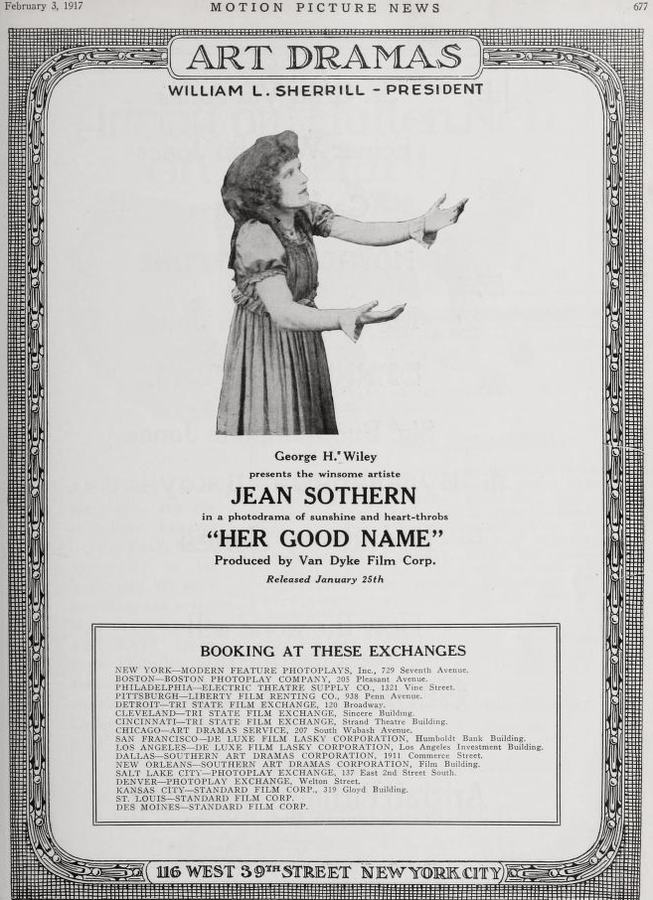
Stepping back into the nascent days of cinematic storytelling, 'Her Good Name' emerges not merely as a relic of a bygone era but as a potent exploration of themes that resonate with enduring power. Directed with a keen eye for human drama and penned by the collaborative vision of Horace Hazeltine and Edfrid A. Bingham, this film, likely from the silent era, plunges us into a world where reputation is currency, and a whisper can devastate a life. It's a testament to the foundational strengths of early narrative cinema, demonstrating how compelling character arcs and moral quandaries could captivate audiences long before the advent of synchronized sound.
The film's very title, 'Her Good Name', immediately signposts its central preoccupation: the sanctity of a woman's honor in a society that often judged her by the flimsiest of perceptions. Our protagonist, Mary Thorne, brought to life with an arresting blend of fragility and steel by Barbara Castleton, embodies the virtues of the era. She is presented as a woman of impeccable character, living a life that, while perhaps not opulent, is rich in integrity and quiet grace. Castleton's portrayal, even through the expressive pantomime of silent film, conveys a profound sense of inner strength, making her eventual fall from grace all the more heart-wrenching. Her eyes, often downcast in modesty, can flash with fierce defiance when her principles are challenged, a subtle yet powerful testament to her unwavering spirit.
The narrative's central conflict ignites with the introduction of Richard Vance, portrayed by Earl Metcalfe. Metcalfe, a familiar face in early cinema often cast as villains or morally ambiguous figures, here delivers a performance steeped in a chilling blend of arrogance and entitlement. Vance is not merely a suitor; he is a predator, accustomed to having his desires met. Mary's polite but firm rejection of his advances wounds his pride to its core, transforming his thwarted desire into a burning need for vengeance. This isn't just a scorned lover's pique; it's a deliberate, calculated assault on Mary's very being, designed to strip her of what she values most. Metcalfe’s sneering glances and dismissive gestures effectively communicate the depth of his malice, making him a truly formidable antagonist.
Vance finds an unwitting, or perhaps all too willing, accomplice in Eleanor Sterling, played by Jean Sothern. Sothern, with her ability to convey both superficial charm and underlying venom, crafts a character who is the epitome of societal envy. Eleanor’s jealousy of Mary’s inherent goodness and the quiet admiration she garners fuels her willingness to participate in Vance’s scheme. It's a classic cinematic trope: the beautiful but malicious rival, yet Sothern imbues Eleanor with enough shaded nuance to make her more than a simple caricature. Her smiles hide daggers, and her whispered confidences carry the weight of ruin. The synergy between Metcalfe and Sothern in their nefarious planning scenes is palpable, creating a palpable sense of dread for Mary’s impending doom.
The scheme they concoct is dastardly in its simplicity and devastating in its efficacy. Through a series of manipulated events and carefully planted rumors, Mary is ensnared in a scandal that casts her as morally compromised. The details, while perhaps melodramatic to modern sensibilities, would have resonated deeply with audiences of the era, where a single accusation could unravel a woman's entire social fabric. We witness Mary’s agonizing ostracization, the averted gazes of former friends, the wagging tongues, and the doors slammed shut in her face. This segment of the film is particularly poignant, highlighting the brutal efficiency with which reputation could be destroyed, and how quickly societal judgment could turn a virtuous individual into a pariah. One might draw parallels to the societal shaming depicted in Manon Lescaut, though Mary's fall is through no fault of her own, making her plight even more tragic.
Yet, 'Her Good Name' refuses to wallow in despair. Mary Thorne, despite the crushing weight of public condemnation, refuses to be broken. Her journey from societal darling to outcast is painful, but it also serves to forge her character, revealing a strength that was perhaps dormant during her more comfortable days. Barbara Castleton truly shines in these sequences, conveying Mary's inner turmoil and her unyielding resolve through subtle gestures and expressions. We see her tears, yes, but also the hardening of her jaw, the determined glint in her eye as she resolves to fight for her truth. This resilience is a powerful message, particularly for a film of its time, subtly advocating for female agency even in the face of overwhelming patriarchal judgment.
Her quest for vindication is not a solitary one, however. The film introduces us to John Davies, a character brought to life by Arthur Housman. Housman, often known for his comedic roles later in his career, here provides a performance of quiet loyalty and steadfast support. Davies, perhaps initially a peripheral figure or even someone who initially misunderstands Mary, becomes her most ardent champion. His unwavering belief in her innocence, even when all evidence points otherwise, serves as a beacon of hope. His character arc, from perhaps a skeptical observer to a devoted ally, adds depth to the narrative, underscoring the importance of true friendship and discernment in a world quick to condemn. His role in helping Mary gather evidence and expose the true culprits is crucial, providing the necessary external force to propel the plot towards its resolution, much like the steadfast heroes in films like The Flames of Justice.
The supporting cast further enriches this tapestry of human experience. Nellie Parker Spaulding, a seasoned actress of the era, likely portrays a figure of maternal wisdom or a loyal confidante, offering solace and practical advice to Mary during her darkest hours. Her presence would have provided a much-needed anchor, a voice of reason amidst the chaos of public opinion. William H. Turner, potentially cast as a sympathetic lawyer or a well-meaning but initially misguided authority figure, contributes to the legal and procedural aspects of Mary's fight. And Ethel Tully, perhaps playing a maid or a witness, might hold a crucial piece of information, a hidden detail that ultimately unravels Vance and Eleanor's elaborate deception. Each performance, however brief, builds the verisimilitude of Mary's world, making her struggle and eventual triumph feel earned.
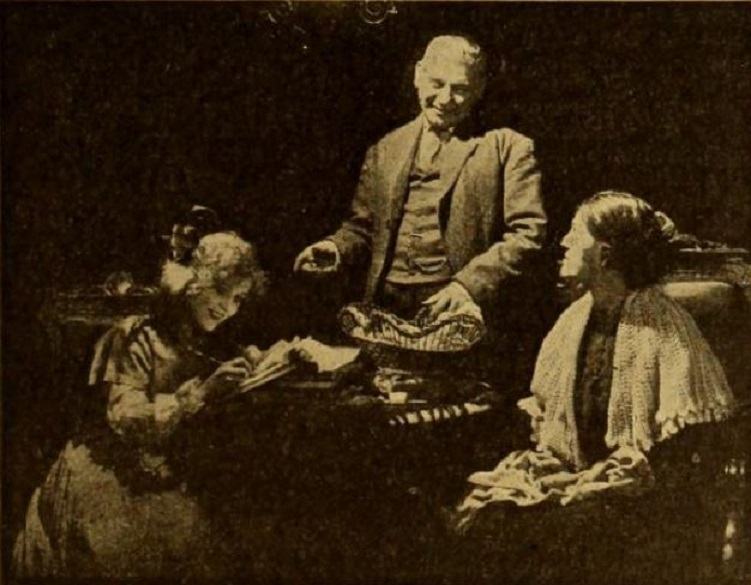
'Her Good Name' is more than just a melodrama; it’s a commentary on the societal anxieties of its time. It grapples with questions of justice, the power of rumor, and the resilience of the human spirit. The film subtly critiques the hypocrisy of a society that values appearances over truth, and the devastating consequences for those who fall victim to its judgments. The writers, Horace Hazeltine and Edfrid A. Bingham, demonstrate a sophisticated understanding of dramatic structure, building tension gradually, allowing Mary’s despair to deepen before offering the glimmer of hope that eventually leads to her vindication. Their screenplay, even in its silent form, speaks volumes about character motivation and the intricate dance of cause and effect.
While specific directorial choices are harder to ascertain without direct access to the film, one can infer from the strong narrative and character performances that the direction would have emphasized clear visual storytelling. Close-ups would have been crucial for conveying the intense emotions of Castleton, Metcalfe, and Sothern. The pacing would likely have built from a calm exposition to a tense middle act of Mary's struggle, culminating in a dramatic, satisfying climax. The use of intertitles, the textual explanations interspersed within silent films, would have been skillfully employed to advance the plot and reveal inner thoughts, ensuring that the audience remained fully engaged with Mary's plight.
The film's visual language, typical of the era, would have relied on strong chiaroscuro lighting to highlight the moral contrasts between characters – the virtuous Mary often bathed in soft light, while Vance and Eleanor might be cast in more shadowy, ominous tones. Set design, while perhaps not as elaborate as later productions, would have served to establish the social strata and emotional tenor of each scene, from opulent drawing-rooms where reputations are made and broken, to humble lodgings where resilience is forged. The film's ability to communicate complex ideas and emotions without spoken dialogue is a testament to the artistry of silent cinema, an art form that often transcended its limitations through sheer visual poetry and the power of performance.
In its exploration of a woman fighting against injustice, 'Her Good Name' finds kinship with other notable films of its time. One might consider The Barrier, which also delves into societal obstacles and the struggle against prejudice, though perhaps with a more overt class struggle at its heart. Mary’s quiet strength and unwavering moral compass echo the protagonists in films like Still Waters, where inner fortitude triumphs over external adversity. The dramatic tension and the unveiling of a conspiracy might remind viewers of the thrilling serials or earlier crime dramas like Fantômas: In the Shadow of the Guillotine, albeit with a focus on personal rather than criminal justice.
The film's climactic sequence, where truth is finally revealed and Mary's name is cleared, would have been a profoundly satisfying experience for contemporary audiences. It’s the quintessential triumph of good over evil, a narrative arc that continues to resonate because it speaks to a fundamental human desire for justice. The vindication is not merely a legal one but a moral one, restoring Mary’s place in society and, more importantly, her peace of mind. This resolution is crucial, transforming what could have been a purely tragic tale into one of enduring hope and the power of perseverance. It's a powerful affirmation that even in the face of overwhelming odds, integrity can prevail.
The artistry involved in creating such a narrative for a silent audience is often underestimated. Every gesture, every facial expression, every intertitle had to be precisely calibrated to convey meaning and emotion. Barbara Castleton, as Mary, carries much of this burden, and her performance, even through the lens of historical distance, clearly stands out. She embodies the archetype of the wronged woman, yet infuses her with enough individuality to make her plight uniquely compelling. Her journey of suffering and ultimate triumph provides a powerful emotional core, making 'Her Good Name' a compelling character study wrapped in a gripping melodrama.
Ultimately, 'Her Good Name' stands as a compelling example of early cinema's capacity for intricate storytelling and profound emotional impact. It’s a film that, despite its age and silent nature, speaks directly to universal human experiences: the pain of false accusation, the strength found in adversity, and the unwavering pursuit of truth. The meticulous crafting of its plot by Hazeltine and Bingham, combined with the evocative performances of its cast, particularly Barbara Castleton, ensures that Mary Thorne's struggle and eventual vindication remain a powerful and resonant narrative.
For anyone interested in the evolution of cinematic narrative, the power of silent acting, or simply a timeless tale of justice, 'Her Good Name' offers a rich and rewarding viewing experience. It reminds us that long before special effects and dialogue dominated the screen, the fundamental human drama – of love, betrayal, resilience, and redemption – was already being told with compelling artistry. It underscores the idea that a good story, well-told, transcends technological limitations and continues to captivate across generations. The film's enduring message about the fragility and importance of one's reputation, especially for women, holds a mirror to societal values that, in many ways, continue to grapple with similar issues even today.
The legacy of films like 'Her Good Name' is not just in their historical value, but in their ability to connect with contemporary audiences through the sheer force of their storytelling and the raw, unadulterated emotion conveyed by their performers. It’s a powerful reminder that the essence of cinema, from its earliest days, has always been about reflecting the human condition in all its complex glory and sorrow.
IMDb 7.5
1934
Community
Log in to comment.