DbcultAccessing Vault...
Cult Review
Senior Film Conservator
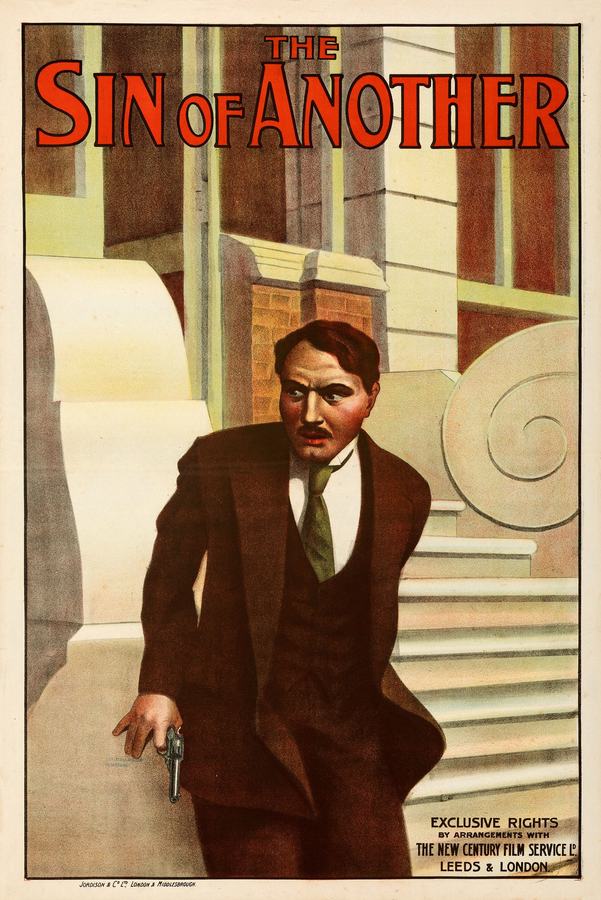
There is a moment, roughly halfway through The Other’s Sins, when the camera refuses to cut away from Lydia De Roberti’s face for an almost uncomfortable eternity. A tear glides down her left cheekbone, hesitates at the corner of a beauty spot, then drips onto the lace collar that frames her throat like a spider’s web. No title card intrudes; no orchestral cue tells you how to feel. The tear is simply permitted to exist, a liquid indictment of every rigid moral ledger the film delights in shredding. In that suspended droplet, early Italian cinema reaches a threshold of psychological intimacy that even the most celebrated epics of the era—Cabiria included—rarely dared approach.
Set in 1889, yet steeped in the atavistic grime of Bourbon rule, the narrative unfurls inside a Neapolitan palazzo whose corridors appear to exhale mildew and incense in equal measure. Cinematographer Emilio Rossi (borrowing tricks from Danish lighting experiments of the same year) bathes interiors in tungsten pools while exteriors—cobblestones slick with rain, Vesuvian ash drifting like grey confetti—glimmer with a patina that anticipates German expressionism by almost a decade. The effect is a city caught between centuries, perfect soil for a morality play whose central question is less “Who sinned?” than “Who has the authority to absolve?”
Capozzi, already famous for swashbucklers, jettisons matinee bravado here; his violinist prowls rather than walks, shoulders perpetually angled as though bracing for a blow. Watch the way he handles the rosary—never clasped in devotion but threaded between knuckles like a set of brass knuckles. De Roberti counters with a stillness so absolute that when her voice finally erupts in the intertitle “Il sangue non mente mai” (“Blood never lies”), the words feel like a cathedral bell hurled into a crypt. Enrico Bracci, as the cloistered son whose seizures serve as barometer of the household’s buried guilt, deserves special mention: his fits are shot in choppy montage—hands, chandelier crystals, pages torn from psalters—anticipating the kinetic hysteria of Ipnosi four years later.
Rather than linear revelation, the screenplay loops back on itself, Rashomon-style sans the sunny woodland setting. Four successive nights, four whispered testimonies, each introduced by a iris-in that mimics the act of peeping through a keyhole. With every loop, the physical space of the palazzo shifts: a corridor lengthens, a crucifix vanishes, a mirror now reflects a younger version of the contessa. Viewers attuned to Italian literature will detect echoes of Il Fu Mattia Pascal’s metaphysical pranks; cinephiles may recall the labyrinthine guilt in The Mystery of the Rocks of Kador, though that film externalizes trauma through landscape, whereas The Other’s Sins traps it indoors, letting frescoes blister with culpability.
Original screenings reportedly featured a viola d’amore player hidden beneath the screen, improvising variations on Corelli’s Folia. Modern restorations substitute a meticulous score by Rinaldo Donati that interpolates Paganini’s 24th Caprice with field recordings of Naples street vendors, the clatter of cart wheels, even the hiss of steam valves from Vesuvian funiculars. The fusion is uncanny: a period artifact that refuses to behave like one, much in the way the film’s 1889 setting keeps leaking modern anxieties about class surveillance and institutional hypocrisy.
“Every frame aspires to the condition of contrapposto: bodies in moral imbalance, yet aching toward some unattainable equipoise.”
Where American noir would later seed shadowed streets with fallen angels, this Italian prototype plants its despair inside sacramental objects: the rosary, the chalice, the wedding veil. Note the scene in which the contessa fondles a reliquary containing what she believes to be her son’s severed finger; Rossi’s camera slides from macro detail to extreme long shot in a single unbroken take, revealing the finger to be merely wax while the true relic—her complicity—remains incorporeal. The film’s boldest coup is to suggest that absolution itself is a commodity, traded like the illicit grain shipments we glimpse in the harbor, their sails inked with the family crest.
D’Armero’s novice functions not as passive observer but as living palimpsest: her habit stitched from discarded altar linens, her ink-stained fingers testament to the patriarchal ledgers she must literally rewrite. When she ultimately torches the archives, the gesture is less rebellion than rebirth through cauterization. De Roberti’s contessa, by contrast, clings to the ledgers as though they were love letters; her final lunge at the altar is not matricidal rage but a desperate attempt to keep the narrative—any narrative—intact. Together the women enact a dialectic between erasure and preservation that feels startlingly contemporary, forecasting the dialectics of Dzieje Grzechu by six years.
Where From the Manger to the Cross spiritualizes its landscape and Life and Passion of Christ monumentalizes martyrdom, The Other’s Sins keeps theology claustrophobic, a matter of household bookkeeping. Its DNA shares strands with Trilby’s mesmerism and Beatrice Cenci’s patricidal nightmares, yet it refuses the moral absolutism those narratives finally embrace. Good and evil swirl like oil in water, inseparable, iridescent.
The 2022 Cineteca di Bologna restoration scanned the last surviving nitrate print at 4K, unveiling textures previously smothered in fungal bloom: the velvet nap of De Roberti’s mourning gown, the gooseflesh on Bracci’s forearms during each seizure. Most startling is a previously lost two-minute sequence inside the baptistery: candle smoke forms a spectral hand that appears to bless—then throttle—the violinist. Contemporary critics dismissed it as double-exposure gimmickry, but modern scholars read it as an early instance of metaphorical superimposition that anticipates Dante’s Inferno’s layered visions.
Though eclipsed by historical pageants and muscle-bound peplum cycles, the film’s influence seeps sideways. The cracked-mirror motif resurfaces in The Cheat; the ledger-as-damnation device prefigures the account books in The Might of Gold. Even the trope of a musical performance-as-trial reappears, albeit comically, in The Great Circus Catastrophe. Yet no subsequent silent quite matches the way The Other’s Sins fuses erotic tension with metaphysical dread, perhaps because post-war Italy preferred the muscular optimism of 1812 to baroque self-flagellation.
Streaming algorithms spoon-feed comfort; this film denies it. You will emerge queasy, uncertain whether the thirteen bell tolls were diegetic or some inner reckoning. But you will also witness the instant when Italian cinema discovered that close-ups could be confessional booths, that tracking shots could stalk sin through corridors like a private eye. And in an age when every digital frame is scrubbed spotless, the fungal bruises on this restoration serve as a reminder that cinema, like conscience, is healthiest when it shows its cracks.
Final cinephile footnote: keep an eye out for the brief insert of a Vesuvian lava flow—an actual 1911 newsreel fragment spliced into the fiction. It’s the film’s wink at us across the century: “Yes, we know the ground beneath stories is molten.”

IMDb —
1925
Community
Log in to comment.