DbcultAccessing Vault...
Cult Review
Senior Film Conservator

Stepping back into the cinematic landscape of 1917, one encounters a fascinating tapestry of storytelling, where nascent film techniques converged with timeless human dramas. Among these, Out of the Wreck emerges as a compelling example, a film that, despite the passage of over a century, still resonates with its intricate exploration of moral quandaries, political machinations, and the enduring power of love in the face of a shadowed past. It's a testament to the era's ability to craft narratives of profound emotional depth without the crutch of spoken dialogue, relying instead on the evocative power of performance, mise-en-scène, and intertitles.
The narrative thrust of Out of the Wreck is rooted in a familiar yet potent premise: the political aspirations of a man threatened by the hidden history of his beloved. James Aldrich, portrayed with a stoic sincerity by William Conklin, is on the precipice of achieving his ambition – a coveted seat as a United States Senator. His campaign, seemingly unassailable, is plunged into jeopardy by the cynical machinations of his opponent, Tom Ryan. Ryan, embodying the darker undercurrents of political warfare, offers a substantial reward to anyone capable of unearthing a scandal in Aldrich's background. This reward acts as a potent lure, drawing in the journalistic talents of Howard Duncan (Don Bailey), a newspaper editor, and his star reporter, Ruby Sheldon (Stella Razeto). Their initial investigation, surprisingly, finds Aldrich himself to be a man beyond reproach. This unexpected integrity forces them to shift their focus, turning their investigative gaze towards his wife, Agnes.
It is here that the film truly begins to unravel its central mystery, delving into the complexities of Agnes's past. Kathlyn Williams, a prominent star of the era, imbues Agnes with a captivating blend of fragility and inner strength. The reporters’ meticulous archival research unearths a devastating revelation: Agnes was once accused of murder. This discovery, a journalistic goldmine, presents a profound ethical dilemma for Duncan and Sheldon. Do they expose this scandal, potentially destroying Aldrich's career and Agnes's life, all for the sake of a headline and a reward? Or does the human cost outweigh the professional gain?
The confrontation between the journalists and the Aldrichs forms the emotional core of the film. Agnes, cornered and facing public ruin, chooses to lay bare her tragic history. Her confession is not merely a plot device but a window into a life marred by hardship and forced into an act of desperate self-preservation. She recounts her harrowing ordeal with Steve O'Brien (William Clifford), a man characterized by his drunkenness and savagery. Her life, she explains, was directly threatened, leaving her with no recourse but to defend herself, an act that tragically resulted in O'Brien's death. This moment, delivered through the powerful visual storytelling of silent cinema and the nuanced performance of Williams, is designed to elicit profound empathy from both the on-screen reporters and the audience.
The raw honesty and the sheer pathos of Agnes's narrative fundamentally alter the trajectory of the film. Duncan and Sheldon, initially driven by journalistic ambition and the promise of a reward, find themselves deeply moved by her story. The cynical pursuit of a scandal gives way to a profound understanding of human suffering and resilience. This shift in perspective is crucial, highlighting the film's thematic exploration of compassion triumphing over sensationalism. They make a momentous decision: to bury Agnes's past, to protect her and Aldrich from the destructive force of public exposure. This act of mercy, far from diminishing Aldrich's love for his wife, only deepens it. The shared trauma, the vulnerability, and the subsequent protection forge an even stronger, more unbreakable bond between them.
The challenge of conveying such a complex narrative, replete with emotional crescendos and moral dilemmas, without spoken dialogue, is where silent cinema truly shines. Out of the Wreck, like many films of its vintage, relies heavily on visual storytelling. Kathlyn Williams, a titan of early cinema, masterfully communicates Agnes's internal turmoil and strength through subtle facial expressions, body language, and gestures. Her ability to convey fear, desperation, and ultimately, a quiet dignity, is central to the film's success. William Conklin, as James Aldrich, complements her performance with a portrayal of unwavering devotion and integrity, his reactions to Agnes's revelation speaking volumes without uttering a word.
The screenplay by Maude Erve Corsan and Gardner Hunting is remarkably tight, demonstrating an astute understanding of dramatic pacing. They craft a story that builds suspense effectively, from the initial political maneuvering to the shocking discovery of Agnes's past, culminating in her powerful confession and the reporters' transformative decision. The use of intertitles is judicious, providing essential dialogue and exposition without overwhelming the visual narrative. This balance is a hallmark of well-executed silent film, allowing the audience to engage with the story primarily through its visual language.
1917 was a pivotal year in filmmaking. The industry was rapidly maturing, moving beyond mere novelty to sophisticated narrative structures. Films like Out of the Wreck showcased a growing confidence in tackling serious themes. The depiction of a woman with a violent past, even if justified by self-defense, was a potent subject, reflecting societal anxieties and nascent discussions around female agency and morality. Compare this to a film like Madame Butterfly from the same era, which, while also featuring a tragic female protagonist, frames her suffering within the confines of cultural betrayal and abandonment. Agnes's story, by contrast, emphasizes resilience and the possibility of redemption, even from a past stained by violence.
The political backdrop of the film also merits attention. The portrayal of political ambition and the cutthroat nature of campaigns, where opponents seek to exploit personal weaknesses, remains eerily relevant. This theme was explored in other films of the period, albeit often with different narrative outcomes. For instance, a film like Beating Back might focus more on the external struggles of a protagonist against adversity, while Out of the Wreck delves into the internal and relational battles stemming from a hidden past.
The role of the press, as depicted by Howard Duncan and Ruby Sheldon, is particularly intriguing. They are not merely passive observers but active agents in the drama, their moral compass ultimately dictating the fate of the Aldrichs. This portrayal of journalists grappling with ethical dilemmas prefigures countless later films. It suggests a nascent awareness of the power and responsibility of the media, a far cry from the more simplistic villainization or hero-worship seen in some earlier works. One might draw a thematic parallel to The Devil, which often explores the moral compromises individuals make, though Out of the Wreck concludes with a redemptive choice by the journalists.
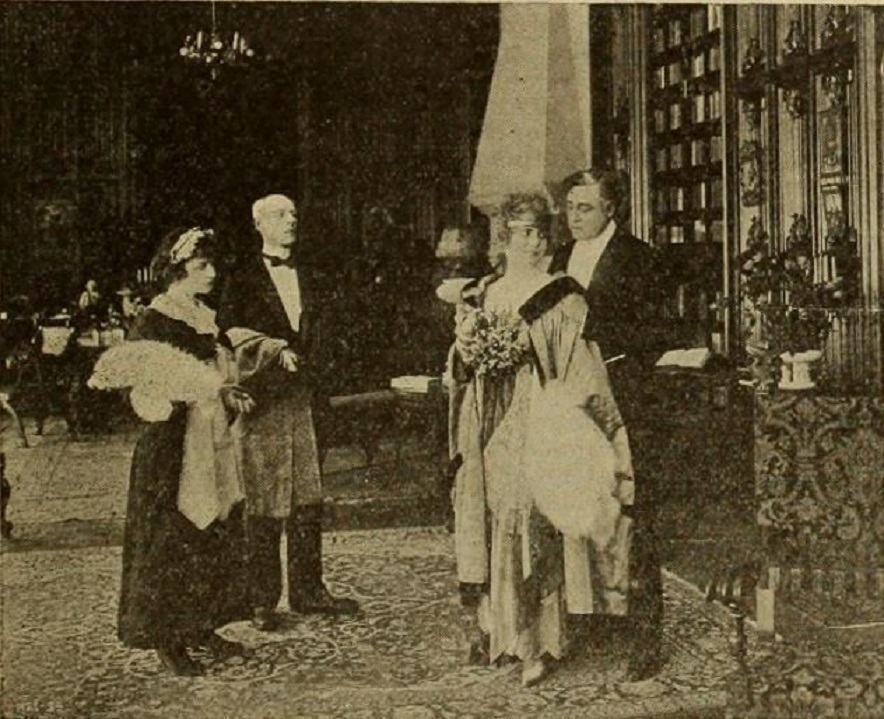
At its core, Out of the Wreck is a story of redemption and the transformative power of forgiveness. Agnes's past is not erased, but it is understood and accepted. Aldrich's love for her is strengthened, not diminished, by the knowledge of her ordeal. This speaks to a deeply human desire for acceptance, even in the face of profound personal history. The film posits that true love can transcend societal judgment and past transgressions, particularly when those transgressions were born of necessity. This theme resonates strongly with other narratives of the era that explored complex moral landscapes, such as The Secret Orchard or Whoso Findeth a Wife, which often dealt with the consequences of hidden identities or past mistakes on marital bliss.
The film also subtly critiques the sensationalism inherent in certain aspects of journalism, contrasting it with a more empathetic approach. Duncan and Sheldon's decision to bury the story is a powerful statement about the human element overriding the professional imperative for a 'scoop.' This moral victory elevates the film beyond a mere melodrama, infusing it with a thoughtful commentary on ethics and compassion. It reminds us that sometimes, the greatest act of journalism is knowing when to withhold, when to protect, and when to prioritize human well-being over a headline.
The cast, though largely working within the stylistic conventions of the era, delivers performances that are both impactful and nuanced. Kathlyn Williams, in particular, carries the emotional weight of the film with remarkable grace. Her portrayal of Agnes is multi-layered, evolving from a woman living under the shadow of a secret to one who finds solace and deeper love through its revelation. William Conklin's James Aldrich is a steadfast figure, his quiet strength providing a vital anchor for Agnes. The dynamic between them is palpable, a testament to the actors' ability to convey profound emotion without the aid of dialogue.
The success of Out of the Wreck can also be attributed to the skillful writing of Maude Erve Corsan and Gardner Hunting. Their ability to construct a compelling narrative that sustains tension and delivers emotional payoffs without the crutch of spoken words is commendable. The story unfolds with a natural progression, each revelation building upon the last, leading to a satisfying and morally uplifting conclusion. They understood the power of visual storytelling and the necessity of strong character arcs in a medium still defining its language.
Comparing this narrative construction to other films of the period, we see a diverse approach to storytelling. While some films like The Flying Torpedo might lean into action and spectacle, Out of the Wreck opts for an intimate, character-driven drama. Similarly, while Young Romance might focus on the lighter side of love and courtship, Out of the Wreck delves into the complexities and trials that can strengthen a mature relationship. The writers expertly balance the political thriller aspects with the profound personal drama, making the film a rich and multifaceted experience.
The film's exploration of societal judgment versus personal truth is particularly poignant. Agnes's fear of exposure is not just about political ruin but about the crushing weight of public opinion. In an era where women's reputations were often fragile and easily tarnished, her story speaks to a universal fear of being misunderstood or condemned based on incomplete information. This theme is echoed in many silent films where societal constraints and expectations played a crucial role in character development, such as The On-the-Square Girl, which also explored a woman's struggle with reputation.
Ultimately, Out of the Wreck stands as a powerful example of silent cinema's capacity for sophisticated storytelling. It's a film that asks profound questions about truth, justice, and the boundaries of compassion. It demonstrates that even in the most challenging circumstances, love and understanding can emerge triumphant, forging bonds that are stronger for having weathered the storm. For aficionados of early film, or indeed anyone interested in the enduring power of human drama, this film offers a richly rewarding experience, reminding us that the 'wreck' of a painful past can sometimes be the very foundation upon which a more profound and resilient future is built.
The legacy of films like Out of the Wreck lies not just in their historical significance but in their continued ability to move and provoke thought. They are a window into the cultural mores and anxieties of their time, yet their core themes remain timeless. The struggle for reputation, the weight of a secret, the redemptive power of love, and the ethical responsibility of the press – these are narratives that continue to captivate audiences across generations.
The nuanced performances, particularly Kathlyn Williams' portrayal of Agnes, elevate the film beyond a simple melodrama. Her character is not merely a victim but a survivor, her past a testament to her strength rather than a mark of shame. This portrayal contributes to a burgeoning understanding of complex female characters in cinema, moving beyond simplistic archetypes. This complexity can be seen in other films that explored the inner lives of women, such as The Cloven Tongue, which often delved into personal struggles and societal expectations.
The resolution of the film, where the journalists choose empathy over sensationalism, offers a refreshing take on the media's role. It's a hopeful message, suggesting that human decency can, at times, override professional ambition. This is a powerful counterpoint to many contemporary narratives that often paint the press in a more cynical light. It provides a valuable historical perspective on how journalism was perceived, and perhaps, how it aspired to be.
In conclusion, Out of the Wreck is more than just a silent film; it is a profound human drama, meticulously crafted and powerfully performed. It invites us to consider the hidden lives we lead, the choices we make under duress, and the transformative power of understanding and forgiveness. It stands as a testament to the enduring artistry of silent cinema and its capacity to tell stories that resonate deeply, long after the projector lights dim.
IMDb 5.1
1929
Community
Log in to comment.