DbcultAccessing Vault...
Cult Review
Senior Film Conservator
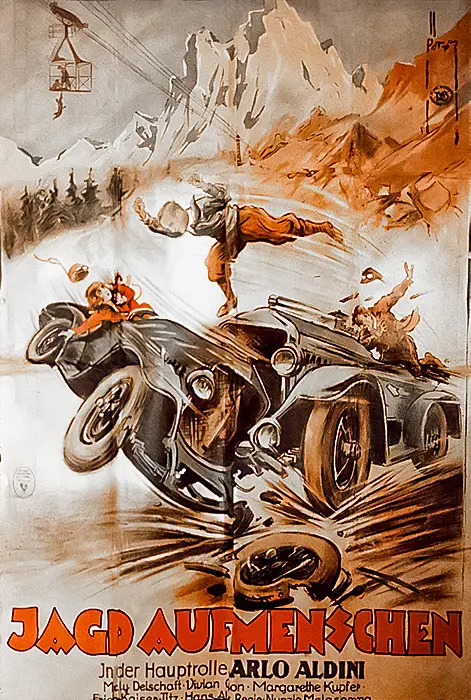
Is Hunted People worth your time in the modern era? Short answer: yes, but only if you are willing to trade narrative speed for atmospheric dread.
This film is for the cinephile who finds beauty in the shadows of the Weimar Republic and the historian interested in the evolution of the 'street film' genre. It is absolutely not for anyone who requires the frantic editing of a modern thriller or a neatly resolved moral arc. It demands patience. It requires you to look past the flicker of the 1926 celluloid to see the raw human anxiety underneath.
1) This film works because it creates an overwhelming sense of environmental pressure, where the city itself feels like a predator closing in on the protagonist.
2) This film fails because its middle act relies too heavily on repetitive hide-and-seek tropes that can test the focus of a contemporary audience.
3) You should watch it if you want to witness the early, magnetic screen presence of Hans Albers before he became the definitive face of German cinema.
Hunted People (Gehetzte Menschen) emerges from a specific moment in German history when the optimism of the early twenties began to curdle into the 'New Objectivity.' While films like The Dragon Painter were exploring lyrical, almost ethereal visual palettes, director Erich Waschneck was more interested in the soot of the railway and the dampness of the cellar.
The cinematography doesn't just record the action; it stalks it. Consider the scene where Jan (Carlo Aldini) hides behind a stack of crates as the police pass. The camera doesn't stay at a safe distance. It pushes in, capturing the beads of sweat and the frantic movement of his eyes. This isn't the theatrical staging seen in Pilar Guerra; this is something more modern, more anxious. It works. But it’s flawed.
The lighting in these sequences is masterful. It avoids the high-contrast expressionism of the early decade for a more naturalistic, yet still oppressive, gray scale. The streets are not just locations; they are characters. They are cold, indifferent, and wide enough to make a man feel small, yet narrow enough to trap him.
Carlo Aldini brings a unique energy to the role of Jan. Known for his 'Maciste' style physical roles, Aldini doesn't play Jan as a traditional victim. He is a man of action who finds himself in a situation where action is useless. There is a specific moment when he tries to force a heavy door in a warehouse—the muscles in his back strain, and for a second, the film feels like a documentary of physical exertion. It is a stark contrast to the more delicate performances found in contemporary dramas like The Little Samaritan.
Then there is Hans Albers. Even in this early supporting role, Albers commands the screen with a sneer that would eventually make him a superstar. His character represents the predatory nature of the urban underbelly. He doesn't need to shout to be threatening. He simply leans against a doorway, lighting a cigarette, and you understand that Jan’s problems are only beginning. The chemistry between the desperate fugitive and the calculating opportunist provides the film's most electric tension.
The biggest hurdle for Hunted People is its second act. Curt J. Braun’s script is lean, but the directorial choices occasionally lean into the repetitive. We see Jan run. We see Jan hide. We see the police search. Then we repeat. While this effectively builds a sense of exhaustion, it can also lead to a sense of viewer fatigue. It lacks the variety of emotional beats found in a film like The Battling Orioles, which balances its tension with lighter moments.
However, the pacing issues are often rescued by the supporting cast. Margarete Kupfer and Maly Delschaft provide a necessary emotional grounding. Their faces tell the story of the people left behind by the 'hunted' men—the mothers and lovers who bear the social stigma long after the fugitive has moved on. These domestic interludes provide a much-needed breath of air in an otherwise suffocating narrative.
If you are looking for a historical artifact that captures the transition from expressionism to realism, then yes, Hunted People is a vital watch. It serves as a bridge between the dreamlike nightmares of the early 1920s and the gritty social realism that would define the end of the decade. It is a film that values atmosphere over plot, making it a feast for those who appreciate visual storytelling.
Pros:
Cons:
When we look at Hunted People alongside The Last Card, we see two different approaches to the 'man on the run' trope. While The Last Card leans into the gambling and high-stakes risk of the criminal underworld, Hunted People is more interested in the mundane misery of the escape. It is less about the 'thrill' of the chase and more about the 'weight' of it.
Even a film like Paddy the Next Best Thing, which operates in a completely different genre, highlights what Hunted People lacks: a sense of levity. Waschneck’s film is relentlessly dour. There is no relief. This is a bold choice, but one that may alienate those used to the more balanced emotional palettes of American silent cinema from the same period.
Hunted People is a bruising piece of cinema. It doesn't ask for your sympathy; it demands your attention. While it may stumble in its pacing, the visual commitment to portraying a man under siege is undeniably powerful. It is a gritty, unwashed ancestor to the modern noir. It isn't always pleasant, but it is always honest in its bleakness. It is a testament to the power of silent film to convey universal fears—the fear of being watched, the fear of being caught, and the fear of having nowhere left to go.
"A haunting reminder that in the concrete jungle of the 1920s, the only thing more dangerous than the law was the silence of the streets."
IMDb 6.8
1932
Community
Log in to comment.