DbcultAccessing Vault...
Cult Review
Senior Film Conservator
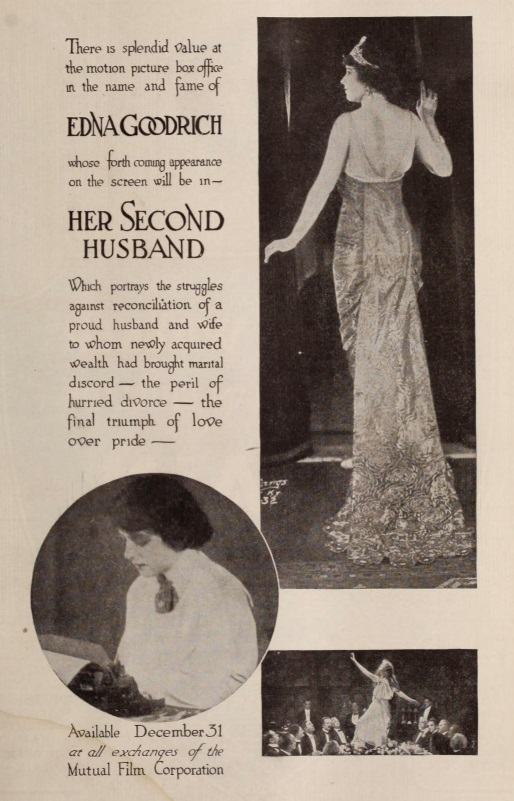
Imagine a film that begins where most romantic melodramas end—at the altar—and then spends its remaining reels asking why anyone would willingly walk back down that aisle. Hamilton Smith’s screenplay for Her Second Husband (1920) is a sly, pre-Code thought experiment smuggled into a post-Victorian America still tipsy on bootleg gin. It is less a love story than an autopsy of matrimony, performed with flapper-era scalpels: divorce decrees, masquerade masks, and the lingering scent of l’ennui.
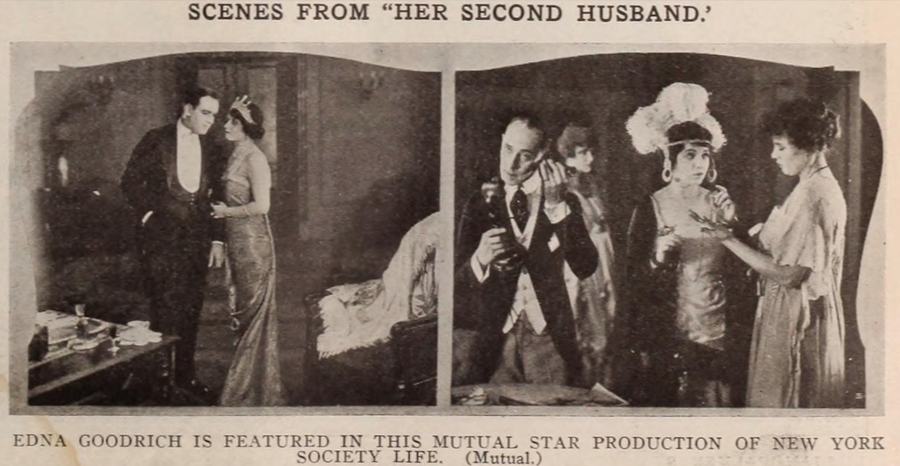
The opening tableau is a dinner party that feels like a Dantean soirée: tuxedoed moguls, their mistresses dripping pearls, and Helen Kirby—played by Edna Goodrich with the poised melancholy of a woman who has memorized every crack in the chandelier—seated at the head of the table like a reluctant saint. Director Richard Neill keeps his camera at medium distance, refusing close-ups, as if to say: observe the ecosystem, not the individual. The men toast to arbitrage; the women toast to nothing. When Helen finally murmurs her exhaustion, John Kirby (William B. Davidson) responds with the film’s brutal thesis: “Adapt or abdicate.” She chooses abdication, and the screen blooms with the intertitle’s white-on-black ferocity: “A decree nisi—freedom inked in mourning.”
What follows is a picaresque of employment stitched together by the thread of male presumption. Each job is a fresh humiliation: first the stenographer whose shorthand must survive the boss’s wandering hand (c.f. the sexual-economic coercion in Zaza), then the mannequin whose body is literally commodified. Goodrich’s performance modulates like a concerto—her shoulders droop in the office, her spine straightens among the gowns, but her eyes never relinquish that glaze of watchful distrust. Cinematographer Miriam Folger (one of the rare female DPs of the era) shoots the dress-shop sequences through gauze, transforming silk into mist, labor into narcolepsy.
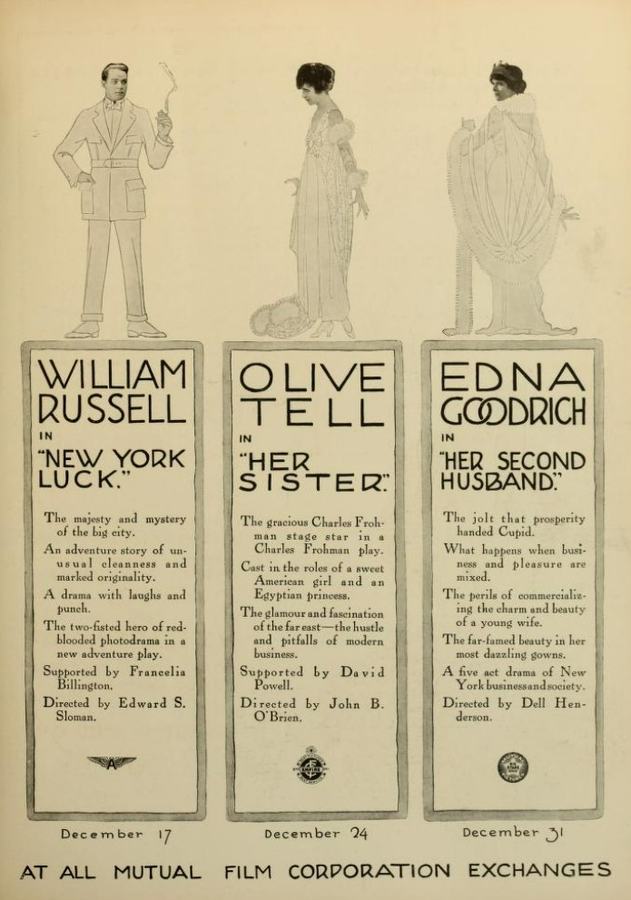
Enter the masquerade ball, a set piece that feels lifted from a Lubitsch dream. The camera glides past harlequins, Pierrots, a Napoleon who might have marched out of Wolfe; or, The Conquest of Quebec. Helen’s mask is a butterfly half-devoured by lace—an apt emblem for a woman both emerging and ensnared. When she recognizes John’s gait (a swagger she could identify blindfolded), the film indulges in a dolly-in so gradual it feels like heartbreak in slow motion. They dance; the orchestra swells with a foxtrot whose tempo mirrors her pulse. The irony: only in anonymity can they rediscover intimacy.
Post-ball, John’s courtship is a series of ornate mea culpas—flowers, pearls, a yacht ride shot against rear-projected seascapes so lurid they border on surreal. Yet Smith’s script refuses the easy absolution. Helen’s final acceptance arrives not with dew-eyed forgiveness but with the steely calculation of a gambler who knows the deck is stacked yet plays anyway. The closing intertitle lands like a shiver: “To be a wife, again, is to survive by strategy, not submission.” Fade-out on the couple ascending a staircase—ascending, perhaps, to another gilded cage whose door Helen now holds the key to.
The film’s palette is predominantly monochrome, but prints struck for upscale theaters featured hand-tinted amber flares during the ballroom scenes—each frame a smoldering ember. Notice how the tinting disappears the moment Helen removes her mask: reality, once again, bleached of illusion. This chromatic gimmick predates the emotional color coding of One Wonderful Night by a full year, suggesting an avant-garde confidence rarely credited to Poverty Row studios.
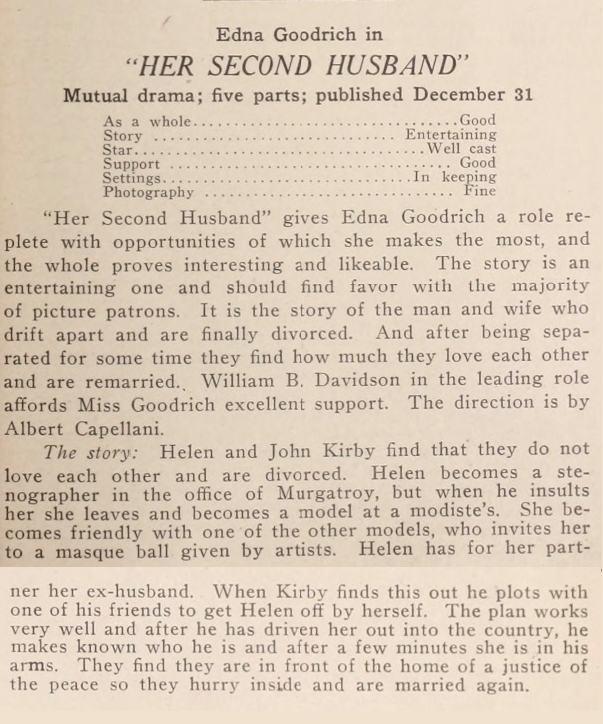
Comparative lensing: where The Bondage of Fear traps its heroine in expressionist shadows, Her Second Husband opts for cavernous negative space—rooms so over-scaled they swallow voices. The result is a horror of vacancy rather than entrapment, a prescient critique of American domestic monumentality that would later find echo in Citizen Kane’s Xanadu.
William B. Davidson, better known for gangster heavies, imbues John with the oily magnetism of a man who has never heard the word no except from his broker. Watch the way his fingers drum against his thigh when Helen first utters “divorce”—the tempo reveals a capitalist’s terror at asset forfeiture. Conversely, Edna Goodrich operates in the register of stillness; her greatest emotive tool is the almost imperceptible twitch at the corner of her mouth—half-smile, half-scar—when she signs the alimony papers. It is the look of someone signing a treaty after losing a war she never agreed to fight.
Hamilton Smith, a newspaperman turned scenarist, peppers the intertitles with epigrams sharp enough to shave with. “Marriage is a corporation whose shareholders sleep together,” reads one card, anticipating The Awful Truth by nearly two decades. More radical still is the film’s refusal to punish Helen for her sexual autonomy; she exits each predatory liaison unscathed, her virtue neither fetishized nor salvaged. In contrast, Diamonds and Pearls martyrs its heroine for similar transgressions—evidence that Her Second Husband occupies a subversive pocket of pre-Code liberalism.
Surviving cue sheets recommend pairing the film with “The Vamp”—a foxtrot whose staccato brass syncs with the stenographic clatter of Helen’s typewriter. Contemporary screenings have experimented with live lo-fi overlays—cello loops, typewriter percussion, sampled heartbeats—transforming the experience into hauntological cabaret. The result underscores what the original exhibitors knew: silence is never silent; it is the audible throb of everything unsaid.
Trade papers of 1920 praised the film’s “ultra-modern candor,” though Variety carped that its finale “slackens into the matrimonial mire it sought to lampoon.” Today, the picture reads as a proto-feminist Bluebeard variant, its cyclical structure anticipating the marital ouroboros of Scenes from a Marriage. Archivists rank it alongside And the Law Says as a lodestar of early social-issue cinema, though prints remain scarce; only a 35mm tinted nitrate survives at MoMA, inaccessible to streaming services. Thus, the film persists as rumor as much as artifact—an apt fate for a narrative about masquerade and erasure.
Quad Cinema’s Silent Divas retrospective occasionally tours a restoration; keep an eye on their calendar. Until then, pair a Blu-ray of The White Terror (similar marital claustrophobia) with Jennifer Parchesky’s essay “Vamping the Contract: Divorce Cinema 1915-1925” for contextual scaffolding. And if you crave more Edna Goodrich, hunt down the obscure Fighting Bob—a gender-bending western that proves her range extended far beyond suffering in mink.
Ultimately, Her Second Husband is less a relic than a dare: to consider how many masks we still don in the boardrooms and bedrooms of this century. Watch it—if you can—and discover why the most terrifying thing about cyclical history is how seamlessly it masquerades as progress.
IMDb —
1933
Community
Log in to comment.