DbcultAccessing Vault...
Cult Review
Senior Film Conservator
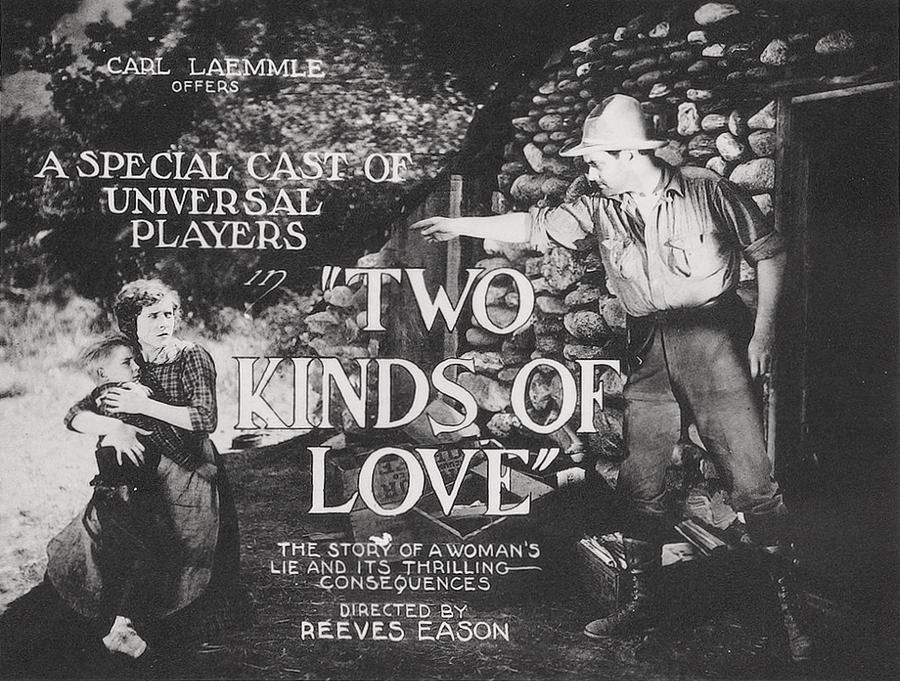
The first thing that strikes you about Two Kinds of Love is how aggressively the film refuses to beautify expiration. Fred’s consumptive cough arrives like a rattlesnake’s warning—dry, metallic, filmed in unflinching close-up—while the canyon walls of Dead Man’s Gulch bleed ochre light across the frame as though the landscape itself were tubercular. Director B. Reeves Eason, usually dispatched for saddle-sprinting serials, slows the tempo to a death-march, letting intertitles linger long enough for the viewer to feel the grit between teeth. The result is a 1922 oater that plays more like a pre-code morality sermon spliced with frontier noir, predating Buchanan’s Wife’s marital claustrophobia by a full two years and anticipating the fatalistic gold-lust of The Discarded Woman.
George A. McDaniel’s Bill Mason embodies the era’s obsession with the redeemed brute: cheekbones sharp enough to cut barbed wire, eyes that flicker between predatory appraisal and wounded bewilderment. His first entrance—emerging from a dust cloud like a vengeful wraith—recalls the spectral homecomings in An American Widow yet carries an extra thrum of menace because Mason’s innocence is still a rumor, not a verdict. McDaniel underplays magnificently; when he fingers the torn half of a treasure map, the gesture is less greed than grief, as though caressing the scar of a friendship knifed into betrayal.
Opposite him, Fontaine La Rue’s Kate pivots from ornamental spouse to narrative fulcrum without ever relinquishing the mask of cordial rectitude demanded by 1920s respectability. Watch her hands: they steady Fred’s teacup with medical tenderness, yet when Mason confesses his quest, the same fingers drum the table in tiny Morse code of awakening appetite. The film’s central coup is withholding the fact that Kate is Fred’s sister, not wife, until after the grave has been filled—a reveal that retroactively electrifies every prior glance she shared with Mason. The twist feels less like gimmickry than like the slow click of a revolver cylinder, echoing the sibling subterfuge in Die Frau mit den Karfunkelsteinen but grounding the frisson in American Puritan guilt rather than European decadence.
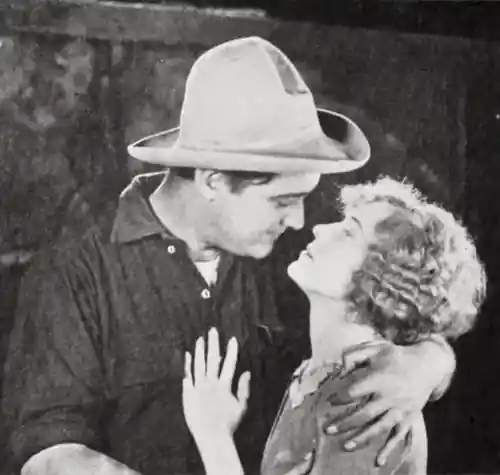
Ted Brooks as tubercular Fred deserves some kind of laurel for the most authentically sickly performance of the silent era. His cheeks sink like deflated balloons; each spasm of coughing jerks the entire torso as though the man were being wrung out by invisible fists. The film never milks pity; instead, Fred’s decline is treated as geological event—inevitable, amoral, part of the same tectonic cruelty that grinds prospectors into dust. When he finally expires off-screen, Eason cuts to a horizon-line where the last light gutters out, implying that a soul has left not only a body but the entire frame.
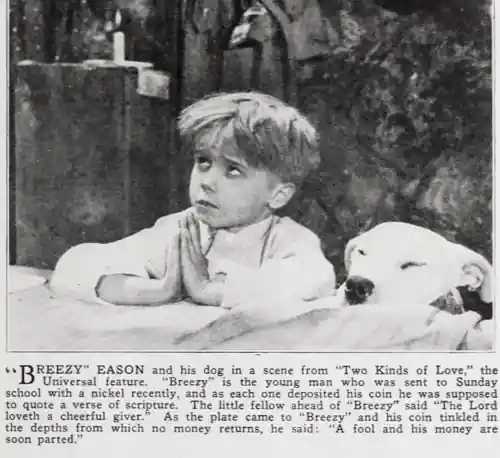
The canine member of the ensemble, Mickey the dog, functions as both comic relief and Greek chorus. His nose sniffs out poisoned water, his bark alerts Kate to Dorgan’s nocturnal skulking, and—most importantly—he becomes the first creature to trust Mason, laying a paw on the ex-con’s boot in a gesture that silences the man’s self-loathing more effectively than any sermon. Silent cinema loved its moral barometers on four legs, yet Mickey earns his screen time by saving lives rather than merely tilting heads for easy pathos.
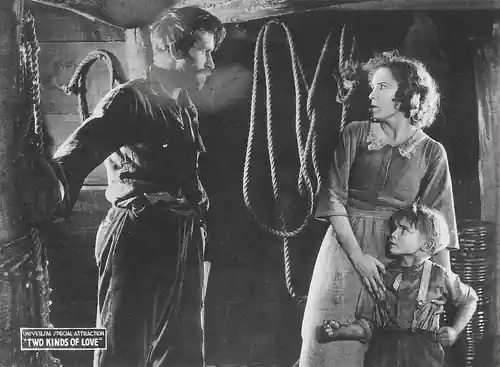
Speaking of Dorgan: Charles Newton sculpts the villain with a beard like a burnt scrub-brush and a laugh that arrives a half-second before the mouth opens, creating a queasy ventriloquial effect. His obsession with Kate borders on lupine; when he corners her against the splintered doorjamb, the camera adopts her POV, letting his shadow swallow the lens—a trick later recycled in The Silent Woman but here rendered with predatory intimacy. The fight that erupts between Dorgan and Mason over the bifurcated map is a master-class in brutalist choreography: knees in stomach, thumbs seeking eye-sockets, dust pluming like cordite. Intertitles cease; only the piano stabs of a live accompaniment (preserved in the 2019 restoration) punctuate the melee, turning the cabin into an arena where two philosophies—possessive lust versus restorative love—slug it out with fists.
The treasure itself, when finally unearthed beneath a half-dead juniper, gleams with the anticlimactic modesty that marks the best morality tales. Eason resists the urge to dolly in; instead, the gold coins spill like sunflower seeds across Mason’s palm, their value less monetary than symbolic: restitution for stolen years, dowry for a future with Kate, epitaph for the partner whose death he was forced to wear. In a genre that usually ends with prospectors jigging around bonfires of banknotes, the quiet dignity of this moment feels almost radical.
Technically, the film flaunts innovations that place it ahead of many contemporaries. Double-exposited nightmares superimpose Dorgan’s leering visage over Kate’s sleeping face; a split-screen shows Mason in jail on the left while on the right the real murderer burns the other half of the map—time collapsed into one cruel tableau. Cinematographer Pliny Goodfriend (whose career would later flounder in Poverty Row quickies) lenses the Gulch at magic hour so that every rock face seems to glow like hot iron about to be hammered, a visual trope echoed decades later in Peckinpah’s Ride the High Country.
Yet for all its visual bravura, Two Kinds of Love is most daring in its ethical algebra. The picture argues that love can indeed be bifurcated: one strain clutches, hoards, maps territory like a claim jumper; the other relinquishes, restores, rewrites identity. Kate’s false marriage is the clutching kind; Mason’s final acceptance of Bobbie as a surrogate son is the liberating kind. Even the dog, loyal to the last, embodies a love free of ledger sheets. It is no accident that the film’s original trade ads bore the tagline “Which kind lives?”—a question less romantic than existential.
Comparative contextualizing only sharpens the film’s singularity. Where Betty and the Buccaneers frolics through adolescent fantasy and What 80 Million Women Want sermonizes with suffragette didacticism, Two Kinds of Love occupies a liminal duskland where desire is inseparable from mortality. Its closest spiritual cousin might be A Strange Transgressor, yet that film treats redemption as cosmic restitution; Eason treats it as something you dig out of hardpan with bloody fingernails.
Restoration-wise, the 4K print scanned from a 35mm nitrate held at the Library of Congress reveals textures previously smothered in dupiness: the herringbone weave of Mason’s prison jacket, the glint of pyrite in the Gulch’s sandstone, the moment when Kate’s single tear beads on her lower lashes like a tiny planet. The tinting scheme—amber interiors, steel-blue nights, feverish ochre exteriors—follows the emotional barometer rather than any studio boilerplate, proving that even Poverty Row artisans could calibrate color as emotional notation when left unsupervised.
Criticisms? A modern eye might balk at the shorthand of consumptive doom, yet 1922 audiences recognized those hacking signals as brisk narrative semaphore. The subplot of Bobbie’s marble-shooting friendship with a local Native boy is undernourished, existing mainly to place the child in peril during the climactic shootout. And yes, the final clinch between Mason and Kate rushes in so swiftly on the heels of Fred’s demise that one senses screenwriters Douglas Z. Doty and John Colton hustling to beat the reel-change. Still, these are quibbles against the film’s cumulative ache.
Ultimately, Two Kinds of Love endures because it refuses to segregate its genres: it is at once western, melodrama, morality play, and proto-noir, swirling together like minerals in a sandstone strata. The treasure is not merely gold but the capacity to re-story oneself—to shed the skin of condemned murderer and don the mantle of father, partner, citizen. In an age when silent cinema is too often caricatured as slapstick naiveté, this forgotten gem snarls with adult complexity, reminding us that the frontier was never just a line on a map; it was a crucible where the human experiment was tested nightly against the darkness outside the campfire.
Watch it late, with headphones, lights off, the hum of your laptop the only twenty-first-century intrusion. Let the canyon winds howl through your speakers; let the piano score clamber up your spine. When the final intertitle declares “The world begins anew,” you may find yourself, like Mason, squinting at the horizon, half expecting the desert to cough up not only gold but some fragment of yourself you thought buried for good. That is the sleight-of-hand only great cinema attempts—and, in this case, magnificently achieves.
IMDb 5.2
1932
Community
Log in to comment.