DbcultAccessing Vault...
Cult Review
Senior Film Conservator
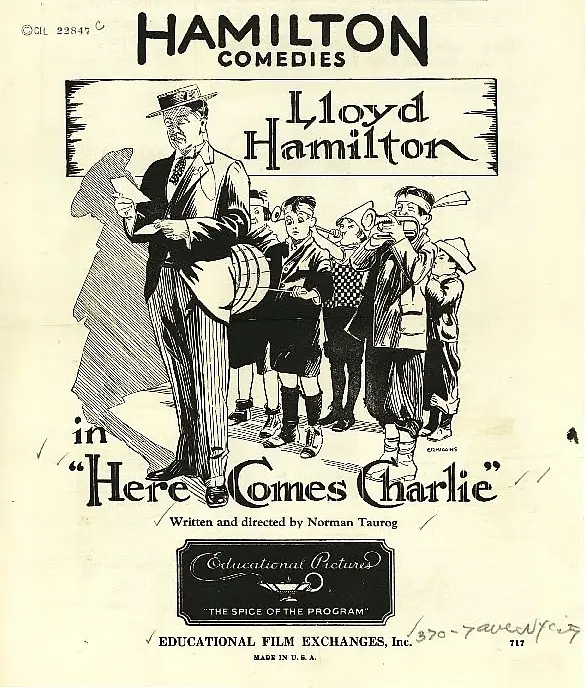
Is 'Here Comes Charlie' worth a watch in the 21st century? Short answer: yes, but with significant caveats that speak more to its historical value than its universal comedic appeal. This early silent comedy is a fascinating, if sometimes frustrating, peek into the nascent days of slapstick, ideal for film historians, silent film enthusiasts, and those curious about the foundational elements of screen comedy. It is decidedly not for viewers seeking modern comedic timing, sophisticated narrative depth, or pristine restorations.
This film works because of its raw, untamed energy and the sheer physical commitment of its lead, Lloyd Hamilton, who navigates the escalating chaos with an almost unsettling blend of confidence and clumsiness. The final bargain sale sequence, in particular, showcases a delightful, if predictable, descent into comedic anarchy that was a hallmark of the era.
This film fails because its plot is thin even by silent short standards, serving merely as a flimsy scaffold for gags that, while historically significant, often feel repetitive or overly simplistic to a contemporary audience. The pacing, while energetic, sometimes feels less like a comedic build-up and more like a rushed progression from one predictable mishap to the next.
You should watch it if you are deeply interested in the evolution of silent film comedy, wish to explore the early career of talents like Lloyd Hamilton, or simply enjoy the unadulterated, often brutal, physical humor that defined the era before more nuanced comedic structures emerged. It offers a window into a bygone cinematic age, warts and all.
Norman Taurog, credited as one of the writers for "Here Comes Charlie," was a prolific director who would later win an Oscar, but in this early silent short, his directorial hand is less about finesse and more about kinetic energy. The film moves with a relentless, almost breathless pace, a common characteristic of silent comedies aiming to pack as many gags as possible into a limited runtime. There's little room for introspection or character development; the narrative is merely a vehicle for escalating comedic scenarios.
The film’s pacing is its most defining directorial choice. From Charlie’s initial surge of confidence to his ill-fated proposal and the ensuing corporate christening, events unfold with a rapid-fire succession that leaves little time for the audience to dwell. This high-speed approach culminates in the infamous "one-hour bargain sale" sequence, which is less a scene and more a meticulously choreographed riot. Taurog orchestrates a genuine sense of pandemonium, with shoppers surging, products flying, and Charlie caught in the eye of the storm. The camera, while largely static by today's standards, is positioned to capture the breadth of the chaos, creating wide shots that emphasize the sheer number of extras and the frenetic movement.
While effective in generating laughs through sheer momentum, this unyielding pace also contributes to the film's episodic feel. Each gag, from the bottle-breaking incident – a moment of accidental slapstick brilliance that perfectly encapsulates Charlie’s unfortunate knack for disaster – to the increasingly desperate attempts to control the sale, feels somewhat disconnected from a larger emotional arc. It's a series of comedic vignettes strung together, rather than a cohesive story. This isn't a flaw in the context of its time, but it certainly dates the film for modern sensibilities accustomed to more intricate narratives.
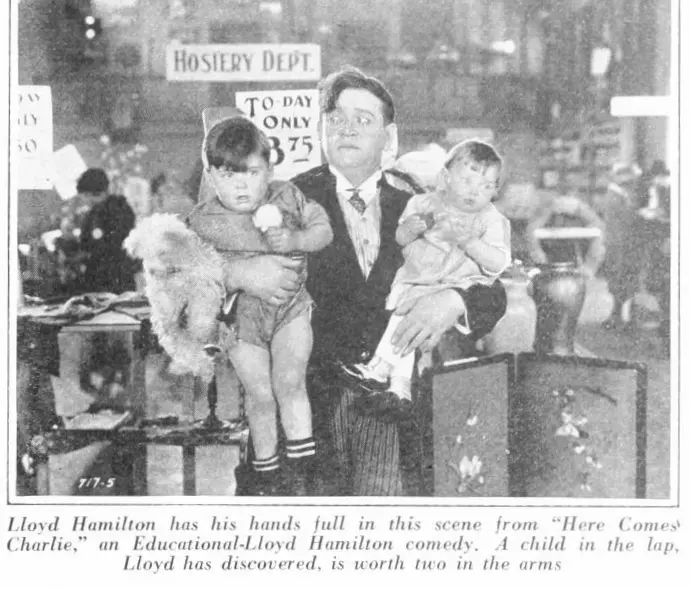
Taurog’s direction in "Here Comes Charlie" serves as a fascinating artifact of early filmmaking, prioritizing immediate comedic impact over nuanced storytelling. It’s a testament to the era’s understanding that motion and physical comedy were paramount, even if it meant sacrificing a deeper emotional core. The film doesn't waste a single frame; it’s all about the next laugh, the next pratfall, the next moment of delightful disarray.
Lloyd Hamilton, though perhaps not as universally recognized as some of his silent-era contemporaries, delivers a performance in "Here Comes Charlie" that is both endearing and utterly chaotic. Hamilton’s Charlie is a character defined by an almost pathological optimism, a man whose confidence is inversely proportional to his competence. This dynamic forms the bedrock of the film's humor, allowing Hamilton to pivot effortlessly from swaggering self-assurance to bewildered desperation.
His physical comedy is the film’s undeniable highlight. Hamilton possesses a rubbery physicality, capable of exaggerated reactions and precise pratfalls. Observe his reaction to Virginia's father's rejection of his proposal: a momentary slump, a flicker of disbelief, quickly replaced by a renewed, if misguided, determination. This ability to convey complex emotional shifts through purely physical means is a hallmark of great silent acting. He doesn't just fall; he crumples with a specific comedic intent.
The bottle-breaking scene is a masterclass in accidental comedy, largely due to Hamilton’s commitment. His wide-eyed innocence, followed by a look of sheer terror and then a pathetic attempt to feign ignorance, is genuinely funny. It's a moment that defines Charlie’s character: well-meaning but fundamentally a magnet for disaster. During the bargain sale, Hamilton is a whirlwind of flailing limbs and frantic expressions, his face a canvas of mounting panic as the situation spirals out of control. He is the ultimate everyman overwhelmed by forces beyond his control, a relatable figure despite the outlandish circumstances.
What makes Hamilton’s performance particularly compelling is his refusal to play Charlie as a complete idiot. There’s a persistent spark of ingenuity, however misguided, in his eyes. He’s trying, desperately trying, to make things right, which makes his inevitable failures all the more humorous. His work here suggests a performer who understood the nuances of silent comedy, capable of both broad physical gags and subtle facial cues that invite audience empathy even as they laugh at his predicament. It’s a performance that, in many ways, foreshadows the more sophisticated characterizations of later comedic actors, proving that Hamilton was a talent deserving of greater recognition.
The visual language of "Here Comes Charlie" is, as expected for a 1920s silent short, functional and direct. Cinematographer George Davis employs mostly static, wide shots that prioritize visibility of the action rather than artistic flair. This approach was standard for the era, ensuring that the physical comedy and character reactions were clearly presented to the audience without distracting camera movements or complex compositions. The focus is squarely on the performers and the unfolding chaos.
Despite the technical limitations, there are moments where the framing effectively enhances the comedic impact. For instance, the wide shot of the department store floor during the bargain sale emphasizes the sheer scale of the pandemonium, allowing the viewer to take in multiple simultaneous gags. The bustling crowd, a sea of flailing arms and determined faces, is a character in itself, beautifully captured to convey the overwhelming nature of Charlie's task. Close-ups are used sparingly but effectively, primarily to highlight Hamilton's expressive face, particularly during moments of shock, despair, or misguided triumph.
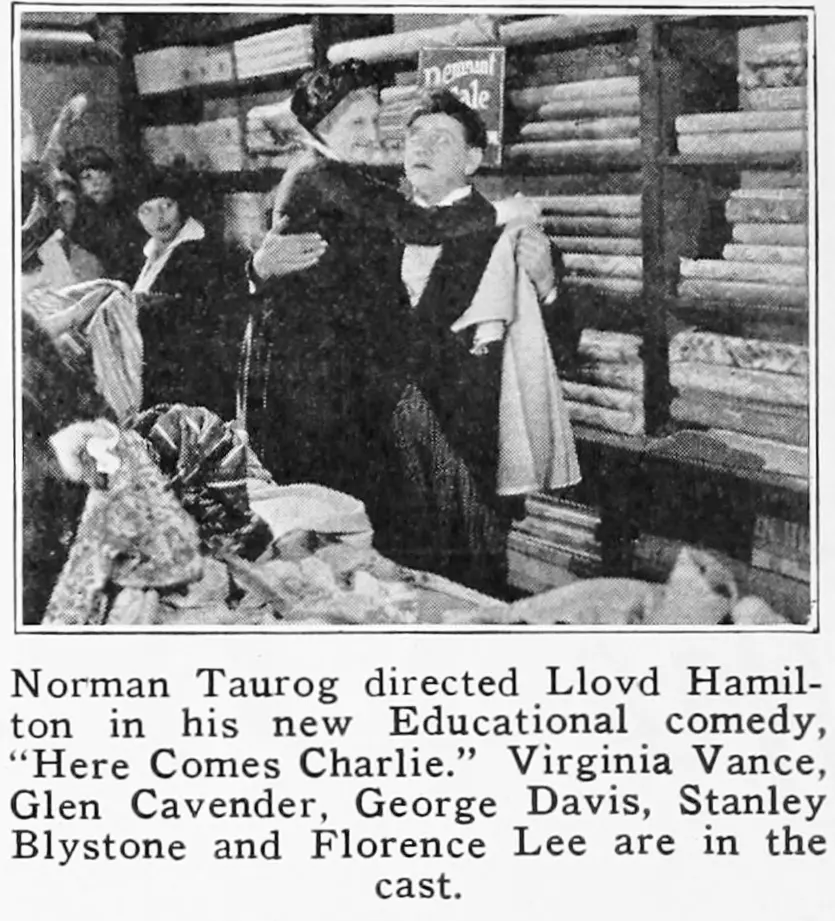
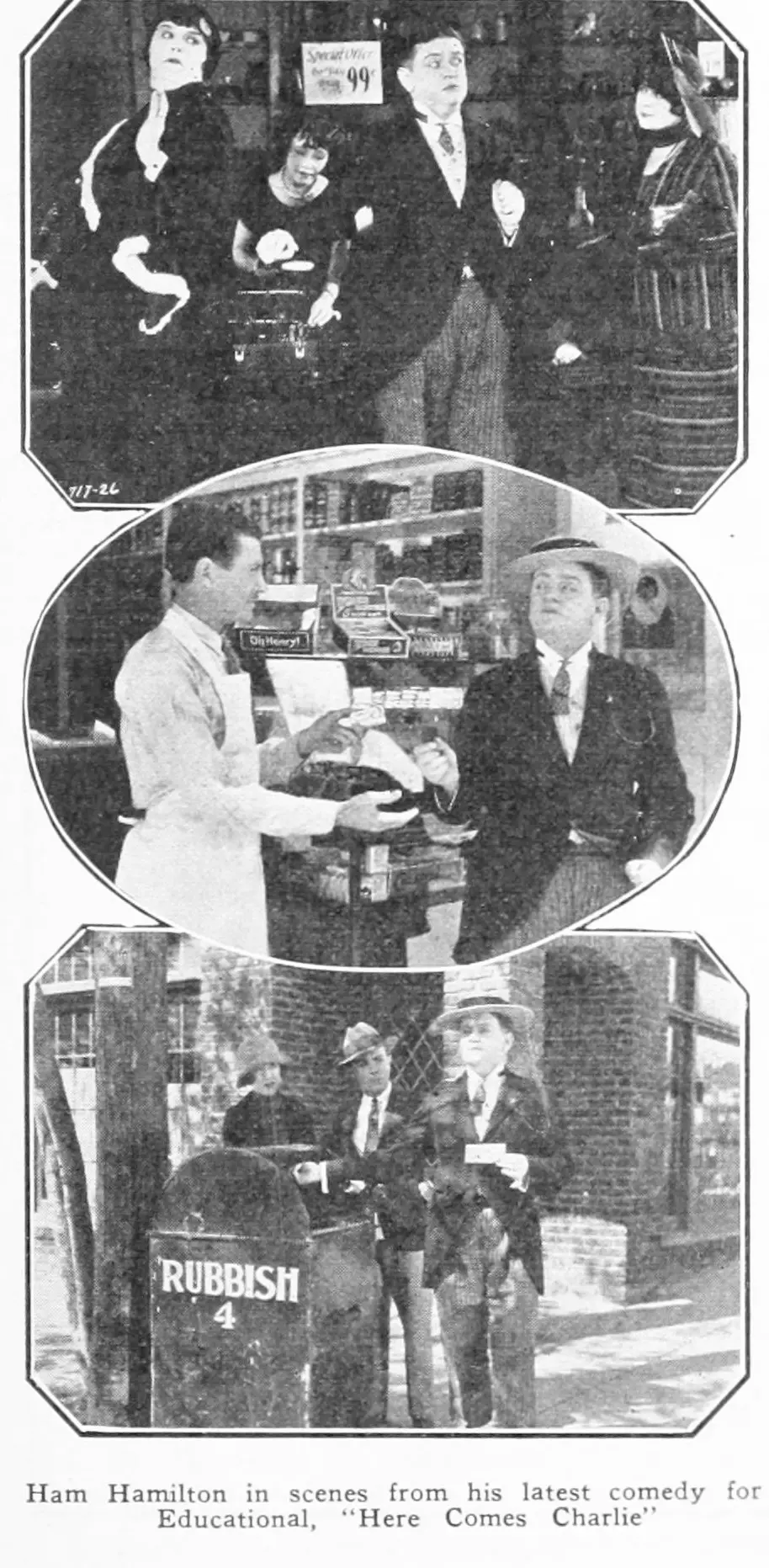
The set design, particularly the department store, is surprisingly elaborate for a short film. It's clear that significant effort went into creating a believable, bustling retail environment. The various departments, the displays of goods, and the sheer size of the main floor all contribute to the film's sense of realism, which in turn makes the eventual descent into chaos all the more impactful. This isn't just a backdrop; it's a living, breathing space that becomes a victim of Charlie's ineptitude and consumer frenzy.
The lighting is straightforward, aiming for clarity and visibility, typical of the studio practices of the time. There are no dramatic shadows or intricate lighting schemes; the goal is simply to illuminate the action. While not groundbreaking visually, the film's cinematography and set design successfully create a convincing world for Charlie's misadventures, proving that even early silent films understood the importance of environment in supporting the narrative, however simple. It’s a testament to the foundational principles of filmmaking being established, where clear visual storytelling was paramount.
The plot of "Here Comes Charlie" is, by modern standards, exceedingly simple: a string of unfortunate events befalling an overly ambitious man. Yet, within its straightforward structure, one can discern thematic undertones that speak to the social and cultural landscape of the early 1920s. Charlie's initial confidence, fueled by his new job as a floorwalker, isn't just personal hubris; it reflects a broader societal belief in upward mobility and the promise of the burgeoning consumer economy. The department store itself is a symbol of modernity, opportunity, and the new American dream.
Charlie's proposal to Virginia, the owner's daughter, immediately introduces a class element. His rejection isn't just personal; it's a reinforcement of social boundaries. The daughter of the store owner is clearly out of reach for a mere floorwalker, no matter his confidence. This subtle commentary on class distinctions, even in a slapstick comedy, adds a layer of unexpected depth. It’s a reminder that even in the most lighthearted fare, societal norms and aspirations often simmer beneath the surface.
The true genius of "Here Comes Charlie" might not be its intentional comedy, but its accidental documentation of early 20th-century consumer culture, specifically the chaotic allure of a bargain sale. It's a snapshot of a society grappling with new forms of commerce.
The climax, the "one-hour bargain sale," is more than just a setup for physical gags; it's a commentary on consumerism run wild. The depiction of shoppers as a ravenous, uncontrollable horde, tearing through merchandise and overwhelming staff, is both hilarious and surprisingly insightful. It captures the primal urge for a good deal, a phenomenon that remains relevant today. Charlie, as the hapless manager of this chaos, becomes a symbol of the individual trying to maintain order in the face of overwhelming, often irrational, societal forces.
While the narrative doesn't delve into deep psychological exploration, it effectively uses Charlie’s escalating misfortunes to explore themes of ambition, class, and the unpredictable nature of fate. His journey from overconfidence to utter defeat is a classic comedic arc, albeit one delivered with the blunt force of a slapstick pie to the face. The film’s simplicity is its strength, allowing these underlying themes to emerge without bogging down the rapid-fire comedic action. It works. But it’s flawed. Its thematic resonance is often accidental, a byproduct of its setting and era, rather than meticulously crafted.
Yes, 'Here Comes Charlie' is worth watching, particularly for specific audiences.
It serves as an excellent historical document of early silent film comedy.
Fans of classic slapstick and physical humor will find moments to enjoy.
Those interested in the career of Lloyd Hamilton should definitely seek it out.
However, be prepared for dated humor and a very thin plot.
It's a short, energetic film, but not a profound cinematic experience.
"Here Comes Charlie" is a delightful, if somewhat rudimentary, relic from the golden age of silent comedy. It’s not a film that will rewrite cinematic history, nor will it likely elicit belly laughs from every modern viewer. What it does offer, however, is an invaluable glimpse into the foundational principles of slapstick, driven by the overlooked talent of Lloyd Hamilton. His performance alone makes the film worth seeking out, embodying the quintessential optimistic fool whose best intentions pave the road to riotous disaster.
While its plot is as fragile as the bottle Charlie breaks over the owner's head, and its humor occasionally shows its age, the film's raw energy and commitment to physical comedy are infectious. It's a testament to the fact that even early, seemingly simple productions could capture the essence of human folly and the chaotic beauty of everyday life. Consider it an essential historical footnote rather than a universally acclaimed masterpiece. It’s a short, punchy reminder of where screen comedy began, and for that, it deserves our attention. It’s a fun, quick watch that requires an appreciation for its context. Go in with that mindset, and you might just find yourself charmed by Charlie’s calamitous journey.
IMDb 6.1
1936
Community
Log in to comment.