DbcultAccessing Vault...
6.6/10
Senior Film Conservator
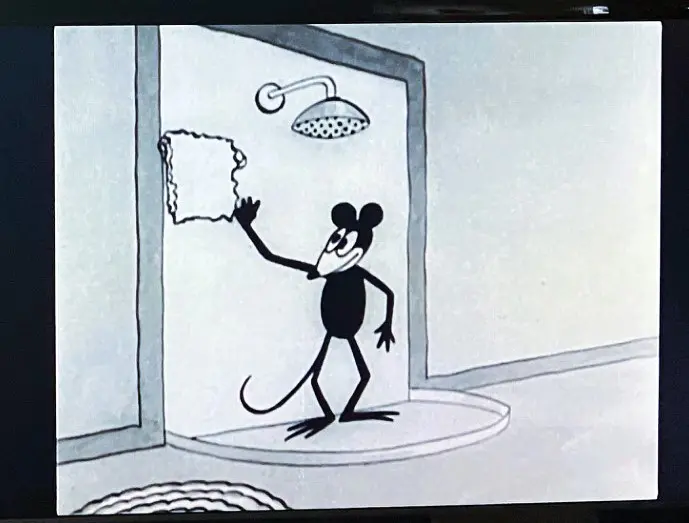
A definitive 6.6/10 rating for a film that redefined the boundaries of cult cinema. Herman the Great Mouse remains a cornerstone of transgressive art.
The annals of early cinema are frequently cluttered with the ghosts of forgotten spectacles, yet few possess the idiosyncratic magnetism of Herman the Great Mouse. To witness this film in its restored state is to engage with a period of filmmaking where the boundaries between reality and optical illusion were fluid, porous, and daringly experimental. While many historians fixate on the monolithic scale of The Birth of a Nation, there is a profound, concentrated power in the miniature world Herman inhabits—a world that demands a different kind of visual literacy.
The set design of this production is nothing short of architecturally defiant. The kitchen, the primary stage for our protagonist’s exploits, is rendered with a distorted perspective that evokes the jagged edges of German Expressionism. Unlike the pastoral simplicity found in The Girl of My Dreams, the environment here is hostile, a metallic and porcelain wasteland where every dropped spoon resonates like a thunderclap. The director’s choice to employ low-angle tracking shots—a rarity for the era—bestows upon Herman a stature that contradicts his biological reality. He is not merely a pest; he is a conqueror of the mundane.
One cannot discuss the visual vocabulary of this film without addressing the lighting. The chiaroscuro effects utilized in the pantry sequences create a sense of impending doom that rivals the atmospheric dread of The Wolf Man. Shadows are not merely absences of light; they are tangible obstacles, ink-black voids that Herman must navigate with predatory grace. The grain of the film stock itself adds a tactile layer to the experience, making the flour-dusted floor feel like a desolate, snowy tundra.
Beneath the surface level of its "mouse-vs-cat" premise, the film pulses with a subversive political energy. Herman’s meticulous planning and his eventual distribution of the cheese to the colony suggest a communal ethos that stands in stark contrast to the individualistic greed depicted in The Evil Thereof. There is a palpable tension between the "Great" in the title and the reality of Herman’s existence. Is he great because of his deeds, or is the title a sarcastic commentary on the delusions of the small? The film refuses to provide an easy answer, opting instead for a nuanced ambiguity.
In many ways, Herman’s struggle mirrors the existential plight seen in Life Story of John Lee, or The Man They Could Not Hang. Both protagonists are trapped in systems designed for their eradication, yet they persist through a combination of sheer will and cosmic luck. Herman’s "executioner" is the domestic cat, a creature filmed with such terrifying proximity that its whiskers appear like iron bars. The cat represents the unthinking, crushing weight of the establishment—a force that Herman cannot defeat through strength, only through the subversion of the establishment’s own logic.
The technical prowess required to execute the interaction between the live-action cat and the animated (or perhaps puppeteered) Herman is staggering for its time. While A Studio Rube played with the meta-narrative of filmmaking, Herman the Great Mouse pushes the medium toward a seamless integration of disparate elements. The sequence where Herman hides inside a discarded boot is a masterclass in frame composition. The boot becomes a cavernous cathedral of leather, its laces hanging like the ropes of a gallows, reminiscent of the stark imagery in Her Reckoning.
The pacing of the film is equally revolutionary. It eschews the frantic, breathless editing of contemporary comedies like The Man from Mexico, favoring instead a slow, methodical build-up of tension. Every twitch of a whisker is given room to breathe, allowing the audience to inhabit Herman’s heightened sensory world. We are forced to wait with him, to feel the vibration of approaching footsteps, and to calculate the distance to the safety of the baseboard.
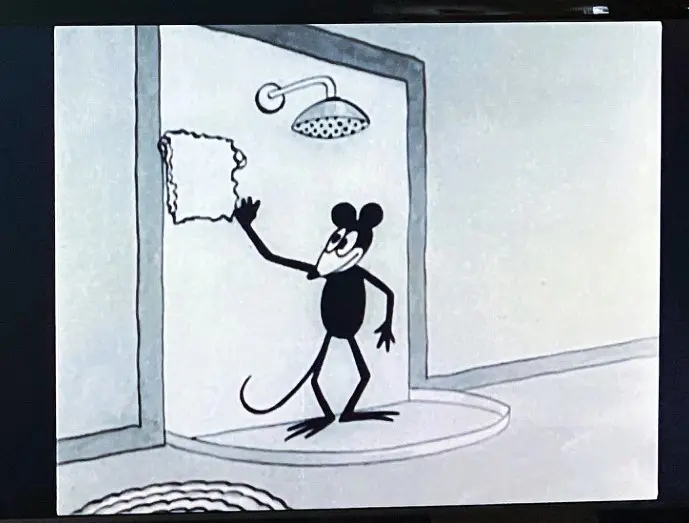
When examining the film's emotional core, it shares a surprising kinship with The Misleading Lady. Both films deal with the concept of performance—Herman must perform the role of the invisible pest while secretly acting as a grand strategist. His life is a masquerade, a constant dance on the edge of a razor. This duality is what elevates the film above the standard fare of the 1920s. It isn't just about survival; it's about the psychological toll of that survival.
Furthermore, the film’s use of environmental hazards as narrative catalysts echoes the rugged naturalism of The Border Legion. Just as the wilderness tests the mettle of the pioneer, the kitchen tests the resilience of the mouse. A spilled jar of honey becomes a treacherous swamp; a cooling pie becomes a steaming, impassable mountain. This transformation of the ordinary into the epic is the film’s greatest achievement. It invites the viewer to look at their own surroundings with a sense of renewed wonder and terror.
Though a silent film, the visual rhythm of Herman the Great Mouse suggests a complex auditory world. One can almost hear the scratching of tiny claws against floorboards or the rhythmic ticking of a grandfather clock that serves as a metronome for Herman’s movements. This inherent musicality is something it shares with Revelj, where the visual cadence dictates the emotional response. The "silence" of Herman is loud; it is filled with the imagined cacophony of a world that is too big, too fast, and too dangerous for its protagonist.
In the final act, the film takes a turn toward the surreal. Herman, exhausted and cornered, has a fever dream that rivals the volcanic intensity of The Volcano. He imagines himself as a giant, towering over the humans who have sought his demise. This sequence, rendered through clever forced perspective and oversized props, provides a cathartic release for both the character and the audience. It is a moment of pure cinematic wish-fulfillment, a brief respite from the crushing reality of his rodent existence.
To watch Herman the Great Mouse today is to realize how much of modern cinema’s visual language was forged in these early, daring experiments. While films like Lombardi, Ltd. focused on the high-society dramas of the era, Herman looked downward, into the cracks and crevices, and found a story just as compelling and twice as harrowing. The film is a testament to the power of perspective, proving that greatness is not a matter of scale, but of spirit.
The legacy of this film can be seen in every subsequent attempt to humanize the non-human, but few have matched its grit. It avoids the easy sentimentality of later animated efforts, opting instead for a stark, almost documentary-like observation of its subject. Even in its most fantastical moments, there is a grounding in the physical reality of Herman’s world—the weight of a crumb, the sharpness of a needle, the suffocating thickness of dust. It is a film that demands respect, much like its eponymous hero.
As we navigate our own increasingly complex and often hostile environments, the image of Herman—standing small but unbroken against a backdrop of domestic titans—remains a potent symbol of defiance. It reminds us that even when the evidence is stacked against us, as in Chains of Evidence, or when we feel like a fish out of water, much like the characters in Black and Tan Mix Up, there is always a way through the floorboards. There is always a way to be great, no matter how small the world perceives us to be.
This review is part of our "Silent Giants" series, dedicated to preserving the memory of the films that built the foundation of modern storytelling.

IMDb —
1921
Community
Log in to comment.