DbcultAccessing Vault...
Cult Review
Senior Film Conservator
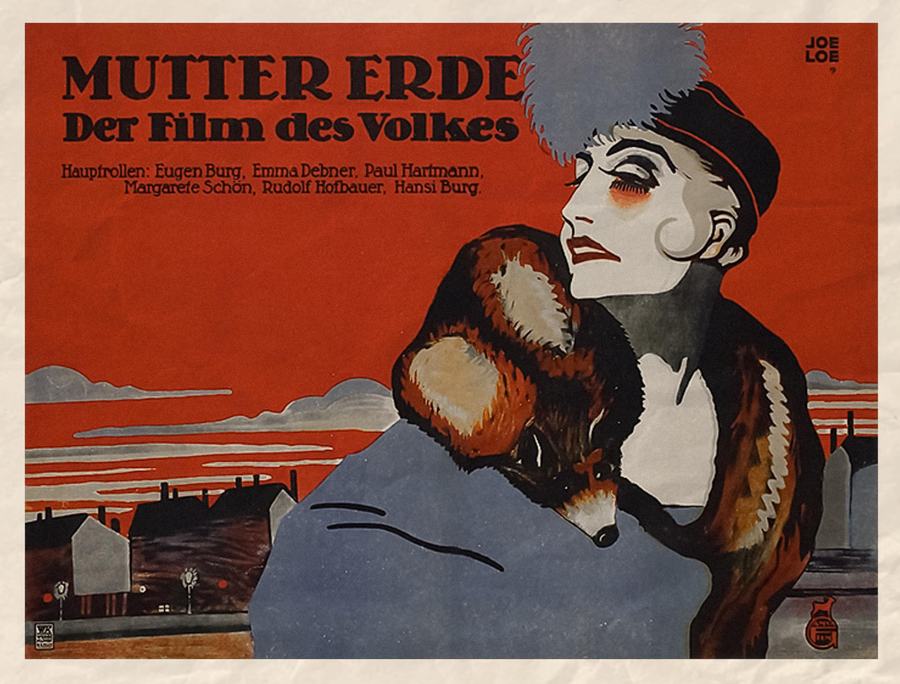
When the title Mutter Erde rolls across the screen, the expectation is a pastoral ode, yet director Heinrich Ilgenstein delivers a film that is as much an elegy for a vanishing way of life as it is a rallying cry for ecological stewardship. The opening sequence, a slow‑pan across dew‑laden wheat, is suffused with a sepia‑toned nostalgia that immediately immerses the viewer in a world where the soil is not merely a backdrop but a living character.
Paula Levermann, embodying Elisabeth, commands the frame with a gravitas that feels both inherited and earned. Her eyes, often framed by the soft glow of sunrise, convey a silent dialogue with the earth that words cannot capture. In a scene reminiscent of the quiet intensity found in The Absentee, Levermann’s performance is a masterclass in restraint; she does not need to shout to be heard, her presence alone reverberates through the fields.
Paul Hartmann’s Friedrich provides a counterpoint: a son torn between filial duty and the seductive promise of modernity. Hartmann navigates this internal schism with a subtlety that mirrors the conflicted tones of The Voice on the Wire. His chemistry with Emma Debner’s Clara—a botanist whose scientific curiosity is both a blessing and a curse—sparks a narrative thread that interrogates the intersection of tradition and innovation.
The supporting cast enriches the tapestry. Hansi Burg’s Otto, the foreman, is a stoic pillar whose silence speaks louder than any protest sign. Margarete Schön, as Frau Kraus, offers the village’s collective memory, her anecdotes dripping with the honeyed bitterness of a generation that has watched the horizon shift repeatedly. Eugen Burg’s magistrate, pragmatic to a fault, embodies the bureaucratic machinery that often smooths over the raw edges of rural dissent.
Ilgenstein structures the film in three acts that echo the agricultural calendar: sowing, growing, and harvest. The first act establishes the intimate symbiosis between the characters and their land, employing long takes that linger on the rhythmic motions of planting and the tactile communion of hands with soil. The second act introduces the inciting incident—a corporate proposal to convert the farmland into a mechanised agri‑complex. This intrusion is not merely economic; it is existential, challenging the very identity of the community.
The third act escalates into a nocturnal sit‑in, a visual homage to the silent protests of the 1960s. The cinematography, bathed in a palette of muted blues and deep oranges, evokes a chiaroscuro that feels both cinematic and documentary. The use of sea blue (#0E7490) in the night‑time lighting underscores the cold, metallic inevitability of progress, while the dark orange (#C2410C) flickers from the lanterns, symbolising the stubborn ember of resistance.
Levermann’s portrayal of Elisabeth is a study in quiet ferocity. In a pivotal monologue, she stands amid a field of withered stalks, her voice a trembling yet unyielding whisper that rises like wind through barley. The scene is reminiscent of the raw emotionality found in The Floor Below, yet Levermann avoids melodrama, opting instead for a cadence that feels as natural as the rustling of leaves.
Hartmann’s Friedrich, torn between love and loyalty, delivers a nuanced performance that avoids the binary of hero or villain. His conflicted glances toward Clara’s scientific notes, juxtaposed with his lingering looks at his mother’s weathered hands, convey an inner turmoil that is palpable. This duality is akin to the layered character work seen in Rose of the Alley.
Debner’s Clara is a breath of fresh air—her curiosity about native plant species injects an ecological subtext that deepens the narrative. Her scenes are often shot in close‑up, the camera lingering on the delicate veins of a leaf as she explains its symbiotic relationship with the soil, a visual metaphor that reinforces the film’s central thesis.
Cinematographer Johannes Gaulke employs a visual language that is both lyrical and unflinching. The use of handheld cameras during protest sequences creates an immediacy that thrusts the audience into the mud‑splattered chaos, while the static, composed shots of sunrise over the fields provide moments of contemplative pause. The contrast between these styles mirrors the film’s thematic tension between stability and upheaval.
The sound design deserves special mention. Ambient noises—cracking twigs, distant cattle lowing, the whisper of wind—are amplified to the point where they become characters in their own right. The score, a minimalist arrangement of strings and folk instruments, swells only in moments of heightened emotional stakes, allowing silence to dominate the majority of the runtime, a technique reminiscent of the auditory restraint in Damaged Goods.
While Mutter Erde stands as a singular meditation on agrarian identity, its thematic concerns echo across the oeuvre of early 20th‑century German cinema. The struggle against external forces mirrors the narrative of The Bells, where tradition clashes with modernization. Similarly, the film’s emphasis on communal resistance finds a kinship with the collective spirit portrayed in Snobs.
The subtle interplay of gender dynamics—particularly Elisabeth’s role as the matriarchal anchor—offers a fresh perspective compared to the male‑centric narratives of The Golden Lotus or the overtly comedic tone of Sleepy Sam, the Sleuth. This focus aligns Mutter Erde with contemporary eco‑feminist discourse, positioning it as a culturally resonant work.
The film’s pacing is deliberate, allowing the audience to inhabit the temporal rhythm of rural life. Scenes linger, not out of indulgence, but to echo the patient cycles of planting and harvesting. This measured tempo may challenge viewers accustomed to rapid editing, yet it rewards patience with a depth of immersion seldom achieved in mainstream cinema.
Ilgenstein’s decision to forgo a conventional climax—opting instead for an open‑ended resolution where a lone seedling emerges from a scarred field—underscores the film’s philosophical stance: resistance is perpetual, and hope persists in the smallest of sprouts. This narrative choice is reminiscent of the ambiguous endings in A Gutter Magdalene, where the story’s emotional truth outweighs plot finality.
Set against the backdrop of post‑war Germany’s agrarian reforms, Mutter Erde functions as both a period piece and a contemporary commentary. The film subtly references the 1950s land redistribution policies, while its present‑day corporate antagonist evokes current debates over EU agricultural subsidies and the rise of agritech conglomerates. This dual temporal layering enriches the viewing experience, inviting scholars to explore its sociopolitical subtexts.
Moreover, the film’s portrayal of community solidarity resonates with the collective action seen during the 1970s environmental movements in Germany, drawing a line from past to present that underscores the cyclical nature of ecological advocacy.
In sum, Mutter Erde is a meticulously crafted work that marries visual poetry with incisive social critique. Levermann’s luminous performance, Gaulke’s evocative cinematography, and Ilgenstein’s patient direction coalesce into a film that feels both timeless and urgently contemporary. Its refusal to deliver a tidy resolution may alienate those seeking narrative closure, yet it is precisely this refusal that cements its artistic integrity.
For cinephiles attuned to the nuances of German cinema, the film offers a rewarding study in how personal narratives intersect with broader ecological discourses. It stands as a testament to the power of cinema to amplify the whispers of the earth, reminding us that every furrow turned, every seed sown, is an act of defiance against the erasure of our natural heritage.
If you are interested in exploring similar thematic terrain, consider watching Mania. Die Geschichte einer Zigarettenarbeiterin, which also delves into labor struggles, or Attack on the Gold Escort for a contrasting take on resistance narratives.

IMDb 6.4
1931
Community
Log in to comment.