DbcultAccessing Vault...
Cult Review
Senior Film Conservator
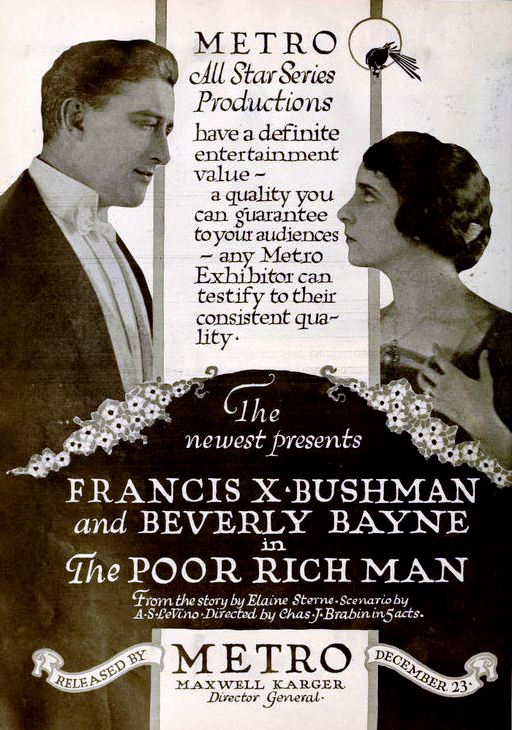
In the annals of early cinema, where narratives often hinged on grand moral lessons and the dramatic arcs of human transformation, The Poor Rich Man emerges as a particularly resonant entry. Released in 1918, a tumultuous year marking the twilight of the Great War and the dawn of a new social order, this film, penned by the insightful duo of Albert S. Le Vino and Elaine S. Carrington, offers more than just a fleeting glimpse into the past. It provides a compelling, if somewhat idealistic, exploration of wealth, worth, and the profound journey from indolence to industry. What strikes one immediately is the film's audacious premise: a millionaire father, exasperated by his son's profligate idleness, stages his own death to force the heir into a crucible of self-reliance. This isn't merely a plot device; it's a profound philosophical query posed in cinematic form: can true character be forged only through adversity, even if that adversity is carefully, deviously manufactured?
The central figure, Vantyne, portrayed with a captivating blend of initial languor and eventual dynamism by Francis X. Bushman, is the epitome of the Gilded Age's privileged youth. His deliberate shunning of work, a lifestyle financed by his industrialist father, James Carter (William Frederic), sets the stage for the dramatic intervention. Carter Sr.'s decision to feign his demise, reported by his lawyer, is a stroke of narrative genius, immediately elevating the stakes beyond mere financial discipline to a matter of existential survival for Vantyne. The reading of the will, a classic cinematic trope, delivers the crushing blow: six months to prove his mettle, with nothing but a decrepit farmhouse as his working capital, or the entire inheritance devolves to his conniving cousin, Teddy Brown (Stuart Holmes). This dramatic pivot is where the film truly finds its stride, transforming a tale of familial exasperation into a compelling saga of personal reinvention.
Vantyne's subsequent embrace of the challenge is not merely a capitulation to his father's will, but a genuine awakening. He doesn't just work; he innovates. The old farmhouse, a symbol of his diminished circumstances, becomes a canvas for his burgeoning entrepreneurial spirit. Crucially, he is not alone in this endeavor. The arrival of Arizona Brown, a vibrant Westerner with whom Vantyne has serendipitously fallen in love, injects a vital dose of practicality and emotional support into his life. Beverly Bayne's portrayal of Arizona is a breath of fresh air, embodying the independent, resourceful spirit that contrasts sharply with Vantyne's former dilettantism. Together, they transform the derelict property into a "thriving and very fashionable resort." This segment of the film, depicting their collaborative efforts and the gradual blossoming of their enterprise, is particularly heartwarming, showcasing the power of partnership and shared vision. It’s a testament to the idea that true wealth lies not in inherited fortune, but in the capacity to create, to build, and to persevere.
Of course, no compelling drama is complete without a formidable antagonist. Teddy Brown, seeing his chance at the Carter fortune rapidly receding, orchestrates a malevolent scheme. His alliance with the actress Edith Trentoni (Sally Crute) to ruin the resort's reputation through a staged kitchen strike and a jewel robbery is a classic villainous maneuver. These acts of sabotage are designed not just to undermine Vantyne's business, but to discredit his character, to prove him incapable of stewardship. The film adeptly portrays the tension and despair that such an attack would inflict upon a fledgling enterprise, making Vantyne's struggle all the more palpable. The narrative here taps into universal fears of betrayal and the fragility of hard-won success. One might recall similar themes of calculated deception and the struggle against unseen forces in films like The Secret Man, where protagonists also face formidable, underhanded opposition.
The climax, with the dramatic reappearance of old Carter, Sr., is both anticipated and satisfying. His timely intervention, exposing Teddy's perfidy and restoring order, provides the necessary catharsis. The villain is turned out, justice is served, and Vantyne and Arizona are proclaimed a "successful team." This resolution, while perhaps predictable by modern standards, was immensely gratifying for audiences of the era, affirming the moral rectitude of hard work and genuine affection over greed and deceit. It's a powerful endorsement of meritocracy, even if initiated by a deceptive fatherly hand. The film's conclusion isn't just about Vantyne inheriting money; it's about him inheriting himself, discovering his true capabilities, and finding a partner who shares his values and strengthens his resolve. This journey of self-discovery, fueled by a parent's unconventional tough love, still resonates today.
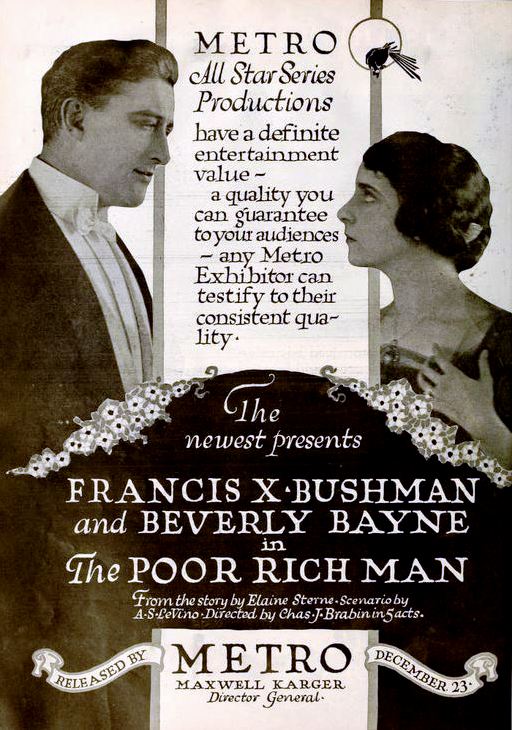
The ensemble cast of The Poor Rich Man delivers performances that, even across the chasm of a century, convey sincerity and dramatic weight. Francis X. Bushman, a veritable matinee idol of the silent era, brings a nuanced portrayal to Vantyne. His initial scenes of languid indifference are convincing, making his subsequent transformation into a determined, hands-on entrepreneur all the more impactful. Bushman's expressive eyes and gestures, essential tools for silent actors, communicate Vantyne's internal struggle and growth with admirable clarity. Beverly Bayne, a frequent and celebrated co-star of Bushman, imbues Arizona Brown with a spirited independence and an endearing warmth. Her character is not merely a romantic interest but an active participant in Vantyne's success, providing both emotional ballast and practical ingenuity. The chemistry between Bushman and Bayne is palpable, lending authenticity to their on-screen romance and making their partnership feel genuinely earned.
William Frederic, as the stern but ultimately benevolent James Carter, anchors the film with his authoritative presence. His portrayal of a father driven to extreme measures for his son's betterment is both believable and sympathetic. Stuart Holmes, as the villainous Teddy Brown, effectively embodies the calculating greed that serves as the story's primary antagonistic force. His sly expressions and conniving demeanor perfectly capture the essence of a man motivated purely by avarice. Sally Crute's Edith Trentoni is a memorable accomplice, adding another layer of deceit to Teddy's machinations. Even supporting players like C.J. Williams, Jules Cowles, and Louis Wolheim contribute to the film's rich texture, their characterizations adding depth to the resort's staff and the broader community surrounding Vantyne's endeavors. The collective performances demonstrate the skilled artistry required to convey complex emotions and narrative progression without the aid of spoken dialogue, relying instead on masterful pantomime, subtle facial expressions, and well-timed intertitles.
As a product of 1918, The Poor Rich Man showcases the sophisticated, yet rapidly evolving, cinematic techniques of the silent era. The direction, while not overtly experimental, is competent and ensures the narrative flows smoothly, keeping the audience engaged through visual cues and the dramatic ebb and flow of events. The cinematography, even in its black and white simplicity, would have been designed to highlight the stark contrasts between Vantyne's former opulence and his subsequent rustic existence, and then the vibrant success of his resort. Location shooting, if employed, would have added a layer of authenticity to the farmhouse's transformation, grounding the fantastical premise in tangible reality. The use of intertitles, far from being a mere functional necessity, would have been carefully crafted to convey dialogue, internal monologues, and crucial plot information with conciseness and dramatic flair. These textual insertions were an art form in themselves, guiding the audience's understanding and emotional response. The period's understanding of visual composition, lighting, and editing, though rudimentary by today's standards, was nonetheless effective in building suspense, conveying romance, and delivering comedic beats. The film's success rested heavily on its ability to communicate complex ideas and emotions without a single spoken word, a testament to the power of pure visual storytelling and the expressive capabilities of its actors.
Beyond its engaging plot, The Poor Rich Man delves into themes that remain remarkably pertinent. The central conflict between inherited wealth and earned success is a timeless debate, exploring whether true character is innate or forged through struggle. Vantyne's journey is a powerful argument for the latter, suggesting that unchecked privilege can be a gilded cage, and that genuine fulfillment often lies in productive labor and self-reliance. The film champions the virtues of hard work, ingenuity, and integrity, contrasting them sharply with the indolence and deceit embodied by Teddy Brown. It also subtly explores the nature of love and partnership, portraying Arizona as an equal contributor to Vantyne's success, her practical wisdom complementing his newfound ambition. Their relationship transcends superficial romance, evolving into a true partnership built on mutual respect and shared endeavor. This emphasis on a collaborative, supportive relationship was perhaps a forward-thinking element for its time, hinting at evolving gender roles and the recognition of women's contributions beyond the domestic sphere.
The societal commentary, though implicit, is clear: wealth, without purpose or effort, can corrupt, while adversity, when met with courage, can ennoble. This moral framework was common in films of this era, aiming not just to entertain but to instruct. While not as overtly political as War and the Woman, or as focused on labor disputes as Strife, The Poor Rich Man nonetheless offers its own brand of social critique, albeit through the lens of individual transformation rather than systemic change. It speaks to the American Dream, the idea that anyone, regardless of their starting point (or even despite it), can achieve success through sheer grit and determination. The film's optimistic outlook, especially in a year overshadowed by global conflict, would have offered a much-needed message of hope and individual agency to its audience.
In conclusion, The Poor Rich Man stands as a charming and instructive artifact from the silent era. Its narrative, while straightforward, is imbued with a timeless moral lesson about the nature of true wealth and the transformative power of self-reliance. The performances, particularly by Francis X. Bushman and Beverly Bayne, are compelling, bringing depth and charisma to their respective roles. The film's ability to engage, entertain, and subtly educate without dialogue is a testament to the artistry of early cinema. For those interested in the evolution of storytelling, the development of character arcs, and the enduring themes that transcend generations, this film offers a rich and rewarding experience. It reminds us that sometimes, the greatest inheritance isn't found in bank accounts, but in the lessons learned and the character forged when everything is seemingly lost. It’s a testament to the fact that even a century later, the human desire for meaning, purpose, and genuine connection remains at the heart of our most beloved stories, whether told through spoken word or the captivating silence of a flickering screen.
IMDb 6.8
1934
Community
Log in to comment.