DbcultAccessing Vault...
6.6/10
Senior Film Conservator

A definitive 6.6/10 rating for a film that redefined the boundaries of cult cinema. High and Low remains a cornerstone of transgressive art.
If you have ever wanted to see a incredibly young Jean Gabin play a famous soccer star who is madly in love with a maid, then yes, High and Low is absolutely worth your time tonight.
But look, if you hate slow-moving early talkies where characters spend ten minutes just walking up and down stairs, you should probably skip this one. 🚪
It is a weird little French movie from G.W. Pabst that feels less like a movie and more like you are spying on a real apartment building in Paris.
The main thread is about Marie, this sweet girl who is working as a maid before she can start her real job as a schoolteacher.
Naturally, things go sideways when she gets accused of stealing some money, which is always the go-to plot device in these old melodramas.
But the plot is honestly the least interesting part of this whole thing.
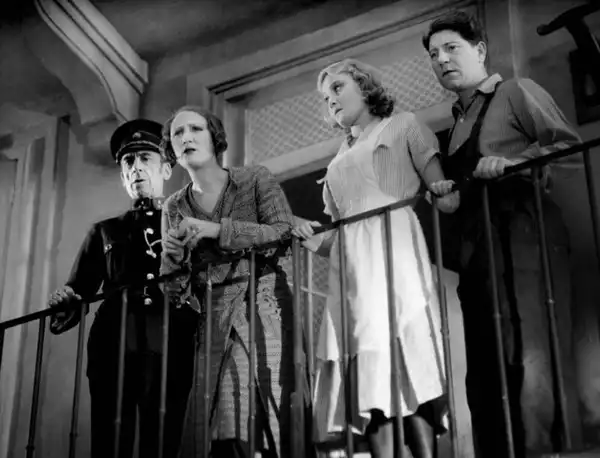
What makes this special is the incredibly weird cast of characters living in the same building.
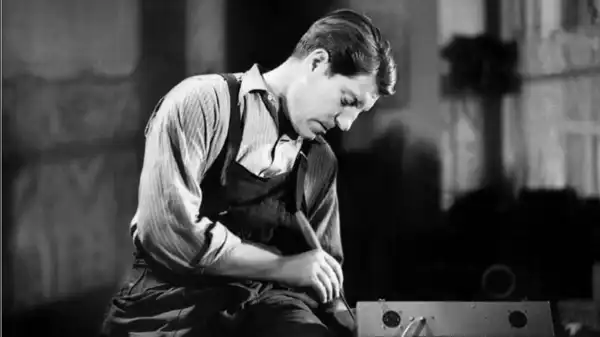
You have got a very young, very sweaty Jean Gabin who plays Charles, the local soccer hero.
He is absolutely obsessed with Marie, and there is this great, slightly awkward scene where he tries to talk to her while holding a giant bouquet of flowers like he is holding a weapon. 💐
Then there is Peter Lorre, who plays a broke, eccentric student named Heinrich.
Lorre is barely in the movie, but every time he slides into a frame, the energy completely shifts.
He has this one scene where he is just staring at a plate of food with those massive, bulging eyes, and you can practically feel the desperation coming off him.
It actually reminded me a bit of the gritty, desperate street vibes you get in early American talkies like The Girl from Woolworth's, though this one has a much more European flavor.
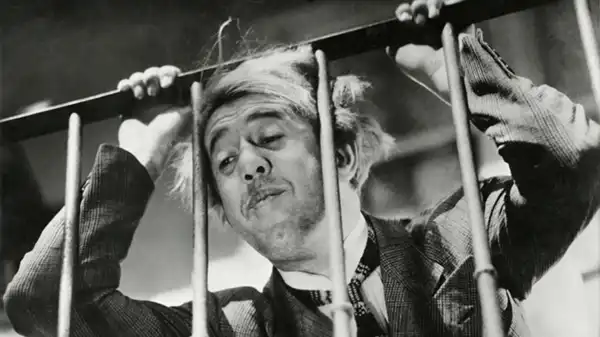
And we cannot forget Michel Simon as the eccentric, bumbling lawyer Maximilian.
Simon basically walks away with the entire movie just by being incredibly loud and physically awkward.
There is a moment where he tries to write a letter, and the way he holds his pen is so bizarrely aggressive that I had to rewind it twice. ✍️
The camera work is surprisingly modern for 1933, too.
Pabst loves to shoot through banisters and down spiral staircases.
Sometimes the camera just hangs there, watching people carry heavy baskets up three flights of stairs in silence.
It goes on for so long that you start to feel the leg pain yourself.
Some of the sound design is a bit rough, though.
Because it is an early sound film, there are these long stretches where everything is dead silent, and then suddenly a door slams and it sounds like a gunshot.
The ending also feels incredibly rushed, like they realized they only had five minutes of film left and needed to wrap up the theft mystery immediately.
One second she is in trouble, and the next, everyone is smiling and everything is fine.
It is a bit messy, sure. But that is exactly why I like it.
It feels alive in a way that modern, perfectly polished movies never do.
If you are in the mood for something dusty, charming, and slightly broken, give this a spin.
IMDb —
1926
Community
Log in to comment.