DbcultAccessing Vault...
Cult Review
Senior Film Conservator
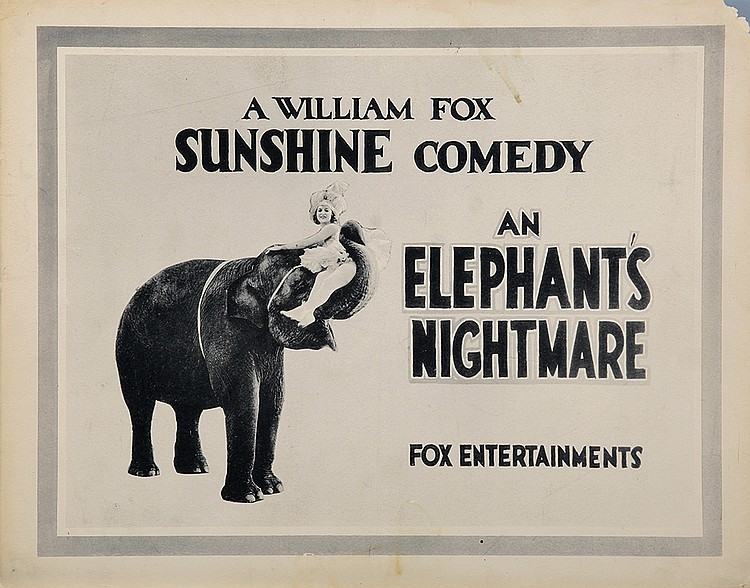
Entropy has a face, and it wears a battered boater two sizes too small.
Jack Cooper, that long-limbed poet of pratfalls, embodies the film’s thesis: catastrophe as cosmology. From his first entrance—an ungainly silhouette backlit by a single sputtering bulb—he is less a character than a vector of universal decay, a one-man second law of thermodynamics in greasepaint-smudged spats. Every twitch of his eyebrow foreshadows another exquisite collapse, and the camera, jittery as a pickpocket, clings to him as though magnetized by ruin.
Director Lawrence A. Bowes refuses to grant the viewer a safe perch. Instead we are shanghaied into the fly-loft’s labyrinth, where sandbags swing like Damoclean metronomes and the scent of gaslight mingles with the coppery tang of panic. The monochrome palette—pearlescent greys bruised by soot—renders each misadventure a lithograph of dread. When the titular elephant, a flimsy colossus of muslin and wishful thinking, lurches from the rafters, its shadow swallows the proscenium like an eclipse heralding apocalypse.
Yet the genius lies not in the falling but in the waiting to fall. Bowes stretches the elastic moment before calamity until it vibrates like a violin string. A frayed rope filament quivers in macro close-up; a pulley squeals a half-second too long; the soundtrack excises all score, leaving only the wheeze of Cooper’s asthmatic breathing. The effect is nauseatingly intimate—viewers lean forward in masochistic communion, praying for release that never arrives without cost.
Compare this to The Raggedy Queen, where disaster pirouettes with baroque elegance. Here grace is scorned; bodies collide with the blunt authenticity of dropped fruit. The humor, if one dares laugh, emerges through a sort of stunned gasp, the reflex of a soul recognizing its own chronic incompetence.
Secondary performers orbit Cooper like moons of misfortune. Lawrence A. Bowes himself cameos as a dyspeptic stage manager whose moustache appears to wilt in real time, each follicle surrendering to despair. A chorus girl, face powdered into Kabuki pallor, recites her lines as though auditioning for a funeral, her gaze already accepting the inevitability of the next catastrophe. Their collective resignation forms a Greek choir of the damned, hymning the futility of human intention.
The screenplay—unsigned, almost mythically authorless—reads like a ledger of entropy: itemized mishaps cross-referenced with cosmic irony. Dialogue is sparse, often drowned beneath the ambient clatter of stagecraft. When words do surface, they arrive as half-heard whispers: "Check the fly rail," someone murmurs, a phrase that reverberates like a death knell once the rail surrenders its load. The elephant, ostensibly the star, never trumpets; it simply looms, a mute totem of our capacity to build grandeur from cardboard and then watch the rain reduce it to pulp.
Technically, the picture revels in contradictions. Depth of field collapses so that foreground splinters loom gargantuan while background faces blur into ghostly smudges—an optical metaphor for myopia of responsibility. Frames occasionally stutter, mimicking the hand-cranked variance of early cinema, as if the film itself cannot maintain consistent momentum, mirroring its protagonist’s flailing trajectory. Meanwhile, the negative space teems with activity: a frayed sandbag rope, barely visible, nonetheless snags the eye, its slow unwind as mesmerizing as a cobra’s sway.
Bowes weaponizes off-screen sound. A crash is more harrowing when one hears only the aftershock: the hiss of escaping sand, the soft thud of fabric on flesh, the collective intake of breath from an unseen audience. Our imagination, conscripted, furnishes gorier detail than any visual effects budget could allow.
One sequence deserves particular reverence. Cooper attempts to secure a canvas sky-drop—azure painted with naïve clouds—only to snag his sleeve on a protruding nail. The sleeve tears stitch by stitch in a macro shot so protracted it becomes existential. Each thread’s snap cues a micro-flinch from Cooper, whose eyes telegraph the dawning awareness that the tear will continue until the entire drop—and perhaps the firmament itself—unravels. The moment is both slapstick and eschatology, Buster Keaton by way of Kierkegaard.
Intertextual ghosts flicker. Aficionados of El zarco may recall how melodrama inflames revolutionary fervor; here the revolution is against the very concept of competence. Likewise, Angelo, das Mysterium des Schlosses Drachenegg drapes gothic corridors in somnambulant dread, but Bowes locates dread in the mundane—a ladder, a weight, a knot. The film’s true ancestor might be The Flower of No Man's Land, where barren landscapes mirror spiritual sterility; the backstage here is that same wasteland under a proscenium arch.
Yet categorization feels reductive. An Elephant's Nightmare invents its own vernacular of anxiety. It is the anti-escapist escapade: you exit the theater not relieved but diagnosed, hyper-aware of every loose shoelace, every flickering fluorescent, every elevator cable hidden behind polite panels. Cinema becomes pathology.
Critics allergic to ambiguity may carp that the narrative lacks redemption. They crave the neat arc—hubris, suffering, epiphany, catharsis. Bowes withholds that narcotic comfort. The final tableau offers no moral ledger, only detritus: Cooper half-buried in sawdust, eyes reflecting the descending house curtain whose bottom hem still burns from a misfired spotlight. The fire, small but persistent, suggests no cleansing rebirth, merely the next venue for fresh folly. Fade to black on a man whose punishment is unending employment.
Such mercilessness will polarize. Some viewers, battered by relentless mortification, may bolt for the exit midway, seeking solace in the orderly failure of everyday life. Others—this critic among them—will find perverse rapture in the film’s refusal to grant reprieve. To watch is to participate in a ritualized humiliation, a secular scourging that leaves you paradoxically lighter, as if shame itself were ballast jettisoned mid-flight.
Historians will note the timing: released into an era addicted to curated perfection, the picture brandishes imperfection as both weapon and creed. Every gaffe Cooper commits is a riposte to the Instagram era’s polished façade, a reminder that the universe leans toward spilled paint and torn curtains. In that sense, the film is punk—raw, abrasive, gleefully unproduced. Its austerity feels radical amid algorithmic gloss.
Auditory design deserves final applause. Creaks, whispers, the distant thrum of city traffic seeping through brickwork—all converge into a musique concrète of dread. There is no score to telegraph emotion; silence itself becomes a character, palpable as fog. When, late in the film, a lone tuba offstage emits a sour bleat, the effect is startlingly erotic in its violation of hush, like a tongue tracing a scar.
Performances? Cooper’s physical lexicon expands the slapstick canon. He weaponizes limpness: knees buckle inward, elbows jut at defensive angles, spine curves in a perpetual cringe. Watch how he removes a cigarette—hand trembling so violently the ash drops before reaching his lips—an entire autobiography of ineptitude in one aborted gesture. It is acting pared to glandular truth.
Should you endure, you will carry souvenirs: the image of a sandbag’s slow-motion pendulum against a dust-mote spotlight; the wet slap of greasepaint on floorboards; the final curtain’s smoldering hem reflected in a retina like a solar flare. These fragments will intrude at pedestrian moments—while fastening a seatbelt, while tightening a jar—and you’ll recall that safety is illusion, that somewhere a rope is fraying, that the elephant, though unseen, still waits overhead.
Verdict: mandatory viewing for anyone who suspects the cosmos is conspiring against competence. A shrill, gorgeous indictment of hubris, delivered with the surgical cruelty of a master sadist. Expect no comfort; expect instead a new vocabulary for anxiety. Ten out of ten catastrophes.
IMDb 6.3
1919
Community
Log in to comment.