DbcultAccessing Vault...
Cult Review
Senior Film Conservator
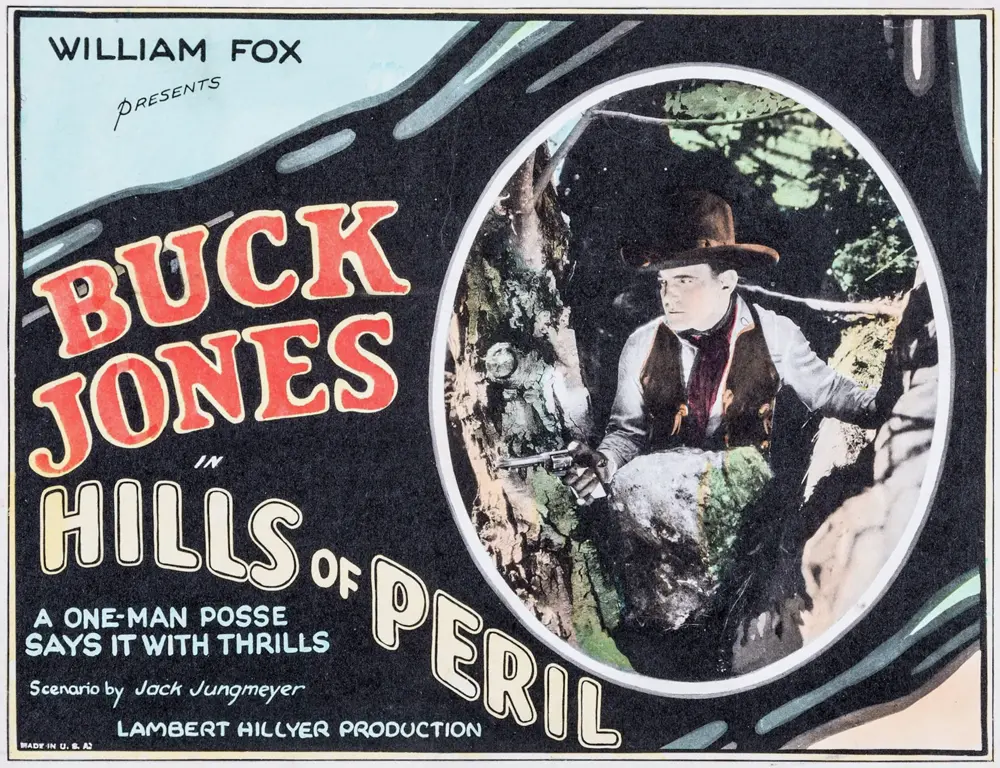
Is Hills of Peril a forgotten gem waiting to be unearthed, or a dusty relic best left in the archives? Short answer: For fans of classic Westerns and early Hollywood curiosities, it offers a surprisingly engaging, if somewhat formulaic, ride, but those seeking intricate plots or modern sensibilities will likely find its pace challenging. This film is unequivocally for devotees of silent-era action, particularly those who appreciate the stoic charisma of Buck Jones; it is decidedly NOT for viewers accustomed to the complex character arcs or high-octane spectacle of contemporary cinema.
In the grand tapestry of early American cinema, the Western holds a unique, almost mythological, place. Hills of Peril, a 1927 silent feature, emerges from this era as a quintessential example of the genre's formative years. Directed by George Abbott and Jack Jungmeyer, and starring the iconic Buck Jones, it embodies many of the tropes and narrative structures that would define the Western for decades to come: the lone hero, the clear-cut villains, the damsel in distress (or, in this case, a woman of independent spirit), and the rugged, unforgiving landscape as a character in itself.
The film’s premise, centered around an undercover lawman infiltrating a gang of bootleggers, speaks to the social anxieties and legal complexities of the Prohibition era, even as it grafts them onto the familiar canvas of the Old West. This blending of contemporary concerns with traditional settings is one of the more fascinating, if understated, aspects of its construction.
Let’s cut to the chase and lay out the fundamental observations about Hills of Peril:
Buck Jones, as Laramie, is the undeniable anchor of Hills of Peril. His performance is a masterclass in silent-era heroism: strong, silent, and physically commanding. Jones doesn't rely on grand gestures or exaggerated facial expressions; instead, he communicates through subtle shifts in posture, the intensity of his gaze, and an inherent gravitas that makes his undercover role entirely believable. When Laramie is forced to adopt the swagger of an outlaw, there's a visible, yet understated, tension in Jones's portrayal – a constant battle between his true identity and his adopted persona. This is particularly evident in a scene where he has to rough up a fellow gang member to maintain his cover; his reluctance is palpable, even without dialogue.
Georgia Hale, as Ellen, provides a compelling counterpoint. She is not merely a passive object of affection but a woman with her own agency and ambition, striving to reactivate her mine. Hale imbues Ellen with a resilient spirit that feels ahead of its time, eschewing the more common 'screaming ingenue' trope. Her scenes with Jones possess a quiet chemistry, built on mutual respect rather than overt romanticism, which is a surprisingly refreshing dynamic for a film of this vintage. The supporting cast, including Bob Kortman as one of the menacing bootleggers, fulfills their roles adequately, though their characters are largely archetypal.
George Abbott and Jack Jungmeyer’s direction, while not groundbreaking, is competent and efficient. They understand the rhythm of the Western, allowing the vast landscapes to breathe and the action to unfold with clarity. The pacing is generally well-judged, balancing moments of suspense with the more intimate interactions between Laramie and Ellen.
The cinematography, though uncredited in its specific operator, effectively captures the rugged beauty and isolation of the Western setting. There are expansive wide shots that emphasize the smallness of human endeavors against the backdrop of nature, and tighter compositions during action sequences that heighten the sense of immediacy. One particularly memorable shot involves a chase through rocky terrain, where the camera tracks the horses with a dynamism that still impresses today, showcasing a mastery of movement that anticipates later, more sophisticated techniques. The use of natural light and practical effects is a testament to the ingenuity of filmmaking in this era, creating an authentic, if sometimes stark, visual world.
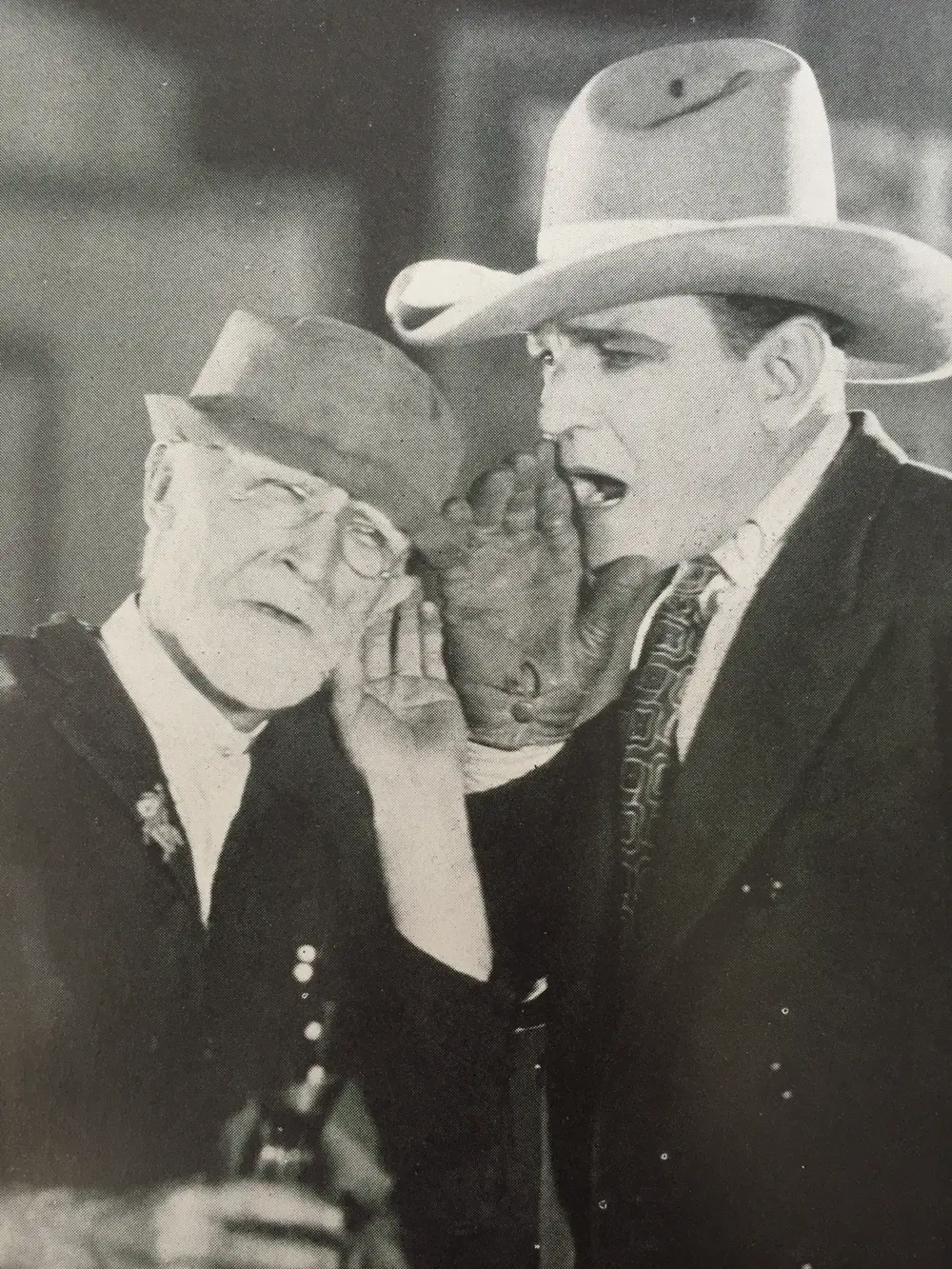
It’s a stark reminder that even without dialogue, the visual language of cinema was already a powerful tool for conveying narrative and emotion. This film, in particular, leverages the landscape not just as a backdrop, but as an active participant in the unfolding drama.
The pacing of Hills of Peril is a steady gallop, characteristic of many silent Westerns. It moves with a purpose, never dwelling too long on any single scene, yet allowing enough time for the audience to grasp the motivations and stakes. The narrative unfolds linearly, with a clear progression from Laramie's infiltration to the eventual confrontation with the bootleggers. While modern audiences might find the rhythm less frenetic than contemporary action films, it possesses a deliberate momentum that builds effectively towards its climax.
The tone is largely earnest and adventurous, with clear distinctions between good and evil. There are moments of lightheartedness, particularly in the interactions between Laramie and Ellen, but the underlying threat of the bootleggers maintains a consistent sense of tension. There is a refreshing lack of cynicism, a hallmark of many films from this period, which allows the heroic narrative to shine through without ironic detachment. This unvarnished sincerity is arguably one of its greatest strengths; it makes no apologies for its straightforward moral compass.
Absolutely, but with significant caveats. For film historians, genre enthusiasts, or anyone interested in the foundational elements of American cinema, Hills of Peril offers invaluable insights. It showcases the enduring appeal of the Western hero, the nascent techniques of cinematic storytelling, and the cultural preoccupations of the late 1920s. It’s a historical document as much as it is entertainment.
However, for the casual viewer unaccustomed to silent films, its lack of spoken dialogue, reliance on intertitles, and comparatively simpler plot structures might prove challenging. It requires a certain patience and an openness to a different mode of storytelling. Do not expect the intricate plotting of a modern thriller or the character depth of a prestige drama. Expect a solid, if unsophisticated, adventure.
Comparing it to other films of its era, such as the more overtly melodramatic The Unguarded Hour or the sprawling epic Autour de la roue, Hills of Peril firmly plants itself in the action-adventure camp, prioritizing clear narrative progression and physical prowess over psychological depth or artistic experimentation. It’s a workhorse of a film, designed to entertain its audience efficiently.
One surprising element is the relative agency given to Ellen. While she eventually needs Laramie’s help, her initial drive to activate the mine positions her as an independent force, not just a romantic interest. This subtly subverts the typical damsel trope of the era, suggesting a nascent shift in how female characters were sometimes portrayed, even in genre pictures. It’s a small detail, but it adds a layer of unexpected modernity to an otherwise traditional narrative. Her determination feels genuine, a character trait that resonates beyond the simple plot mechanics.
Furthermore, the film’s depiction of bootlegging, while serving as the primary conflict, feels less like a moral crusade and more like an exciting backdrop for a hero to prove himself. The 'evil' of the bootleggers is largely implied through their actions, rather than explicitly condemned, which offers a fascinating, almost detached, perspective on a major social issue of the time. It’s a Western first, a social commentary second, if at all.
Hills of Peril is a sturdy, if unremarkable, entry into the silent Western canon. It works. But it’s flawed. Its greatest asset is undoubtedly Buck Jones, whose presence elevates the material beyond mere genre exercise. For those willing to meet it on its own terms, understanding its historical context and the stylistic conventions of its era, it offers a perfectly enjoyable, if not groundbreaking, adventure. It serves as a vital snapshot of a foundational period in cinema, demonstrating the enduring power of classic storytelling even without the benefit of sound. While it won't redefine your understanding of cinema, it will certainly provide a pleasant, nostalgic ride through the rugged terrain of early Hollywood. Consider it a respectable, if not essential, piece of cinematic archaeology.
IMDb —
1921
Community
Log in to comment.