DbcultAccessing Vault...
6.9/10
Senior Film Conservator
A definitive 6.9/10 rating for a film that redefined the boundaries of cult cinema. The Girl of Gold remains a cornerstone of transgressive art.
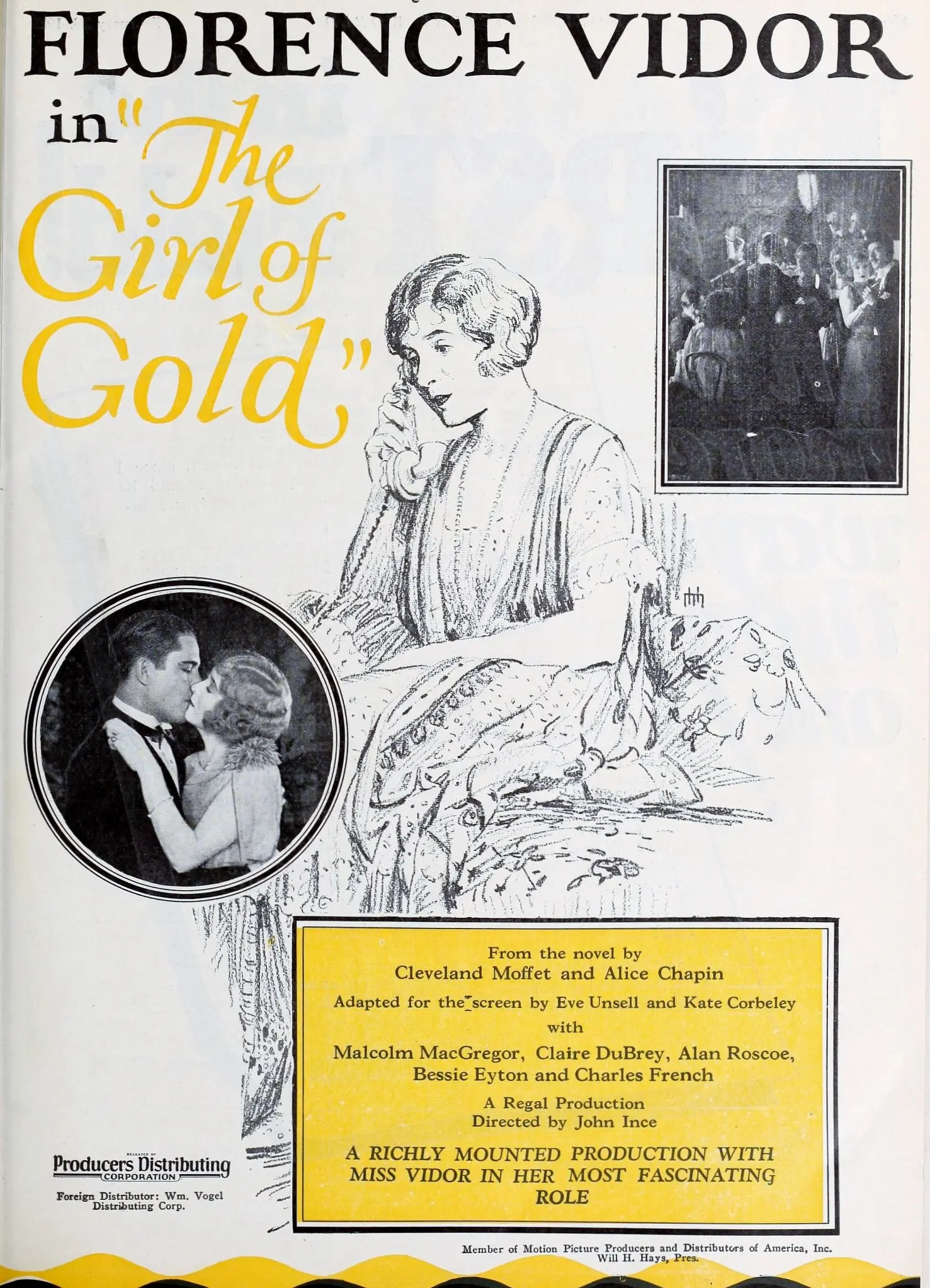
The Girl of Gold, a 1925 romantic drama, is a masterstroke of the pre-code era, where societal norms and individual desires often collide with explosive results. Directed by a team of writers—Eve Unsell, Kate Corbaley, Cleveland Moffett, and Anna Alice Chapin—this film tells the story of Helen Merrimore, a daughter of a wealthy mine owner who is shunned by New York society for her wealth. Weary of being courted purely for her fortune, she attends a house party under an assumed name, where she encounters Schuyler Livingstone, the impoverished heir of the elite Livingstone lineage.
Edith Loring, Schuyler's wife, who secretly harbors feelings for him, orchestrates a dinner meeting between Schuyler and Helen at a questionable roadhouse. Unbeknownst to them, Edith's husband, Ned, discovers the rendezvous. In a twist of fate, Helen happens to be present and steps in to protect Schuyler, falsely claiming that she arranged the meeting to announce her engagement to him. This act of deception sets the stage for a complex series of events that unfold, intertwining their fates with those of other characters.
Helen, played by Bessie Eyton, is a nuanced character whose journey from a wealthy heiress to a woman seeking genuine love is both poignant and compelling. Schuyler, portrayed by Malcolm McGregor, embodies the charm and vulnerability of the impoverished nobleman. Their relationship is fraught with complications, including the revelation that Helen's father has orchestrated her engagement to Schuyler, hoping to secure his lineage with Merrimore wealth. This plot twist adds a layer of depth to the narrative, as Helen and Schuyler must navigate their feelings for each other against the backdrop of familial and societal expectations.
Social commentary is a significant thread woven throughout the film. 'The Girl of Gold' critiques the rigid social structures of the time, highlighting the superficiality and often cruel nature of high society. The film's critique extends beyond mere surface-level social commentary, delving into deeper themes of love, sacrifice, and the quest for genuine connection. Through Helen and Schuyler's journey, the film explores the idea that true love transcends wealth and status, challenging the societal norms of the era.
Visually, 'The Girl of Gold' is a treat for the eyes. The opulence of New York's elite society is contrasted sharply with the rugged, industrial landscape of the mining town. The cinematography captures the grandeur of New York's mansions and the stark beauty of the mining site, creating a vivid visual palette that enhances the film's narrative. The use of lighting and set design effectively conveys the emotional states of the characters, particularly during pivotal scenes that reveal the truth about Helen and Schuyler's engagement.
The supporting cast, including Alan Roscoe, Claire Du Brey, Charles K. French, and Florence Vidor, all contribute to the film's richness. Alan Roscoe brings a sense of gravitas to his role, while Claire Du Brey's performance as Edith Loring adds layers of complexity to her character's motivations. Charles K. French and Florence Vidor provide a strong foundation for the film's emotional and narrative arcs, supporting the lead performances.
While 'The Girl of Gold' stands on its own merits, it is interesting to compare it with other films of the era. For instance, 'Youth to Youth' (1927) explores similar themes of societal expectations and the quest for authentic connection. 'Heart of Gold' (1927) and 'Madeleine de Verchères' (1926) also tackle the idea of love and identity against the backdrop of societal pressures. 'Tin Knights in a Hallroom' (1926) and 'Once a Plumber' (1925) offer contrasting perspectives on the intersection of social status and personal desires.
In conclusion, 'The Girl of Gold' is a testament to the artistry and complexity of early 20th-century cinema. It is a film that not only entertains but also provokes thought about the nature of love, societal expectations, and the pursuit of genuine connections. Through its vibrant performances, engaging plot, and rich visual storytelling, it remains a captivating piece of cinematic history.
IMDb —
1918
Community
Log in to comment.