DbcultAccessing Vault...
Cult Review
Senior Film Conservator
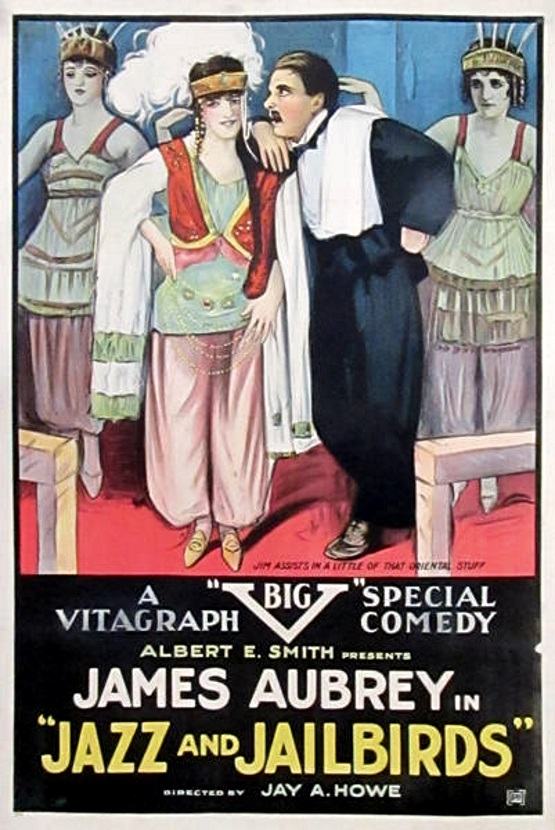
Step right up, film aficionados, and prepare for a journey back to the roaring twenties, a time when cinema was silent but its laughter roared! Today, we're shining a spotlight on a forgotten gem, a riotous romp of mistaken identities, daring escapes, and an unlikely romance that could only blossom amidst the chaos of a bygone era: Jazz and Jailbirds. This 1919 offering, featuring the comedic talents of Jess Weldon and a pre-fame Oliver Hardy, is more than just a historical artifact; it's a vibrant testament to the enduring power of slapstick and a fascinating peek into the narrative conventions that captivated audiences a century ago. Forget the nuanced psychological dramas of today; this film delivers pure, unadulterated comedic energy, a whirlwind of gags and predicaments designed to elicit hearty guffaws from start to finish. It’s a delightful reminder that sometimes, the simplest stories, told with panache and physical prowess, can leave the most lasting impression.
Our tale unfurls within the bustling confines of the 'Come On Inn,' a name that itself promises a certain level of delightful disarray. Here, we meet Jimmy, an earnest but perpetually beleaguered waiter, whose heart has been irrevocably captured by the ethereal charms of Mlle. Twinkletoes. Their burgeoning romance, however, quickly runs afoul of the inn’s manager, forcing Jimmy into a quick-witted deception: he claims his affections are merely an elaborate act, a theatrical flourish for the entertainment of the patrons. This initial skirmish sets the stage for a narrative steeped in theatricality and the blurring lines between performance and reality. It's a classic comedic setup, reminiscent of countless stage farces, where misunderstandings are the engine of humor. But the plot, ever eager to escalate, soon introduces the formidable figure of Warden I.M. Ruff, accompanied by members of his imposing family. Jimmy, through a series of escalating blunders – a cocktail of carelessness and perhaps a touch of vengeful mischief – finds himself squarely in the Warden’s crosshairs, culminating in a rather humiliating forced apology.
Just as Jimmy navigates this particular minefield, a new, more sinister element enters the fray: the Count De Razzbury, a character whose very name suggests aristocratic villainy. In a move of audacious thievery, the Count deftly relieves the Warden of his pocketbook, only to then, in a moment of panic, plant the incriminating evidence squarely in Jimmy’s pocket. The consequences are immediate and dire. Jimmy, despite his fervent protestations of innocence, is summarily arrested, his explanations scoffed at by a system all too eager to pin the crime on the most convenient scapegoat. He is, inevitably, dispatched to prison, a stark and sudden reversal of fortune that propels the story into its central comedic premise: the innocent man caught in an absurd web of circumstances.
The narrative then deftly pivots to the Ruff family, who, oblivious to the true culprit, are planning a grand reception. In a twist of delicious irony, Mlle. Twinkletoes is hired to perform, and the nefarious Count De Razzbury is invited as the guest of honor, much to the simmering jealousy of Miss Ruff's steady companion. Meanwhile, within the grim walls of the prison, Jimmy, during the convicts’ morning exercise, orchestrates a remarkably clever escape. This breakout isn't merely a dash for freedom; it's a strategic maneuver that places him directly in the path of 'the steady company,' who, mistaking Jimmy for someone else, extends an invitation to impersonate the distinguished guest at the very reception where the Count is meant to shine. The audacity of this turn of events is pure comedic gold, setting the stage for a confrontation brimming with dramatic irony and impending recognition.
As Jimmy, now in disguise, is presented to Mr. Ruff, the Warden experiences a flicker of recognition, a nagging suspicion that something is amiss, a faint echo of the 'Hoosegow' in Jimmy's demeanor. This tension builds exquisitely until Jimmy's disguise, inevitably, 'slips,' revealing his true, unadorned face. The jig is up! However, in a moment of genuine emotional resonance, Mlle. Twinkletoes steps forward, bravely confessing Jimmy's innocence. Convinced by her heartfelt plea, and perhaps swayed by a pang of conscience, Ruff promises a thousand dollars to right the grievous wrong he has inflicted. The film culminates in a chaotic scramble: Jimmy, despite being badly beaten, regains consciousness just in time to snatch the promised bounty before Ruff can reconsider, a final, triumphant act of reclaiming agency and justice in a world that had so unfairly conspired against him.
At the heart of Jazz and Jailbirds lies the spirited performance of Jess Weldon as Jimmy. Weldon embodies the quintessential silent film protagonist – a figure of boundless energy, expressive physicality, and a face capable of conveying a spectrum of emotions without uttering a single word. His comedic timing, particularly in the escalating series of blunders and his desperate attempts at subterfuge, is impeccable. He masterfully navigates the transition from lovelorn waiter to wronged convict to audacious imposter, each phase demanding a slightly different shade of his comedic palette. Weldon’s performance is a masterclass in the art of silent slapstick, where every gesture, every wide-eyed stare, and every frantic dash contributes to the overall comedic impact.
And then there's Oliver Hardy. While his role here might not be the iconic 'heavy' we'd later associate with Laurel and Hardy, his presence is nonetheless significant. Even in these early, formative years, one can discern the nascent elements of the comedic persona that would define his legendary career. Hardy, often playing the 'straight man' or a figure of authority, even here, exhibits a certain gravitas, a physical presence that grounds the more frantic antics of his co-stars. It’s a fascinating glimpse into the evolution of a comedic genius, demonstrating that even before his partnership with Stan Laurel, Hardy possessed an inherent comedic sensibility that made him a valuable asset to any production. His very demeanor, even in a supporting capacity, adds a layer of authenticity and often, exasperation, to the proceedings.
Dorothy Vernon, as Mlle. Twinkletoes, provides the emotional anchor and the romantic impetus for Jimmy's trials. Her portrayal is charming and spirited, embodying the ideal silent film heroine – beautiful, graceful, and ultimately, courageous. Her decisive intervention in the film's climax, vouching for Jimmy's innocence, is a pivotal moment that elevates her beyond a mere damsel in distress, making her an active agent in the resolution. The supporting cast, including Richard Smith and Dorothea Wolbert, ably fill out the vibrant world of the film, creating a believable ensemble that contributes to the overall comedic tapestry. From the blustering Warden I.M. Ruff to the cunning Count De Razzbury, each character, however briefly on screen, serves a vital purpose in propelling the intricate plot forward, ensuring that the comedic engine never falters.
To truly appreciate Jazz and Jailbirds, one must immerse oneself in the unique language of silent comedy. This is a genre that thrives on exaggeration, on the eloquent power of the unspoken word. Visual gags are paramount, from the pratfalls and chases to the meticulously choreographed chaos that defines so much of the film's humor. The narrative is driven not by dialogue, but by frantic gestures, wide-eyed expressions, and the occasional, pithy title card that punctuates the action. Director J.A. Howe demonstrates a keen understanding of this visual grammar, orchestrating scenes that build in intensity and comedic absurdity, culminating in satisfyingly chaotic payoffs.
The film stands as a vibrant example of the slapstick tradition that dominated early cinema. It shares a lineage with countless other films of the era, where the simple act of falling down or narrowly escaping disaster became an art form. Unlike the more dramatic and suspenseful narratives like The Spiders - Episode 1: The Golden Sea or the intense character studies seen in A Fool There Was, Jazz and Jailbirds revels in its lighthearted approach, prioritizing laughter above all else. Its strength lies in its ability to construct elaborate scenarios of mistaken identity and daring escapes, all while maintaining a buoyant and optimistic tone. The pacing is relentless, a hallmark of silent comedies, ensuring that the audience is constantly engaged in the unfolding spectacle.
While primarily a vehicle for laughter, Jazz and Jailbirds inadvertently touches upon several intriguing themes. The most prominent, of course, is that of mistaken identity, a comedic trope that has fueled countless narratives across centuries. Jimmy's journey from innocent waiter to unjustly incarcerated convict, and then to audacious imposter, highlights the fragility of identity and the ease with which one can become entangled in circumstances beyond their control. This theme, while played for laughs, subtly underscores the arbitrary nature of justice and the societal prejudices that can condemn an individual based on superficial evidence.
Moreover, the film offers a glimpse into the social stratification of the era. Jimmy, the humble waiter, stands in stark contrast to the authoritative Warden Ruff and the aristocratic Count De Razzbury. His plight, therefore, resonates with a certain underdog appeal, a common man battling against the powerful and the privileged. The ultimate triumph of Jimmy, not just in clearing his name but in securing a financial recompense, serves as a satisfying, albeit comedic, reversal of fortune that speaks to a desire for justice, however crudely delivered. Even the underlying romantic subplot, with Mlle. Twinkletoes' unwavering belief in Jimmy, adds a layer of emotional depth to the otherwise madcap proceedings, reminding us that even amidst the chaos, human connection and loyalty endure.
Released in 1919, Jazz and Jailbirds is a fascinating artifact from a pivotal period in cinematic history. It predates the widespread advent of synchronized sound, placing it firmly within the golden age of silent film. The production values, while perhaps modest by today's standards, reveal the ingenuity and resourcefulness of filmmakers working with nascent technology. The sets, costumes, and outdoor locations all contribute to creating a believable, if exaggerated, world for the narrative to unfold. The film's reliance on physical comedy and expressive acting highlights the strengths of this particular cinematic era, where the visual narrative was king and performers honed their craft to communicate complex emotions and actions without dialogue. It serves as an excellent reference point for understanding the evolution of film language, demonstrating how stories were told and humor was crafted before the advent of the 'talkies.'
While not as widely remembered as some of the era's blockbusters, Jazz and Jailbirds holds a significant place for film historians and enthusiasts of silent comedy. It offers a valuable insight into the early careers of talents like Oliver Hardy, showcasing his foundational work before becoming one half of the world’s most beloved comedic duos. More importantly, it reminds us of the universal appeal of laughter, of stories where the underdog triumphs against seemingly insurmountable odds, and where chaos ultimately resolves into a satisfying sense of justice. Its enduring charm lies in its simplicity, its relentless energy, and its unpretentious commitment to pure entertainment. Even a century later, the antics of Jimmy and the delightful absurdity of his predicament can still bring a smile to one's face.
So, if you're looking to delve into the rich tapestry of early American cinema, or simply crave a dose of good old-fashioned slapstick, Jazz and Jailbirds comes highly recommended. It’s a joyous, energetic, and surprisingly intricate piece of comedic filmmaking that continues to resonate with its timeless themes and uproarious gags. A true testament to the power of silent storytelling!
IMDb 6.4
1931
Community
Log in to comment.