DbcultAccessing Vault...
Cult Review
Senior Film Conservator
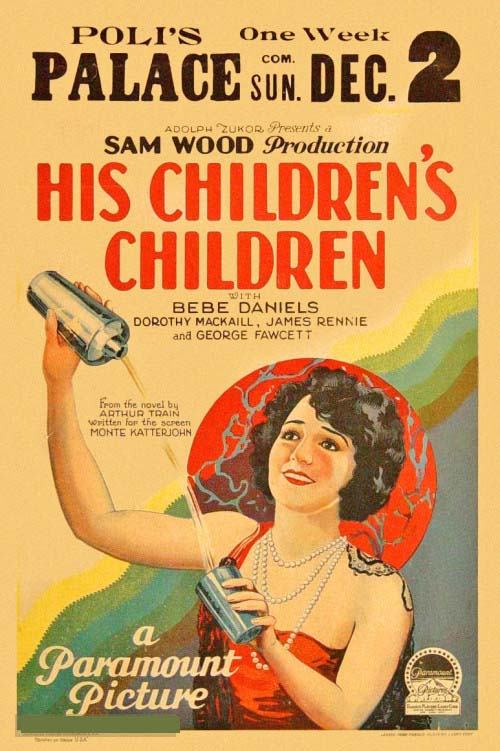
The silent era frequently grappled with the specter of lineage, yet few films approach the surgical precision of His Children's Children. Directed by the prolific Sam Wood and adapted from Arthur Train’s biting social critique, this 1923 production serves as a somber memento mori for the American Dream. It is a cinematic excavation of the stratified layers of the Mayne family, where the bedrock of Victorian industry meets the shifting sands of Jazz Age nihilism. While films like Lady Rose's Daughter explored the individual’s climb through the social hierarchy, Wood’s epic focuses on the terrifying momentum of the descent.
At the center of this maelstrom is Peter B. Mayne, portrayed with a weathered, staccato intensity that suggests a man more comfortable with iron rails than velvet cushions. His character acts as a silent rebuke to the contemporary decadence of the 1920s. In the meticulously crafted flashbacks, we see a younger Peter—not a man of boardrooms, but a man of the earth, carving a path through the wilderness. This ruggedness stands in stark contrast to the soft, indoor lives of his descendants. The film uses these historical echoes to create a sense of atavistic guilt; the audience is constantly reminded that the splendor of the Park Avenue penthouse was paid for in the sweat and blood of a different century. Unlike the romanticized struggle found in Wagon Tracks, the history here is presented as a burden, a standard that the modern Maynes can never hope to meet.

Rufus, the middle link in this deteriorating chain, represents the precarious transition from producer to manager. He is a man of paper wealth, his life dictated by the erratic pulse of the stock ticker. The film brilliantly captures the claustrophobia of his existence. While his father dealt with physical obstacles—mountains, weather, and distance—Rufus deals with the ephemeral phantoms of credit and reputation. The tension in his household is palpable; he is the engine that keeps the social machinery running, yet he is increasingly alienated from the very family he supports. This domestic friction mirrors the thematic obsession with social standing found in Infatuation, though Wood imbues it with a more systemic, almost clinical dread.
The real tragedy, however, unfolds through the lives of the three daughters, most notably Diana, played with a luminous but fractured grace by Bebe Daniels. These characters are the true 'children's children' of the title—beneficiaries of a struggle they never understood and heirs to a fortune they are ill-equipped to manage. Diana is the quintessential flapper, but without the joyous liberation usually associated with the archetype. In her, we see the boredom of the over-privileged. Her pursuits are not of happiness, but of distraction. The film’s portrayal of high society is far from the whimsical charm of What Happened to Rosa; instead, it is a suffocating web of etiquette and artifice.

The social milieu of the Mayne daughters is depicted as a series of lavish, hollow rituals. The cinematography during the ballroom scenes is intentionally dizzying, capturing the frenetic energy of a class that is dancing on the edge of a precipice. There is a profound sense of spiritual vacancy here. While the patriarch found meaning in the tangible expansion of the nation, his granddaughters find only a fleeting sense of self in the approval of their peers. This disconnect is the film’s most potent weapon, illustrating how the very success of the first generation sows the seeds for the moral bankruptcy of the third.
Sam Wood’s direction is characterized by an unusual restraint. He allows the architecture of the sets to speak for the characters. The Mayne mansion is not just a backdrop; it is a character in itself—massive, cold, and increasingly tomb-like. The use of deep focus photography (primitive by later standards but effective here) allows us to see the patriarch in the background, a ghostly reminder of the past, while the younger generations bicker in the foreground. This visual layering reinforces the theme of the past constantly haunting the present.

Furthermore, the lighting transitions from the harsh, naturalistic glare of the railroad scenes to the soft, diffused, and ultimately deceptive lighting of the New York interiors. It is a visual journey from truth to artifice. When compared to the more straightforward narrative style of The Midnight Wedding, His Children's Children feels remarkably modern in its psychological depth. It doesn't rely on melodrama to convey its message; it relies on the slow, agonizing accumulation of domestic failures.
One cannot discuss this film without acknowledging the eclectic cast. Warner Oland, years before his iconic turn as Charlie Chan, provides a performance of subtle menace that adds a layer of external pressure to the family’s internal collapse. The presence of Jack Oakie in an early role provides a fleeting glimpse of the comedic talent that would later define him, though here he is subsumed by the film’s overall somber tone. The cast is a microcosm of the industry at the time, featuring veterans of the stage and rising stars of the screen, all working in a strange, harmonious friction.

The film also benefits from its secondary characters, who act as foils to the Mayne family’s insularity. Where a film like A Kiss for Susie might find nobility in the working class, Wood’s film suggests that the rot of the upper class eventually seeps into everything it touches. The lawyers, the suitors, and the hangers-on are all part of the same entropic system. There is no 'outside' to the Mayne influence, which makes their eventual downfall feel all the more absolute.
When placed alongside contemporaries like And Women Must Weep, His Children's Children stands out for its lack of sentimentality. It does not ask us to pity the Maynes, nor does it ask us to celebrate their ruin. It simply asks us to witness the physics of social decay. The film shares a certain DNA with La mission du Docteur Klivers in its exploration of duty and legacy, but it transplants those themes into the uniquely American soil of the post-war boom. It lacks the adventurous spirit of With Stanley in Africa, choosing instead to explore the far more dangerous and uncharted territory of the human ego.

The climax of the film is not a sudden explosion, but a quiet, devastating realization. As the financial and social structures Rufus built come crashing down, the patriarch Peter B. Mayne is the only one left with any semblance of dignity. His death is not a tragedy, but a mercy—an exit from a world he no longer recognizes and a family that has failed his legacy. The resolution offers no easy comfort. It suggests that the cycle of wealth and decay is as inevitable as the changing of the seasons. The daughters are left to navigate a world where their name no longer carries the weight of gold, forcing a confrontation with reality that they are fundamentally unprepared for.
In the end, His Children's Children is a haunting exploration of the 'third-generation curse.' It posits that the first generation builds, the second maintains, and the third destroys. It is a theme that remains as relevant today as it was in 1923. While the technology of the railroad has been replaced by the digital age, the human tendencies toward complacency and profligacy remain unchanged. The film is a masterful, if cynical, look at the price of success and the fragility of the American dynasty.
For those interested in the evolution of the family saga, this film is essential viewing. It lacks the melodramatic flourishes of Ranson's Folly or the earnestness of Volunteer Organist, opting instead for a cold, clear-eyed gaze into the heart of the Gilded Age's sunset. It is a film of shadows, both literal and metaphorical, reminding us that every empire is built on a foundation that will eventually be forgotten by those who benefit from it most.
IMDb —
1920
Community
Log in to comment.