DbcultAccessing Vault...
Cult Review
Senior Film Conservator
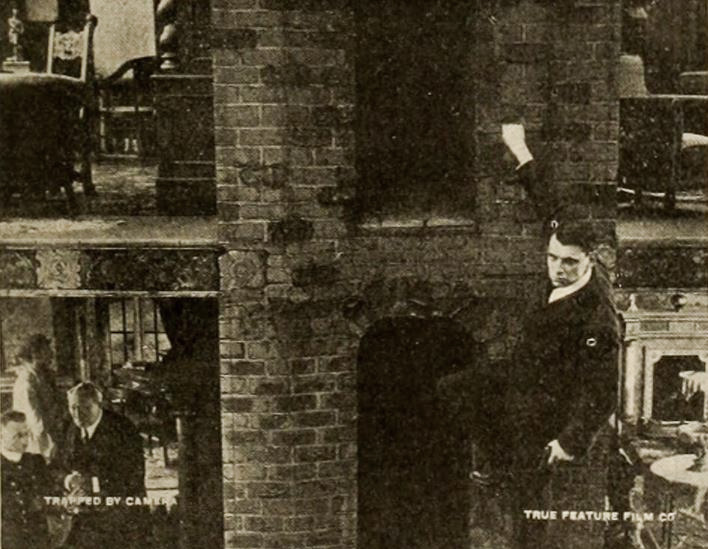
A house that breathes secrets, a camera that never blinks, and one bearded spy who steps into the trap of his own reflection—Trapped by the Camera is a 1914 time-capsule that feels algorithmically injected into our surveillance-saturated century.
Watch it today and you half-expect the grain to resolve into 4K, for the intertitles to sprout subtitles in emoji. Yet the tremor it leaves is purely analog: the chill of being observed without consent, a sensation we now shrug at through glass-screen rectangles. Ernst Reicher, multitasking as star, scenarist, and shadow-auteur, understood that the most lethal weapon isn’t the pistol but the lens. His Stuart Webb—decked in astrakhan collar and doom-laden gaze—never fires a shot; he simply arranges for light to ambush darkness.
The professor’s apartment block behaves like a Möbius strip drafted by M.C. Escher and erected by cash-strapped masons. Staircases corkscrew into one another, attic doors open onto sub-basements, and every creak is a Morse code whispered to the trespasser. Reicher refuses to map this space for us; instead he lets the camera prowl, producing a Kafkascope where geometry itself commits treason. Compare this claustrophobic vertical maze to the open-air psychosis of Jess, where the outback swallows identity whole; here, identity is quartered by drywall and risers.
Webb’s Rube-Goldberg contraption—tripwire attached to flash-bulb attached to cine-crank—constitutes the first fictional CCTV rig. Contemporary viewers in 1914 would have flinched at the hubris: filming a crime before it occurs? The gadget’s whirr is the era’s dial-up modem, promising revelation at 16 frames per second. When the bulb detonates, the burglar’s beard blooms white against celluloid night, a proto-mugshot snapped by a machine with no conscience. Fast-forward a hundred-odd years and Ring doorbells perform the same choreography on porches worldwide, except we’ve traded silver nitrate for cloud storage.
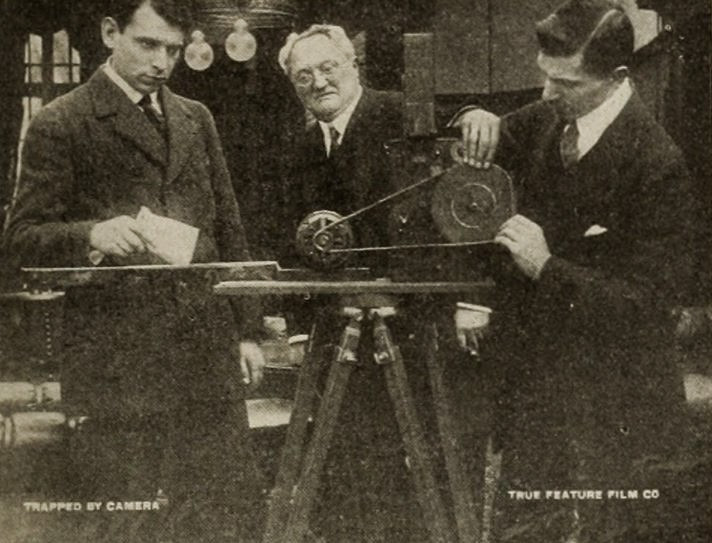
Having captured the hirsute clue, Webb anticipates the only logical sequel: emergency depilation. The barbershop set-piece is Hitchcock before Hitchcock bothered to spell suspense with a capital S. Lather foams like surf over villainous chin; the razor hovers, scythe in a cathedral of hygiene; handcuffs click in lieu of severed throat. The whole sequence smells of bay rum and comeuppance. One thinks of the tonsorial terror in The Last Volunteer, yet Reicher’s version is leaner, meaner, and weirdly intimate—no orchestra, just the hush of hair being clipped and the metallic whisper of justice.
Beneath the whodunit froth lurks geopolitical dread: foreign agents stalk European capitals, filching torpedo blueprints. WWI is months away; the film’s paranoia feels prophetic. The screenplay never names the infiltrator’s homeland, but kaiser-era audiences would have filled the blank with whichever empire their newspaper vilified that week. Compare this to the morphine-drenched underworld of Cocaine Traffic; or, the Drug Terror—both movies weaponize domestic space, turning parlors into battlefields where empires bleed by candlelight.
Reicher is Stuart Webb and vice versa; the role clings to him like a second epidermis. His performance is calibrated for silence—eyebrows arch like question marks, fingers drum Morse on lapels, the mouth remains a hyphen of calculation. He belongs to the lineage of cerebral sleuths stretching from The Royal Imposter’s disguised nobleman to The Key to Yesterday’s amnesiac antiquarian. Yet Reicher adds a veneer of urbane fatigue, as if every solved case subtracts a year from his lifespan.
Cinematographer Willy Gaebel (uncredited yet indispensable) chisels chiaroscuro worthy of later German expressionism. Watch how the camera lingers on the professor’s desk: quills cast shadows like black lightning, inkwells glisten like obsidian hearts. When the flashbulb pops, the frame overexposes, converting burglar to negative-space demon. These tenebrous flourishes anticipate the spectral glow in Moths, where light itself seems carnivorous.
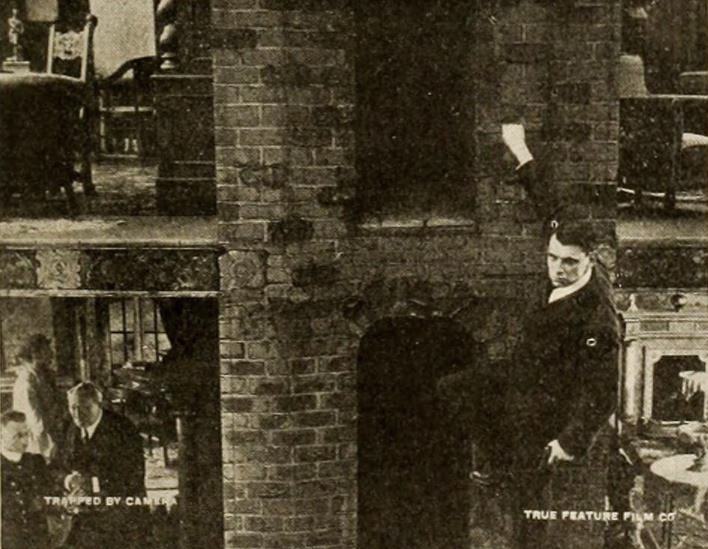
Female characters are peripheral here, a stark contrast to the matriarchal cunning of A Woman’s Triumph or the anarchic femininity of Frou Frou. The professor’s maid scuttles through two shots, her face a blur of starched terror; Webb’s assistant is male, eager, forgettable. This vacuum feels deliberate: the film constructs a masculine panic room where empires, not hearts, are stolen.
Reicher spritzes the narrative with gallows humor—policemen bump into suits of armor, the professor misplaces his spectacles atop a globe, Webb tests the tripwire and ends up photographing his own toe. These comic sneezes prevent the tone from calcifying into pure noir. They also serve as pressure valves, much like the barnyard slapstick nestled inside The Country Mouse.
A 2023 4K restoration by the Deutsche Kinemathek floats around arthouse venues, revealing textures previously drowned in mildew: the herringbone of Webb’s waistcoat, the dust motes pirouetting in projector beam. Contemporary reviewers on Letterboxd liken the experience to "finding surveillance footage of your own dreams." Streaming rights remain tangled; your best bet is a region-free Blu from Edition Filmmuseum, coupled with a synth-score reimagining by composer Alva Noto that replaces intertitles with glitched morse.
Trapped by the Camera is the seed from which sprout Fritz Lang’s Spione, Coppola’s The Conversation, even Tony Scott’s Enemy of the State. Its DNA coils around every found-footage thriller that insists the camera itself is protagonist. When you next scroll past a doorbell-cam clip on social media, remember Stuart Webb: he monetized paranoia before silicon ever dreamed of it.
Verdict: essential viewing for cine-archaeologists, surveillance scholars, and anyone who suspects their furniture is gossiping about them after midnight.
IMDb 5.2
1935
Community
Log in to comment.