DbcultAccessing Vault...
7.5/10
Senior Film Conservator
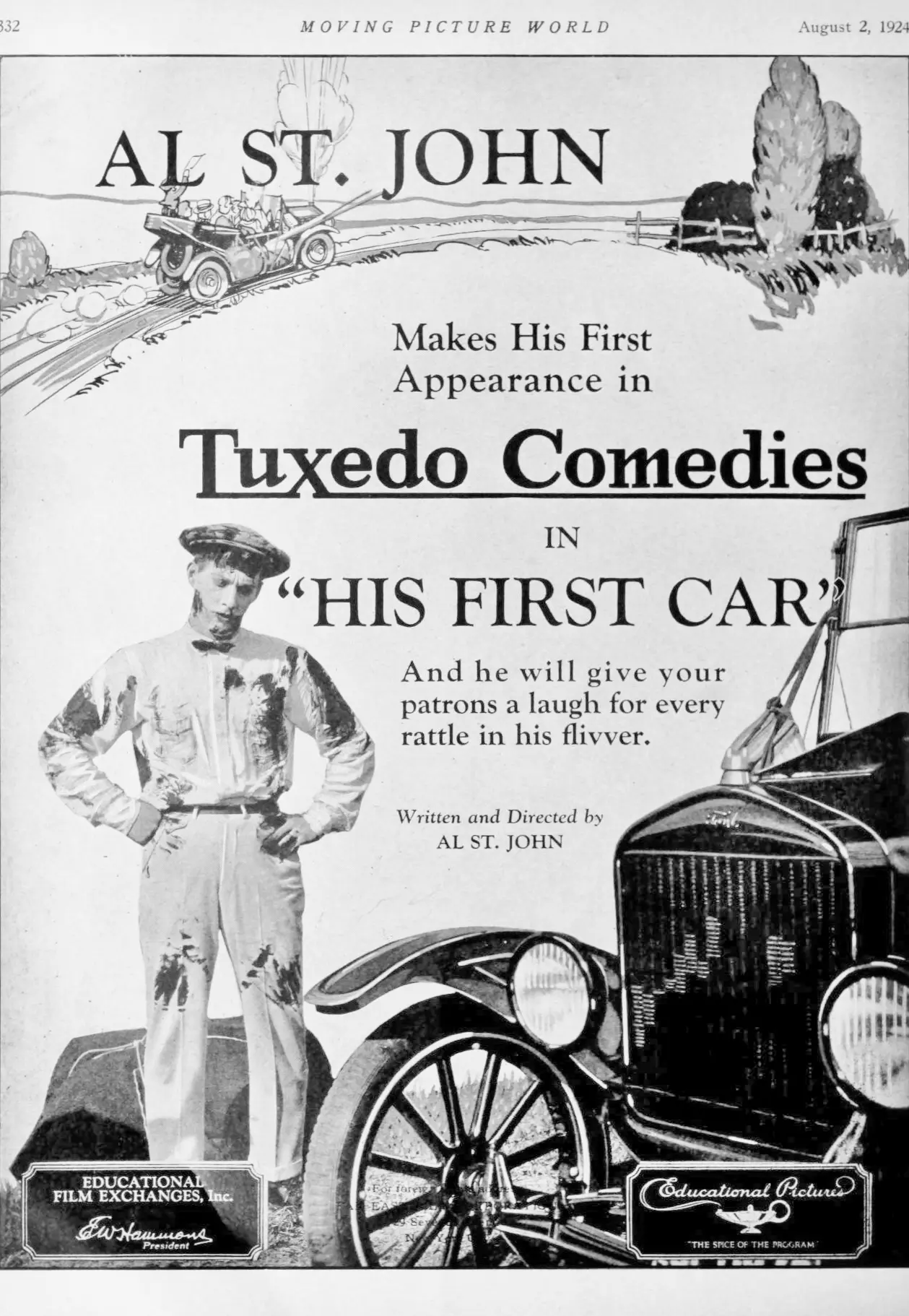
A definitive 7.5/10 rating for a film that redefined the boundaries of cult cinema. His First Car remains a cornerstone of transgressive art.
The roaring twenties, a decade often romanticized for its jazz-fueled exuberance and burgeoning modernity, was also a period of profound societal shifts, not least of which was the democratisation of the automobile. The car, once a luxury reserved for the elite, was swiftly becoming an attainable dream for the burgeoning middle class, promising freedom, adventure, and an escape from the mundane. It’s this very potent symbolism that Roscoe 'Fatty' Arbuckle, in his capacity as writer, brilliantly skewers in the uproarious and surprisingly insightful short film, His First Car. Far from a mere chronicle of mechanical acquisition, this 1924 cinematic gem serves as a cautionary tale, a comedic deconstruction of the often-unforeseen consequences that accompany even the most eagerly anticipated of modern conveniences. The very premise—a man buying his first car and celebrating by taking his family and neighbors to the country for a camping trip—is presented with an immediate, almost prophetic, addendum: “In hindsight, this was a terrible idea.” It’s a bold declaration that sets the stage for a spectacular unraveling, a testament to the film’s self-aware humor and its astute commentary on the human tendency to over-optimise.
At its heart, the narrative of His First Car is disarmingly simple, yet its execution is a masterclass in escalating comedic tension. Our protagonist, portrayed with an endearing blend of wide-eyed optimism and burgeoning exasperation by the inimitable Al St. John, has finally achieved the quintessential American dream of the era: ownership of his very first automobile. This momentous occasion, however, is not to be a solitary triumph. Instead, it becomes the catalyst for a grand, albeit misguided, gesture of communal celebration. He decides to commemorate this milestone by taking his entire family – wife Blanche Payson, and children Doris Deane and Donald Hughes – along with a contingent of unsuspecting neighbors, including George Davis and Leon Holmes, on a camping trip to the idyllic countryside. The initial vision, undoubtedly, is one of pastoral bliss, sun-dappled picnics, and harmonious camaraderie, a picturesque escape from urban confines. The reality, as the film deftly illustrates with relentless comedic precision, is a spectacular descent into an anarchic maelstrom of vehicular malfunction, interpersonal friction, and the relentless, unforgiving whims of nature. St. John's character, initially beaming with pride, slowly crumbles under the weight of accumulating disasters, his cheerful demeanor giving way to frantic desperation and ultimately, utter defeat.
Arbuckle’s writing, even when operating within the confines of a silent short, exhibits a remarkable understanding of human folly and the inherent absurdity of aspiration meeting reality. The very act of acquiring a car, intended to simplify life and expand horizons, ironically becomes the progenitor of untold complications. This thematic thread resonates with a timeless quality, recalling the grander, more dramatic narratives of ambition gone awry found in works like Crime and Punishment, albeit stripped of its existential angst and imbued instead with a far more lighthearted, slapstick sensibility. Here, the consequences are not moral decay or psychological torment, but rather muddy clothes, deflated tires, a broken picnic basket, and shattered nerves. The irony is palpable: the modern convenience designed to facilitate easy travel becomes the very instrument of arduous struggle, transforming a simple outing into an epic, albeit miniature, ordeal. Arbuckle masterfully crafts scenarios where every solution begets a new, more complicated problem, trapping the characters in a comedic feedback loop of escalating misfortune.
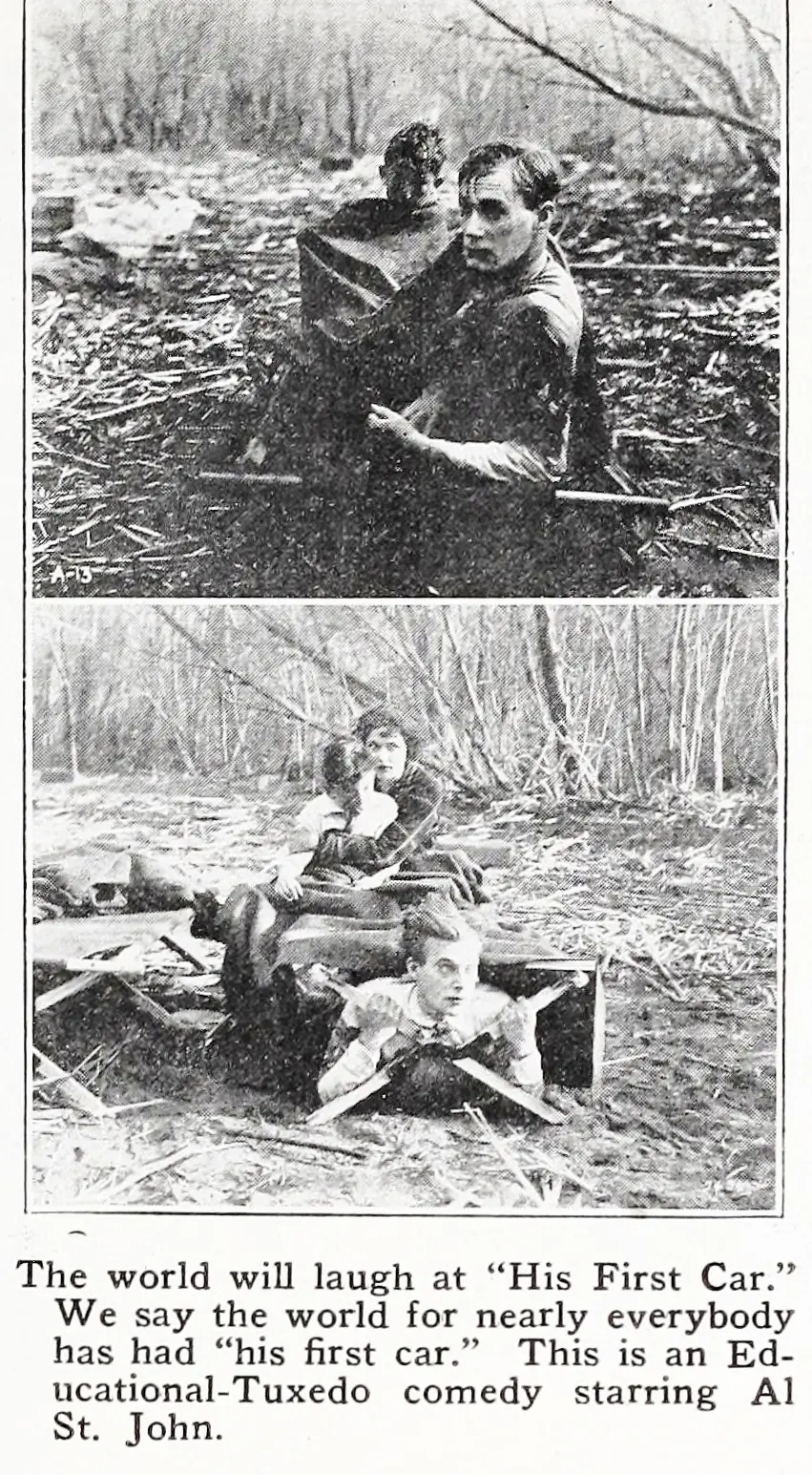
Al St. John, a veteran of countless comedies and a frequent collaborator with Arbuckle, delivers a performance that anchors the escalating chaos with remarkable skill. His character arc, from ebullient new car owner to a man on the verge of a nervous breakdown, is portrayed with nuanced physical comedy that speaks volumes without a single word. He isn't merely a prop for gags; his reactions, his increasingly frantic attempts to maintain control—from struggling with an obstinate crank handle to wrestling with a recalcitrant tent—and his palpable despair are what lend the film its comedic potency. The supporting cast, particularly Blanche Payson as the long-suffering wife, provides excellent counterpoints to St. John’s increasingly unhinged patriarch. Her expressions of exasperated resignation, a weary glance skyward or a barely perceptible shake of the head, speak volumes, a testament to the power of silent film acting where a raised eyebrow or a pursed lip can convey entire paragraphs of dialogue, perfectly embodying the quiet despair of a woman who knew this was a bad idea from the start.
The choice to include the neighbors on this ill-fated expedition is a stroke of genius, transforming a potential domestic squabble into a full-blown societal meltdown in miniature. The forced proximity, the clash of personalities, and the shared indignities of the camping trip expose the fragile veneer of polite society. What starts as a congenial outing quickly devolves into bickering over who packed what, accusations about who left the lantern on, and a general sense of every-man-for-himself as the comforts of home fade into a distant memory. This dynamic, though played for laughs, offers a subtle commentary on community and the limits of shared endurance, painting a picture of human nature under pressure that is both hilarious and acutely observed. It’s a stark contrast to the more overtly dramatic explorations of communal struggle seen in epics like Die Herrin der Welt 2. Teil - Die Geschichte der Maud Gregaards, which deals with grander geopolitical and personal conflicts, but nonetheless explores how individuals react when their shared circumstances become unbearable.
IMDb —
1920
Community
Log in to comment.