DbcultAccessing Vault...
Cult Review
Senior Film Conservator
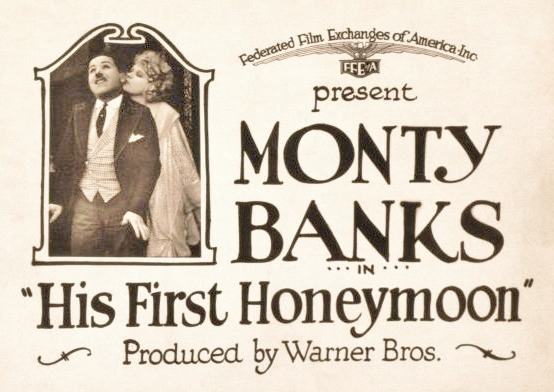
Imagine a champagne bottle uncorked at 2 a.m. in a Pullman corridor: that effervescent hiss is the precise tonal signature of His First Honeymoon, a 1925 five-reeler that somehow distills the entire Jazz Age into forty-three buoyant minutes. Florence Gilbert’s Tootsie doesn’t walk; she detonates into frames, a sequined comet trailing gin rickey laughter. Monty Banks, all angular panic and pencil-mustache twitches, is the perfect stooge to her controlled chaos. Together they hijack the hoariest of comic premises—the mistaken honeymoon—and turn it into a staccato poem on risk, re-invention, and the American yen for running away from oneself.
Director William A. Seiter (working here with the unheralded scenarist Raymond Griffith) shoots Niagara not as postcard kitsch but as a liquid guillotine: water foams like celluloid nitrate ready to combust. Note the insert shot of Tootsie’s satin slipper perched on the railing while the Falls thunder below; the camera lingers three frames longer than safety dictates, letting dread seep through the fizz. The gag lands—she retrieves the shoe without a glance downward—but the vertigo lingers, a rare emotional hangover in slapstick.
Gregory’s odyssey is less a linear itinerary than a spiral of self-dissolution. Each station stop peels away another layer of respectability: the starched collar surrendered to a drunken porter, the pocket watch pawned for orchids, the fiancée’s photograph traded for a single ride on the honeymoon Ferris wheel. The narrative arc is a backwards birth: returning to an infant state where impulse rules and identity is a costume you shrug off like a silk robe. When Tootsie coos, “First honeymoon? Kid, we’re all on our second chance,” she’s not breaking the fourth wall—she’s dismantling the whole proscenium of post-war propriety.
Gilbert, too often dismissed as a confectionary beauty, reveals a surgeon’s timing: every double-take is calibrated to the millisecond, yet her eyes hold a private melancholy that makes the laughter catch in your throat. Banks, usually the second banana, carries the film’s emotional valise; watch the way his shoulders deflate when he realizes the honeymoon suite has only one bed—terror, then a flicker of surrender so naked you almost blush. Their chemistry is the silent era’s answer to Grant & Russell, only faster, drunker, more liable to slide off the screen and ask you for a light.
Cinematographer Hal Mohr (later to lens The Jazz Singer) bathes night sequences in sulphur-yellow sodium flares that make faces appear carved from butter. Interiors of the Grandview Hotel are rendered in forced perspective: corridors telescope into infinity, a visual echo of the lovers’ recursive deceptions. The famous iris-in on Tootsie’s wink becomes a spiritual shutter: we are complicit voyeurs, accessories to bigamy against the backdrop of honeymoon capitalism.
Compare this visual bravado to the claustrophobic boardrooms in The Manager of the B & A or the apocalyptic frescoes of Attila, the Scourge of God; Seiter’s film is the hinge between Calvinist repression and boom-time hedonism, a diurnal dream that knows sunrise will bring receipts.
Prudence, the abandoned fiancée, arrives mid-film armed with a chaperone and a Presbyterian glare. Her very silhouette—corseted, vertical, unbending—operates as a moral yardstick against which Tootsie’s curves sin provocatively. Yet the film refuses catfight tropes. In a daring two-shot, both women size each other up over a pot of hotel tea; steam fogs the lens, and for a heartbeat neither stereotype holds. Prudence’s tremulous confession—“I, too, wanted to ride the Ferris wheel”—floods the scene with sorrowful recognition: desire is the great democratizer, reducing saint and sinner to the same quivering id.
Seiter cuts on motion, not punch lines. A bellboy’s stumble propels us into the next gag before the brain processes the pratfall, creating a percussive rhythm closer to a Bix Beiderbece solo than to Sennett’s pie-throw symphonies. The climactic chase across the ice-bridge beneath the Falls intertitles become haiku:
“Grooms freeze.
Brides fly.
Water laughs.”
Each card lasts eight frames—shorter than a sneeze—yet lands like a battering ram.
Contemporary restorations often smother silent comedies with jaunty organ. Seek instead the 2018 Cineteca di Bologna print featuring a commissioned score by Les Automatiques: ukulele, toy piano, sampled roulette wheels. The musicians underline the film’s latent menace—during the near-drowning sequence, a slow waltz in C-minor makes the foam feel carnivorous. Silence, when it finally drops, hits like a scream.
Place His First Honeymoon beside The Marriage of Kitty and you witness the tonal gulf between continental drawing-room sophistication and Yankee restlessness. Kitty’s matrimonial calculus is a chess problem; Tootsie’s is a craps shoot. Stack it against The Misfit Wife and the gender dialectic flips: the latter punishes wayward women, whereas Seiter’s film lets its heroine pirouette off the moral cliff and still sticks the landing.
Watch the peripheral figures: the Iroquois blanket vendor, the Black porter who wordlessly catches the looted wallet. Their wordlessness is not neutrality; it is the enforced silence of labor that bankrolls the lovers’ white freedom. The film may not critique this hierarchy, yet its presence haunts the edges like chemical staining on nitrate. One wonders what honeymoon these supporting shadows might script if given voice.
For decades only a 9.5 mm abridgement circulated among collectors in Buenos Aires. Then in 2015 a near-complete 35 mm fine-grain master turned up inside a disused Montreal nunnery—rumor links it to an export distributor who sought sanctuary during the Depression. The Canadian Film Institute oversaw a 4K wet-gate transfer, revealing pockmarks of rain on the original negative: Niagara insisting on autographing every frame. Today the film streams on Criterion Channel, but catch it 35 mm if you can; the projector’s flicker turns each splash into stroboscopic bliss.
Silent comedy too often means safety: Keaton’s stone-face, Lloyd’s skyscraper dangle, Chaplin’s tramp. His First Honeymoon offers something more volatile—an erotic roulette wheel spun by two performers who refuse to signal whether the marble will land on love, loot, or loneliness. It is the missing link between the matrimonial satires of the Teens and the screwball baptism of the Thirties. Missing it is like skipping the first sip of gin after Prohibition: legal, but spiritually impoverished.
Final Whisper:
Let the Falls roar. Let the vicar frown. Let the last intertitle read “And they lived happily ever after—until Tuesday.” Then watch the projector’s bulb dim and feel your own pulse syncopate with the certain knowledge that every honeymoon, first or fifth, is only the first exhale of a lifelong freefall. Grab the popcorn, grab the hand of whoever braved the sofa beside you, and jump. The water’s fine—until it isn’t.

IMDb —
1920
Community
Log in to comment.