DbcultAccessing Vault...
5.3/10
Senior Film Conservator
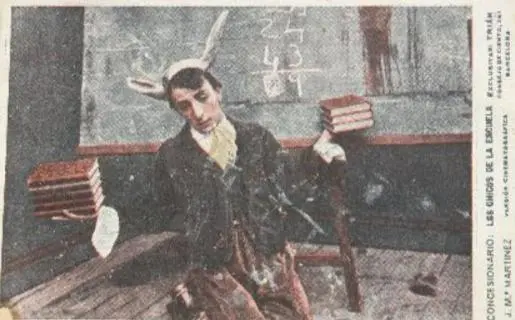
A definitive 5.3/10 rating for a film that redefined the boundaries of cult cinema. Los chicos de la escuela remains a cornerstone of transgressive art.
Should you invest your time in a century-old Spanish silent comedy? Short answer: Yes, but only if you value historical texture over modern pacing. This film is a definitive artifact for those interested in the roots of European comedy, though it may leave fans of high-octane blockbusters checking their watches.
This film is specifically for students of cinema history, lovers of Spanish culture, and those who enjoy seeing the 'zarzuela' style translated to the screen. It is absolutely not for viewers who demand 4K resolution or a narrative that moves at the speed of a TikTok algorithm.
1) This film works because it rejects the sterile, stage-bound stiffness of many early silents in favor of a kinetic, almost chaotic energy that feels surprisingly modern in its depiction of childhood mischief.
2) This film fails because its reliance on the audience's familiarity with the original zarzuela lyrics and music means that, in silent form, some of the rhythmic punch of the comedy is lost to time.
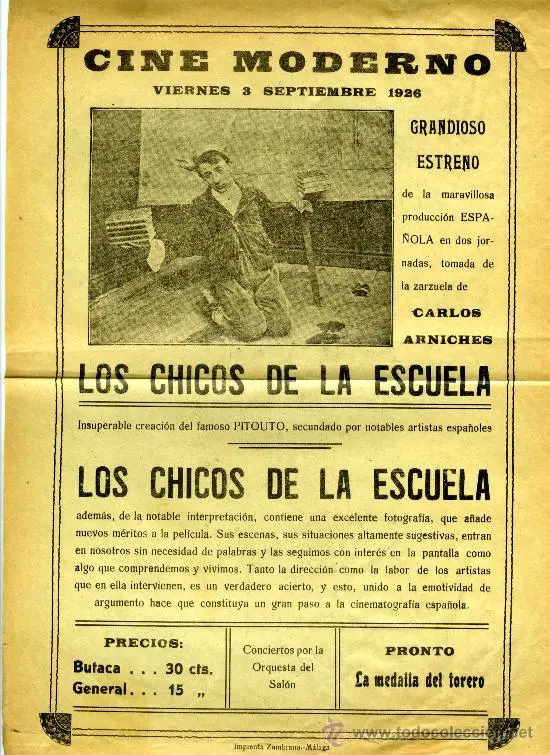
3) You should watch it if you want to see how Florián Rey, one of Spain's most influential directors, began his journey of defining a national cinematic identity through the lens of the common people.
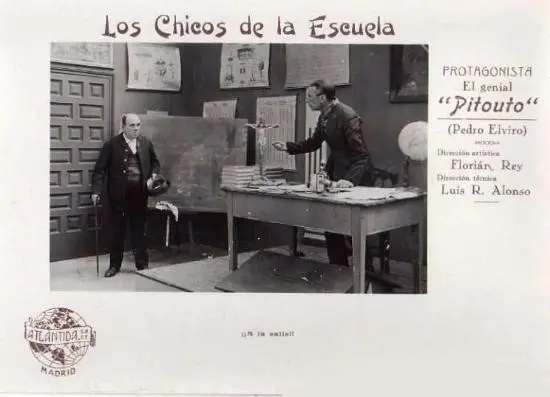
To understand 'Los chicos de la escuela', one must understand Carlos Arniches. Arniches was the king of the 'sainete'—short, comic plays that captured the slang and soul of Madrid. When Florián Rey took this to the screen, he wasn't just filming a play; he was trying to translate a specific linguistic energy into a visual medium. This is a difficult task. In films like Assunta Spina, the drama is carried by the raw, operatic physicality of the actors. Here, the comedy relies on the 'type'—the grumpy teacher, the clever brat, the worried mother.
The film succeeds in creating a sense of place. You can almost smell the dust of the classroom and the heavy air of a Madrid afternoon. The cinematography, while primitive compared to the sweeping vistas of The Four Horsemen of the Apocalypse, has a gritty, documentary-like honesty. Rey doesn't glamorize the school. It’s a cramped, somewhat oppressive space, which makes the children's eventual outbursts feel earned rather than scripted. There is a specific scene involving a spilled inkwell that serves as a perfect microcosm for the film’s philosophy: small accidents leading to disproportionate social catastrophe.
Luis González carries a weight on his shoulders that few child actors of the era could manage. He doesn't fall into the trap of 'Shirley Temple' sweetness. Instead, he plays his role with a calculating edge. It’s a performance that reminds me of the realism found in Alone in London, where the children feel like actual humans rather than props for adult sentimentality. The supporting cast, including Isabel Alemany and Alfredo Fraile, provide a solid, if somewhat theatrical, backdrop.
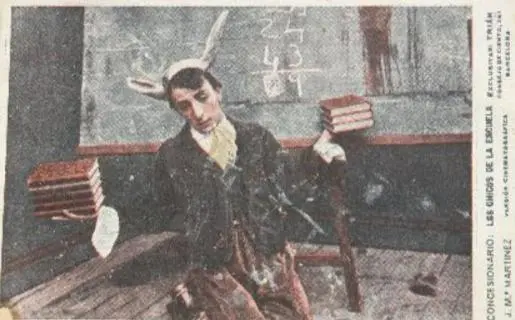
However, we have to talk about the pacing. It’s a slog. There, I said it. The second act stretches the thin plot to its absolute limit. While contemporary films like The Sporting Venus were experimenting with faster editing and more dynamic location shifts, 'Los chicos de la escuela' stays rooted in its theatrical origins. This isn't necessarily a failure of talent, but a reflection of the Spanish industry's struggle to break away from the shadow of the stage. The film feels long, even at its modest runtime.
Technically, the film is a fascinating mess. The lighting is inconsistent, often swinging from overexposed exteriors to muddy interiors. Yet, in those muddy interiors, Rey finds moments of genuine brilliance. He uses the deep shadows of the schoolhouse to isolate the characters, creating a sense of psychological pressure. It’s a far cry from the polished look of Chickie or the urban sophistication of Daytime Wives. This is cinema in its rawest, most local form.
One surprising observation is how the film handles class. Most silent comedies of the 20s were obsessed with the upper crust—think of the flapper culture in The Sporting Venus. Rey, however, focuses on the working class. The 'chicos' aren't wealthy heirs; they are the future of the Spanish labor force. There is a subtle, perhaps unintentional, political undercurrent here. The school is a factory for conformity, and the children's laughter is a form of industrial sabotage.
If you are looking for a masterpiece of silent cinema that rivals the greats, you might be disappointed. However, if you want to understand the evolution of Spanish humor and the career of Florián Rey, it is essential viewing. It offers a window into a world that was about to be irrevocably changed by the Spanish Civil War. It is a fragile, funny, and deeply human piece of filmmaking that deserves better than to be forgotten in a vault.
Pros:
Cons:
In 1925, the world was changing. In the US, films like Plain Clothes were refining the slapstick formula. In Germany, expressionism was at its peak. Spain, however, was looking inward. 'Los chicos de la escuela' is a fiercely nationalistic film, not in a political sense, but in a cultural one. It celebrates the Spanish character—stubborn, loud, and deeply communal. Compare this to the more international, almost rootless feel of Shattered Idols. Rey’s film could only have been made in Madrid.
The film also touches on themes of femininity and the role of the mother in a way that feels more grounded than the melodramatic excesses of Beaches and Peaches. The women in Rey's world are the anchors. While the boys are causing chaos and the men are posturing, the women are the ones navigating the social consequences. It’s a subtle touch that elevates the film above mere slapstick.
'Los chicos de la escuela' is a flawed, dusty, but ultimately charming relic. It lacks the technical sophistication of its contemporary peers, but it makes up for it with a raw sense of personality. It’s a film that demands your attention but doesn't always reward it with easy thrills. It works. But it’s flawed. If you can handle the silence and the slow burn, you’ll find a story that still has a heartbeat, even after a hundred years. It is a foundational stone in the house of Spanish cinema, and for that alone, it deserves our respect.
IMDb 5.9
1930
Community
Log in to comment.