DbcultAccessing Vault...
5.7/10
Senior Film Conservator
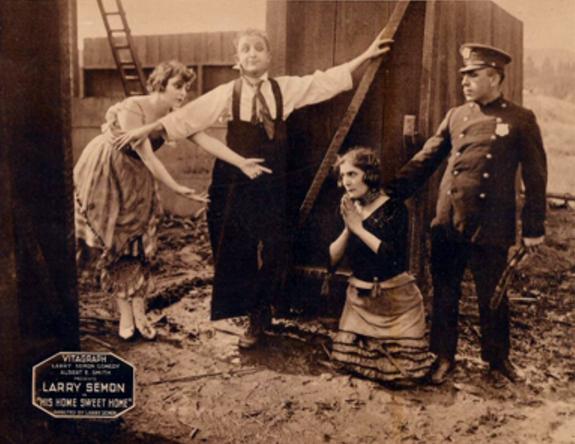
A definitive 5.7/10 rating for a film that redefined the boundaries of cult cinema. His Home Sweet Home remains a cornerstone of transgressive art.
The flickering phantoms of a bygone era often hold surprising treasures, and "His Home Sweet Home", a 1919 confection from the prodigious, albeit often overlooked, comedic genius Larry Semon, stands as a testament to the sheer, unadulterated madness that silent cinema could conjure. From the very outset, the premise is a masterclass in escalating absurdity: a seemingly innocent domestic gathering, a party hosted by a mother and daughter, devolves into an anarchic free-for-all, with Semon himself at the epicentre of the burgeoning chaos. This isn't merely a quaint snapshot of early 20th-century home life; it's a meticulously orchestrated symphony of slapstick, a ballet of blunders where the mundane is relentlessly, hilariously subverted. Semon, ever the architect of intricate pandemonium, transforms the humble kitchen into a veritable battleground, a crucible where culinary aspirations collide with the forces of nature and nefarious human intent.
Larry Semon's comedic persona, often characterized by his distinctive make-up and an almost manic energy, finds full, glorious expression here. He is not merely a participant in the unfolding disaster but its unwitting catalyst, a magnet for misfortune whose every well-intentioned action inadvertently triggers a cascade of increasingly outlandish events. His physical comedy is a marvel of contortion and timing, a kinetic display that predates and, in some ways, parallels the intricate Rube Goldberg-esque contraptions that would later define certain aspects of silent film comedy. Unlike the more melancholic introspection of a Chaplin or the stoic resilience of a Keaton, Semon's humor often leans into the frantic, the explosive, the utterly unhinged. He embodies a particular brand of American comedic spirit, one that revels in the destruction of order and the celebration of the illogical. His frantic movements, his wide-eyed astonishment, and his ingenious, if often disastrous, attempts to regain control are the very engines of the film's relentless hilarity. The sheer audacity of his gags, often involving elaborate contraptions or spectacular falls, marks him as a daredevil of the silver screen, constantly pushing the boundaries of what was physically possible and comically acceptable.
The introduction of monkeys into this domestic melee is a stroke of pure, inspired lunacy. These aren't merely background props; they are active agents of disruption, their simian mischief adding an unpredictable, primal layer to the burgeoning chaos. The natural unpredictability of animals, particularly intelligent and agile ones like monkeys, serves as a perfect foil to Semon's already heightened state of agitation. They pilfer, they swing, they interact with the kitchen implements and party guests with an innocent destructiveness that only amplifies the comedic stakes. This use of animals to inject an additional layer of unpredictability was a common, if often challenging, trope in early cinema, seen in various forms across the landscape of silent comedies. The challenge of directing such creatures, and integrating their spontaneous actions into a cohesive narrative of gags, speaks volumes about the ingenuity of filmmakers like Semon. The monkeys in "His Home Sweet Home" are not just cute additions; they are anarchic forces, mirroring and magnifying the human-induced chaos, blurring the lines between domestic order and untamed wildness. Their presence transforms the kitchen from a place of human endeavor into a truly multi-species madhouse, a chaotic menagerie where bananas are flung with as much strategic precision as any pie.
As if a party gone awry and a kitchen overrun by monkeys weren't enough, the narrative brilliantly introduces a cabal of jewel thieves. This adds a layer of deliberate villainy and tangible stakes to the proceedings, shifting the comedic tone from mere slapstick to a blend of farce and low-stakes thriller. The thieves, with their clandestine movements and nefarious objectives, provide a stark contrast to the accidental mayhem caused by Semon and his simian companions. Yet, in Semon's world, even professional criminals are not immune to the gravitational pull of absurdity. Their attempts at stealth and larceny are repeatedly, hilariously thwarted by the very chaos they find themselves immersed in. This juxtaposition of a serious criminal plot with an overwhelming tide of comedic mishaps is a hallmark of many silent comedies, where external threats often become just another ingredient in the recipe for pandemonium. Consider the way similar plot devices might have been handled in films like Get-Rich-Quick Wallingford, where schemes, though perhaps more financial, still drive narrative tension, or even in the more dramatic Each Pearl a Tear, albeit without the overt comedic overlay. Here, the thieves are less menacing and more like additional dominoes in Semon's intricate chain reaction of disaster. Their presence elevates the stakes, transforming a simple party into a high-octane scramble for survival and precious gems, all while maintaining an unwavering commitment to comedic excess. The visual gags involving their attempts to hide or retrieve their ill-gotten gains are some of the film's most inventive, demonstrating Semon's ability to blend suspense with outright hilarity.
While Semon is undeniably the gravitational center of "His Home Sweet Home", the supporting cast plays a crucial role in amplifying the comedic effect. Eddie Dunn, Charles Amador, Lucille Carlisle, William Hauber, Frank Alexander, Rosa Gore, Frank Hayes, and Joe Rock each contribute to the tapestry of madness. Lucille Carlisle, in particular, often played a significant foil to Semon, her reactions serving as a grounding rod amidst his escalating lunacy, or conversely, as another element to be swept up in the current of chaos. The ensemble doesn't merely react to Semon; they actively participate in the unfolding spectacle, their individual quirks and predicaments adding depth and texture to the overall comedic landscape. Their collective bewilderment, exasperation, and occasional moments of triumph against the tide of misfortune create a rich, dynamic environment for Semon's antics to play out. This interplay is vital; a solo comedian, no matter how brilliant, needs a world to disrupt, and a cast to disrupt it upon. The reactions of the party guests, ranging from polite dismay to outright panic, provide a crucial mirror to the audience's own incredulity and amusement. The film effectively uses its entire cast as a living, breathing set of props and reactions, each character adding another layer to the intricate comedic architecture. The synchronized chaos, where multiple gags unfold simultaneously across different characters, is a testament to the directorial precision required for such elaborate slapstick.
The technical prowess of silent film, particularly in the realm of physical comedy, is often underestimated. "His Home Sweet Home" is a masterclass in visual storytelling, where every gag, every pratfall, every frantic dash is meticulously choreographed and captured. The cinematography, while perhaps lacking the sweeping grandeur of epic dramas, is perfectly attuned to the demands of slapstick. Camera angles are chosen to emphasize the absurdity of the situation, to highlight Semon's rubbery contortions, and to capture the rapid-fire succession of gags. Editing is sharp and precise, crucial for the timing of comedic beats, ensuring that each punchline lands with maximum impact. The film relies heavily on visual cues, exaggerated expressions, and broad physical movements to convey emotion and narrative progression in the absence of spoken dialogue. This required a particular skill set from the actors and the director, a deep understanding of how to communicate complex ideas and nuanced reactions through purely visual means. The frenetic pace, characteristic of many Semon shorts, is achieved through a combination of rapid-fire action and judicious editing, creating a sense of relentless momentum that sweeps the audience along with the rising tide of hilarity. It’s a testament to the era's ingenuity that such intricate and fast-paced comedic sequences could be so effectively realized without the aid of sound, relying instead on the universal language of sight gags and physical expression.
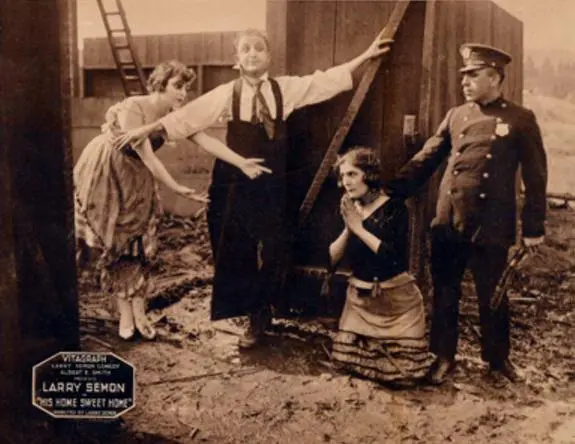
Larry Semon, despite his immense popularity during the silent era, often finds himself somewhat overshadowed by the monumental figures of Chaplin, Keaton, and Lloyd in contemporary discourse. Yet, to overlook Semon is to miss a crucial, vibrant thread in the tapestry of silent comedy. His films, including "His Home Sweet Home", showcase a distinctive style – a blend of elaborate mechanical gags, frantic chases, and a particular brand of destructive humor – that sets him apart. He was a pioneer in stunt work and special effects for comedy, often incorporating intricate contraptions and seemingly impossible feats into his routines. While Chaplin mastered the pathos and social commentary, Keaton the stoicism and architectural comedy, and Lloyd the everyman charm and thrill-seeking, Semon carved out his niche in pure, unadulterated, often chaotic, physical farce. His work, though perhaps less overtly intellectual than some of his peers, possessed an undeniable energy and a commitment to spectacle that was uniquely his own. Films like The Battle of the Sexes or The Woman Pays, while not directly comedic, demonstrate the era's broad experimentation, but Semon focused squarely on pushing the boundaries of physical absurdity. His influence, though sometimes unacknowledged, can be seen in later generations of physical comedians who embraced the wilder, more destructive side of slapstick, recognizing the sheer comedic potential in meticulously orchestrated mayhem.
What makes "His Home Sweet Home", and indeed much of Semon's oeuvre, resonate even today? It is the universal appeal of chaos, the relatable frustration of domestic life spiraling out of control, and the timeless joy of witnessing expertly executed physical comedy. The film taps into a primal comedic nerve, the delight in seeing order dismantled and replaced by glorious, ludicrous anarchy. Despite the passage of a century, the gags still land, the expressions still amuse, and the sheer audacity of the premise still enthralls. It serves as a vivid reminder that laughter transcends time and technological advancements. The film also offers a fascinating glimpse into the social mores and anxieties of the era, albeit through a highly distorted, comedic lens. The very idea of a "home sweet home" being so thoroughly invaded and disrupted speaks to a playful subversion of societal expectations. It's not just a historical artifact; it's a living, breathing piece of entertainment that continues to provoke genuine mirth. Its enduring legacy lies in its unpretentious commitment to pure, unadulterated fun, a quality that is, perhaps, more valuable than ever in an increasingly complex world. The film's ability to elicit genuine belly laughs without a single spoken word is a powerful testament to the timeless art of visual humor.
The film's implicit question, "What could go wrong?", is answered with a resounding, emphatic "Everything!" The genius lies not just in the individual gags, but in their relentless accumulation and the escalating sense of impending doom, albeit a comedic one. It's a masterclass in comedic tension, building from minor inconveniences to full-blown pandemonium. Consider the delicate balance of a party, where social graces are paramount. Semon's presence is a wrecking ball to this facade, his every interaction a potential catastrophe. The monkeys are not just pets; they are agents of pure, unadulterated id, embodying the wildness that polite society strives to suppress. And the jewel thieves, with their calculated malevolence, add a layer of human-driven chaos that intertwines with the accidental and the animalistic. The film brilliantly orchestrates these disparate elements into a cohesive, albeit chaotic, whole. It’s a testament to Semon’s vision that he could juggle so many balls – or rather, so many flying pies, swinging monkeys, and escaping jewels – without dropping a single one comedically. The narrative, lean as it is, is merely a framework upon which Semon hangs an endless array of visual jokes and physical stunts, each one more audacious than the last. This commitment to maximalist comedy ensures that the audience is never given a moment to breathe, constantly bombarded by new, inventive forms of mayhem, making it a truly exhilarating watch.
In the broader context of silent film, "His Home Sweet Home" stands as an exemplar of the short-form comedy, a format that allowed for rapid experimentation and the honing of comedic techniques. While feature-length films like The Hoosier Schoolmaster explored more complex narratives, the short comedies thrived on immediacy and concentrated bursts of laughter. Semon, like many of his contemporaries, perfected this art of the compact gag reel, meticulously crafting sequences that built to explosive payoffs. The film's energy is reminiscent of other fast-paced silent shorts, perhaps even touching upon the frantic pace seen in newsreels like Allies' Official War Review, No. 27, though obviously for entirely different purposes. It’s a world away from the more dramatic character studies found in films like My Lady Incog. or The Gates of Gladness, firmly planting its flag in the territory of pure, unadulterated mirth. The film also subtly plays with themes of domesticity and invasion, a common undercurrent in many thrillers of the era, but here twisted into a comedic framework. It’s not about the terror of a home invaded, but the absolute hilarity of it. The film, in its own riotous way, offers a counterpoint to the more serious dramatic offerings of the period, demonstrating the breadth and versatility of early cinematic storytelling, proving that even the most mundane settings could become stages for extraordinary comedic spectacle.
Beyond the immediate laughter, one might discern a subtle commentary on the fragility of social order and the thin veneer of civility that often masks underlying chaos. The "home sweet home" of the title becomes ironic, a place where sweetness is quickly replaced by slapstick, and order by an almost elemental disorder. Semon, in his own way, is a disruptor of norms, a comedic anarchist who exposes the inherent absurdity in striving for perfect decorum in an imperfect world. The film, while primarily a vehicle for gags, inadvertently touches upon the universal human experience of things going wrong, of plans unraveling, and of the sheer unpredictability of life. It elevates the mundane frustrations of domestic life to an epic, hilarious scale. The constant struggle against inanimate objects, the battle against mischievous animals, and the unwitting entanglement with criminals all speak to a broader theme of humanity's often-futile attempts to control its environment. This underlying current, while never didactic, adds a surprising layer of resonance to what is, on the surface, a straightforward comedy, making it more than just a series of laughs but a reflection on the beautiful chaos of existence itself.
Ultimately, "His Home Sweet Home" is a joyous, relentless explosion of comedic energy, a vibrant artifact from an era that perfected the art of visual humor. It’s a crucial entry point into the unique world of Larry Semon, a comedian whose audacious stunts and boundless inventiveness deserve far greater recognition. For anyone seeking to understand the foundational elements of slapstick or simply in need of a hearty laugh, this film remains an essential viewing experience. Its ability to generate such sustained hilarity from such a simple, yet increasingly complicated, premise is a testament to the timeless power of well-executed physical comedy. It’s a chaotic, delightful, and utterly unforgettable romp that solidifies Semon's place as a true pioneer of cinematic mirth, inviting us to revel in the glorious, unbridled madness that only a master of silent comedy could orchestrate. The enduring appeal of watching a perfectly tidy world descend into utter, glorious disarray is, after all, a truly universal pleasure.
IMDb —
1928
Community
Log in to comment.