DbcultAccessing Vault...
Cult Review
Senior Film Conservator
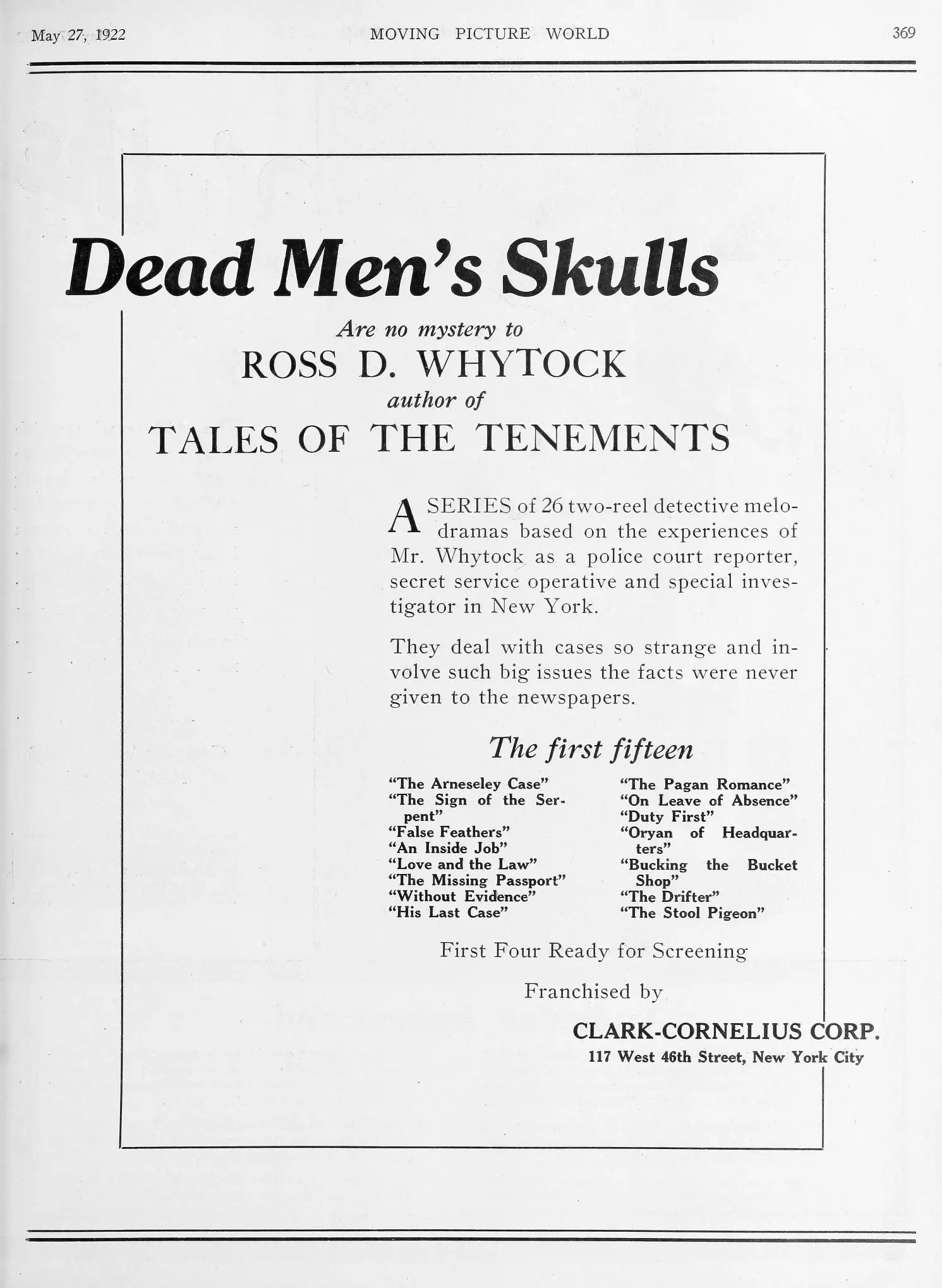
There is a singular, almost tactile melancholy that permeates the celluloid of His Last Case. It is a film that breathes through the dust of history, offering us a glimpse into a period of cinematic transition where the visual language was becoming increasingly sophisticated, yet remained tethered to a raw, primordial honesty. To watch Walter Miller in this production is to witness a masterclass in the economy of gesture. Unlike the frenetic energy found in contemporary works like Speed Demons, Miller operates with a gravitational stillness that commands the screen, suggesting a depth of internal conflict that dialogue would only serve to dilute.
The screenplay, penned by Ross D. Whytock, is a fascinating specimen of early narrative construction. Whytock does not merely present a series of events; he constructs a psychological cage for his characters. While many films of the era relied on broad melodramatic strokes—think of the sweeping emotional arcs in The Price of Her Soul—Whytock opts for a more surgical approach. He explores the concept of the 'final act' not just as a plot point, but as an existential crisis. The protagonist is not merely solving a crime; he is attempting to reconcile his soul before the curtain falls on his career.
This sense of finality is mirrored in the film's pacing. There is a deliberate, almost rhythmic cadence to the scenes, a far cry from the experimental structures seen in Séraphin ou les jambes nues. Instead, His Last Case moves with the steady, inexorable march of a funeral procession, building a sense of dread and inevitability that is rare for its time. The way Whytock weaves the supporting characters into this web of intrigue is equally impressive. Each figure feels like a ghost from the protagonist's past, a reminder of the cases that came before and the ghosts that remain unexorcised.
Nellie Burt delivers a performance that is both ethereal and grounded. In an era where female roles were often relegated to the 'maiden in distress' or the 'femme fatale,' Burt finds a middle ground of nuanced agency. Her chemistry with Miller is palpable, yet it is not the chemistry of a standard romance. It is the connection of two souls who recognize the same weariness in each other. When comparing her role to the industrial grit of the women in Britain's Bulwarks, No. 1: Women Munitioners of England, one sees a different kind of strength—a quiet, domestic fortitude that serves as the film's moral anchor.
Burt’s presence allows the film to explore themes of domesticity and the toll that a life of 'cases' takes on the private sphere. This is a theme that would later be explored with more overt sentimentality in A Rural Cinderella, but here, it is handled with a starker, more realistic lens. The domestic spaces in His Last Case feel lived-in and heavy with the weight of unspoken words, providing a sharp contrast to the cold, impersonal nature of the legal and criminal worlds Miller inhabits.
The cinematography in His Last Case utilizes lighting as a narrative tool with surprising maturity. The use of deep shadows and high-contrast lighting anticipates the noir aesthetics of decades later. We see the protagonist frequently obscured by darkness, a visual metaphor for his own moral ambiguity. This is not the bright, clear-eyed storytelling of From the Manger to the Cross; this is a film that understands the power of what is left unseen. The framing of the urban environments creates a sense of claustrophobia, a city that is closing in on its defender.
Consider the sequence in the final act where the resolution is reached. It is not a moment of triumph, but one of exhaustion. The camera lingers on Miller’s face, capturing the minute tremors of a man who has won the battle but lost the war. It is a level of psychological realism that rivals the intensity found in Fires of Conscience. The visual storytelling here is so potent that the title cards almost feel redundant; the story is told in the furrows of the brow and the slant of the light.
When placed alongside its contemporaries, His Last Case stands out for its refusal to provide easy answers. In The Railroader, we see a more direct exploration of man versus machine, but in Whytock’s world, the machine is the legal system itself—impersonal, grinding, and ultimately indifferent to the individual. The film shares a thematic kinship with Hidden Fires, particularly in its exploration of the secrets we keep to protect those we love, but it handles these elements with a more cynical, world-weary hand.
The film also offers an interesting juxtaposition to Who Chose Your Wife?. While the latter deals with the social intricacies of choice and partnership, His Last Case suggests that our choices are often made for us by our circumstances and our past. There is a deterministic streak running through the narrative that feels modern, almost nihilistic, yet it is tempered by the profound humanity of the lead performances. It is this balance between the cold machinery of fate and the warm blood of human emotion that makes the film so enduring.
It is easy to dismiss early silent films as primitive, but His Last Case proves that the fundamental elements of great cinema—character, atmosphere, and moral complexity—were present from the beginning. The film lacks the exoticism of Jungle Dancers or the overt theatricality of The Shadows of a Great City, but it gains something far more valuable: a sense of truth. It is a film that respects its audience, trusting them to follow the intricate emotional threads that Whytock and Miller have so carefully laid out.
In the broader context of the cast's filmography, this remains a high-water mark. For Walter Miller, it was a role that allowed him to shed the 'leading man' persona and embrace something more weathered and real. For Nellie Burt, it was a chance to demonstrate a range that would see her through a long and varied career. Even compared to the intense drama of Jess or the visceral conflict in A Man and the Woman, this film holds its own as a definitive statement on the burden of the law.
To conclude that His Last Case is merely a 'detective story' would be a disservice to its artistic ambition. It is a film about the end of things—the end of a career, the end of an era, and the end of innocence. It captures the specific anxiety of the early 20th century, a time when the world was becoming faster and more complex, leaving behind those who lived by a simpler, albeit harsher, code. The film does not offer the visceral satisfaction of White Meat, but it offers something far more lingering: a reflection on what it means to finish one's work with integrity.
Ultimately, the film serves as a reminder that cinema has always been a medium for deep introspection. Through the collaborative efforts of Miller, Burt, and Whytock, His Last Case survives as a poignant, atmospheric, and deeply moving piece of art that deserves its place in the pantheon of silent era greats. It is a film that demands to be seen, not as a historical curiosity, but as a living, breathing piece of drama that continues to resonate with the universal human experience of seeking justice in an unjust world.
IMDb 6.4
1931
Community
Log in to comment.