DbcultAccessing Vault...
Cult Review
Senior Film Conservator
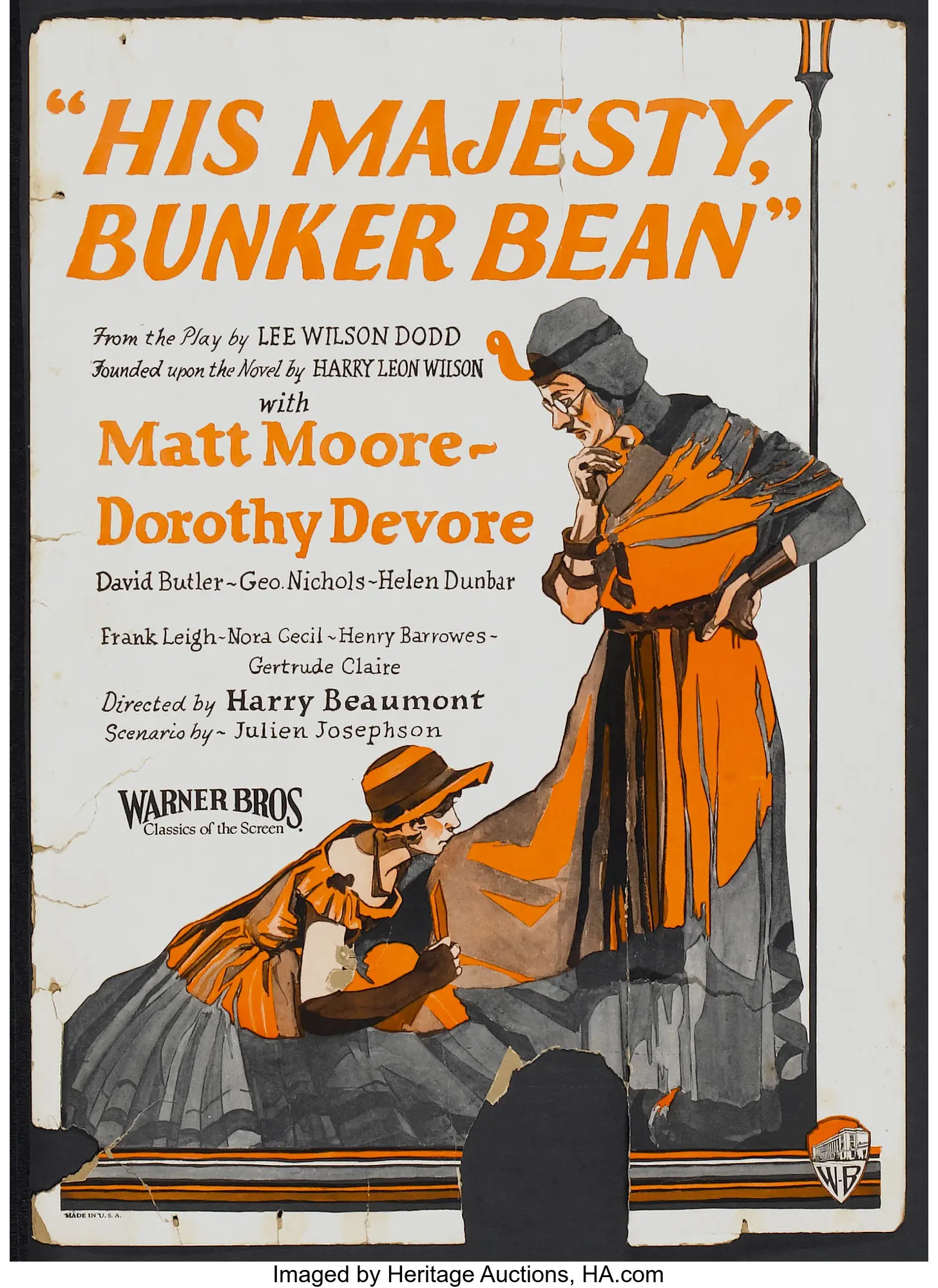
His Majesty, Bunker Bean (1925) is a cinematic curiosity that straddles the line between vaudeville, silent film, and absurdist theater. It is a relic of the interwar period’s fascination with spiritualism, reincarnation, and the paradoxes of human identity. The film’s premise—a clerk, Bunker Bean, who is duped into believing he is both Napoleon and the Egyptian monarch Ram-Tah—reads like a punchline from a Marx Brothers sketch, yet its execution is anything but slapstick. Instead, it is a meticulously crafted satire of ego, gullibility, and the fragility of authority, cloaked in the garb of myth and melodrama.
The narrative unfolds in a series of escalating farces, each more improbable than the last. Bunker Bean, portrayed by Frank Leigh with a blend of droll self-doubt and burgeoning megalomania, is a cipher figure—bland, unassuming, and desperate for validation. His encounter with two con artists posing as mediums (a role that feels lifted from The Devil’s Pay Day’s own manipulation of belief) sets off a chain reaction of delusions. The script, a collaborative effort by Harry Leon Wilson, Julien Josephson, and Lee Wilson Dodd, is a masterclass in tonal shifts, seamlessly blending the tragic and the comic. One moment, Bunker is reciting Egyptian hieroglyphs to a bemused crowd; the next, he is staging a mock coronation in a derelict office building, complete with a rubber-duck scepter and a crown of office supplies.
Visually, the film is a tapestry of contradictions. The sets, designed with the grandeur of a Cecil B. DeMille epic, are juxtaposed with the squalor of Bunker’s reality—a visual metaphor for the clash between imperial grandeur and the mundane. The use of shadow in scenes where Bunker’s delusions peak is particularly striking; chiaroscuro lighting transforms him into a silent film villain, his face half in darkness, half in light, as if embodying the duality of his personas. This technique echoes The Golem’s haunting use of light and shadow to evoke the supernatural, but here it is employed for satirical effect.
Dorothy Devore’s performance as one of the mediums is a revelation. She imbues her character with a chilling calmness, her voice a velvet-soft purr that lulls Bunker—and the audience—into complicity with his madness. Her scenes with Gertrude Claire’s equally conniving partner in deceit are a study in subtlety; their smiles never reach their eyes, their gestures as precise as a clockwork automaton. These moments of calculated manipulation are the film’s quietest, yet most disturbing, as they expose the ease with which reality can be rewritten by those who profit from others’ delusions.
The film’s thematic resonance extends beyond the confines of its plot. It is, at its core, a meditation on the illusion of power. Bunker Bean’s transformation from a timid clerk to a self-styled emperor mirrors the mechanisms of propaganda and the seductive nature of authority. This is not unlike the themes explored in Under Four Flags, where loyalty and identity are tested under duress, but here the stakes are comedic. The film’s climax—a riotous sequence in which Bunker’s followers, a motley crew of misfits and opportunists, attempt to crown him in a public park—feels both farcical and eerily prescient. It is a darkly comic reflection on how easily crowds can be rallied behind a cause, no matter how baseless.
Technically, the film is a marvel of its era. The editing, though rudimentary by modern standards, is taut and purposeful, with cross-cutting between Bunker’s delusions and the real-world consequences of his actions. The use of intertitles is particularly noteworthy; their language is poetic and archaic, evoking the grandeur of ancient texts while underscoring the absurdity of Bunker’s claims. This juxtaposition is reminiscent of The Writing on the Wall’s interplay between prophecy and reality, though Bunker Bean’s narrative is less mystical and more satirical.
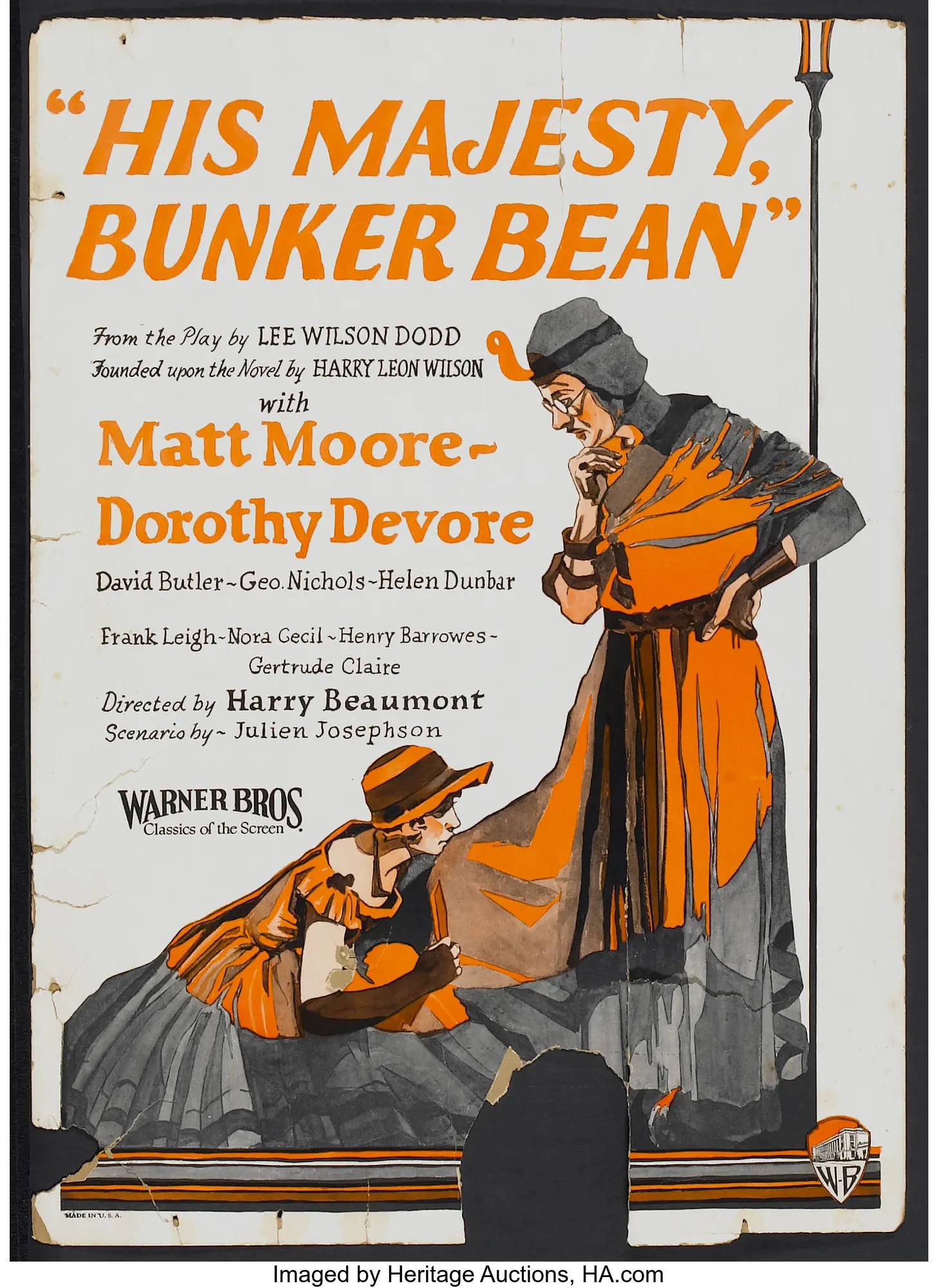
Performances across the board are a testament to the ingenuity of 1920s silent cinema. David Butler’s turn as a skeptical journalist, who alternately mocks and sympathizes with Bunker, adds a layer of moral ambiguity to the film. His character serves as the audience’s surrogate, questioning the legitimacy of Bunker’s claims while inadvertently enabling them. Similarly, Lucille Ward’s portrayal of a would-be admirer who genuinely believes in Bunker’s divinity introduces a tragic undertone. Her scenes, particularly a haunting sequence where she offers a bouquet of flowers to his “empty” throne, are imbued with a melancholy that contrasts sharply with the film’s overall comedic tone.
The film’s score, though lost to time, is referenced in surviving reviews as a blend of Egyptian chants and military marches. This auditory clash between ancient and modern would have reinforced the film’s central theme: the collision of myth and modernity. In its absence, the surviving footage relies on visual cues to convey this tension, with the Egyptian motifs—hieroglyphs, obelisks, and the like—serving as a visual gag against the drabness of Bunker’s office life. This aesthetic duality is a hallmark of Julien Josephson’s writing, whose other works like Should Brides Marry? also explore the chasm between societal expectations and personal identity.
Perhaps the most daring aspect of His Majesty, Bunker Bean is its willingness to embrace absurdity without apology. Unlike the more restrained satire of Handcuffs or Kisses, this film leans into its own ridiculousness, treating the premise with the same gravity as any historical epic. This unflinching embrace of the ludicrous is what makes the film both a product of its time and eerily timeless. The idea that a man could be convinced of his own infallibility through a combination of charlatans and his own insecurities feels as relevant today as it did nearly a century ago.
In terms of cinematic legacy, His Majesty, Bunker Bean occupies a unique niche. It is a forerunner to the absurdist comedies of the 1960s and beyond, yet it remains firmly rooted in the aesthetics of the silent era. The film’s influence can be seen in works like The Lucky Dog and The Offenders, which similarly blend social commentary with farcical elements. However, Bunker Bean’s most direct descendants may be in the works of filmmakers who use delusion as a narrative device, such as the psychological unraveling in Salvation Nell (1921) or the existential crises in The Changing Woman.
Ultimately, His Majesty, Bunker Bean is a film that rewards patience and a willingness to engage with its meta-textual layers. It is a satire of delusion that is itself a delusion, a mirror held up to the delusions of its time and ours. The film’s greatest achievement is not its plot—which is inherently preposterous—but its ability to use that preposterousness as a lens through which to examine the human condition. In an age where belief can be manufactured and sold like a commodity, Bunker Bean’s story feels both quaint and chillingly relevant.
For those seeking a deeper dive into the world of 1920s satirical cinema, consider exploring The Writing on the Wall for its mystical undertones or The Golem for its mythic grandeur. Each of these films, like Bunker Bean, uses the surreal to interrogate the real, offering a glimpse into the anxieties of their respective eras.
IMDb 7.9
1926
Community
Log in to comment.