DbcultAccessing Vault...
6/10
Senior Film Conservator
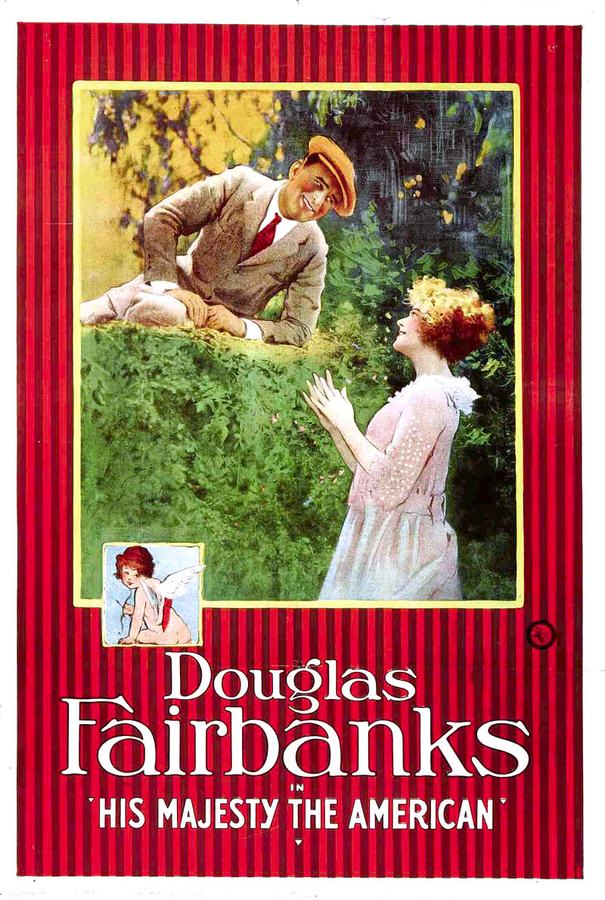
A definitive 6/10 rating for a film that redefined the boundaries of cult cinema. His Majesty, the American remains a cornerstone of transgressive art.
When Douglas Fairbanks bounded across screens in 1919's His Majesty, the American, he wasn't merely performing—he was redefining cinematic possibility. Directed with propulsive energy by Joseph Henabery, this quintessential Fairbanks vehicle merges geopolitical fantasy with jaw-dropping physicality. Watch how Fairbanks vaults over hacienda walls in Mexico with the effortless grace of a panther, his crisp white suit remaining improbably immaculate amidst dust and danger. This isn't costume; it's manifest destiny made fabric.
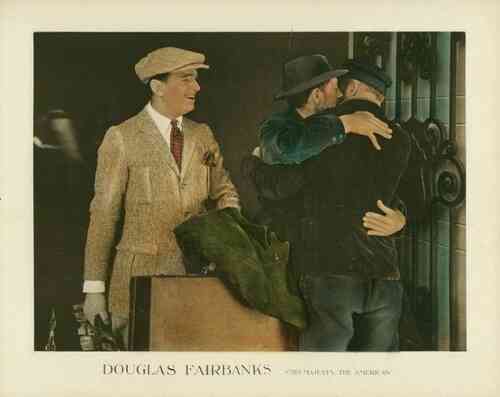
The screenplay, co-penned by Fairbanks himself, operates on deliciously audacious contrasts. The Mexican sequence—shot with startling authenticity in locations still bearing revolution's scars—establishes Brooks' character through action as philosophy. His dismantling of bandits (led by Charles Stevens' gleefully vicious El Diablo) becomes a moral ballet: no guns, only fists, wits, and that indomitable grin. Notice the symbolic transition aboard the ocean liner: Fairbanks' loose-limbed informality clashing against the stiff postures of European aristocracy. Production designer Charles O. Seessel crafts Alaine as a Gothic confection—turrets shadowed with conspiracy, ballrooms shimmering with deceit.
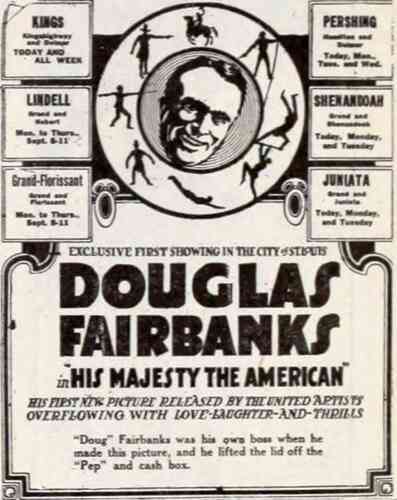
Bull Montana's Duc d'Artelles slithers through court with reptilian menace, his physical deformity (a hunchback) serving as externalized moral corruption—a trope Karloff would later subvert in Titanenkampf. Karloff himself appears as Valdini, the Duc's henchman, offering chilling premonitions of his iconic monster through lumbering physicality and hooded eyes. Marjorie Daw's Duchess evolves magnificently from porcelain ornament to equal partner, her awakening agency mirroring postwar femininity. Their chemistry ignites during a midnight garden rendezvous where Fairbanks literally climbs her balcony—a scene that would define romantic tropes for decades.
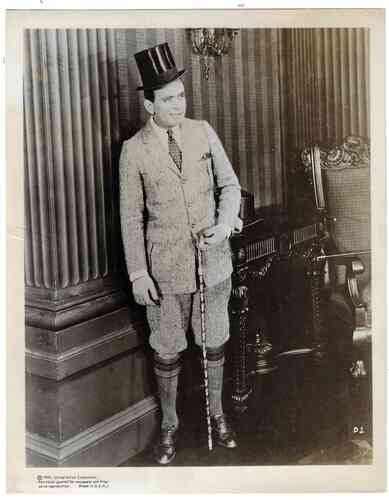
Henabery pioneers kinetic storytelling that feels startlingly modern. The revolutionary coup sequence unfolds in three simultaneous layers: commoners rioting in cobblestone streets, conspirators seizing the throne room, and Fairbanks' rooftop traversal—all intercut with rhythmic precision. Cinematographer Victor Fleming (years before Gone With the Wind) employs low-angle shots to magnify Fairbanks' leaps, turning palace spires into jungle gyms. Witness the virtuoso moment where Brooks swings from a chandelier onto a banquet table: the camera tilts dynamically as hors d'oeuvres become projectiles.
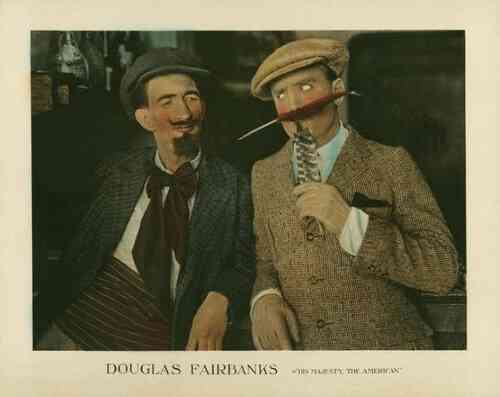
These sequences influenced everything from The Lone Wolf serials to Indiana Jones, but Fairbanks' athleticism remains unmatched. When he scales the castle's rain-slicked walls using only dagger holds, the tension derives from real risk—no doubles, no wires. This physical authenticity gives weight to the film's central thesis: American vigor as antidote to European decay. Compare this to the static pageantry of contemporaneous royal dramas like The Honor of His House; Fairbanks turns monarchy into extreme sport.
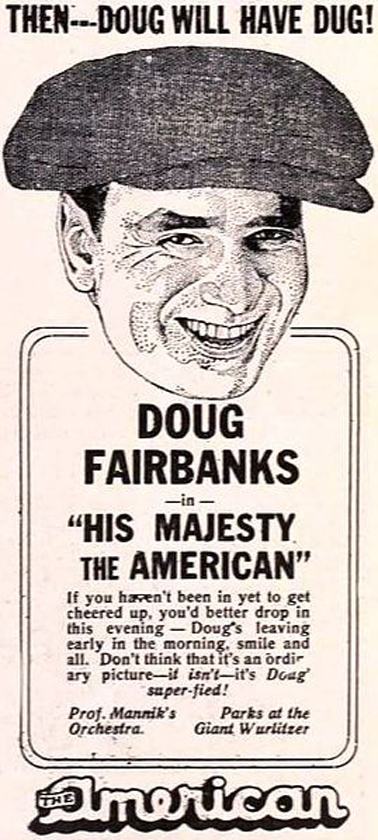
Beneath the derring-do simmers potent political commentary. Brooks' ascension isn't about restoring aristocratic order but modernizing it. His first decree—dissolving the royal guard to train citizen-soldiers—plays as revolutionary as the plot he thwarts. Screenwriters embed sly critiques of inherited power: "You Americans think crowns grow on thorns," scoffs Lillian Langdon's dowager queen, unaware she voices the film's thesis. The democratic hero must earn legitimacy through action, not bloodline—a notion that resonated powerfully with 1919 audiences navigating a reshaped world order.
This thematic boldness distinguishes it from safer star vehicles like Betty to the Rescue. Fairbanks weaponizes charm as political tool, disarming courtiers with handshakes instead of bows. In the magnificent coronation climax, he swaps ermine robes for practical riding gear, symbolically rejecting millennia of tradition. The film’s true romance isn't just with Elodie, but with progress itself.
Recurring imagery transforms entertainment into art. Water motifs abound—Brooks emerges dripping from a palace fountain after evading guards, later reflecting on his destiny beside a moonlit lake. These baptismal moments signal rebirth. Costuming tells parallel stories: Fairbanks' increasingly disheveled formal wear versus Karloff's immaculate uniforms, visually opposing spontaneity against rigidity. Even intertitles crackle with wit: "Your Highness, you sit on a volcano!" warns a conspirator. "Never sat on one before!" Brooks quips—foreshadowing actual volcanic peril in Fairbanks' later Kilauea Volcano.
Scoring suggestions (for modern accompanists) should emphasize this duality: mariachi trumpets for Mexico, sweeping Strauss waltzes for Alaine, syncopated jazz when Fairbanks disrupts both. The film’s boldest innovation remains its global fluidity, rejecting insular nationalism years before such themes dominated cinema. Its DNA surfaces in everything from The Spirit of Romance to Madame Spy, but rarely with such muscular poetry.
A century later, what astonishes isn't just the stunts but their narrative integration. Every backflip advances plot or character—when Brooks somersaults over charging cavalry, it reveals his tactical genius. Karloff's subtle gestures (fingers twitching toward a poisoned wine glass) demonstrate villainy without melodrama, contrasting with Montana's operatic scowling. This balance of spectacle and substance makes Henabery's work superior to heavier dramas like La Muerte Civil.
The film's legacy lives in superhero cinema's DNA—Tony Stark's arrogant charm, Black Panther's royal dilemmas—but Fairbanks offers something modern icons lack: unmediated physical presence. In an era of digital doubles, his human audacity remains breathtaking. As Brooks rappels down tapestries or wrestles conspirators atop moving carriages, we witness cinema inventing its athletic language. The revolutionary ending—monarch and commoners rebuilding Alaine together—still feels radical. Few films capture the euphoria of movement so purely; fewer still make nation-building look this exhilarating.
IMDb 5.3
1929
Community
Log in to comment.