DbcultAccessing Vault...
Cult Review
Senior Film Conservator
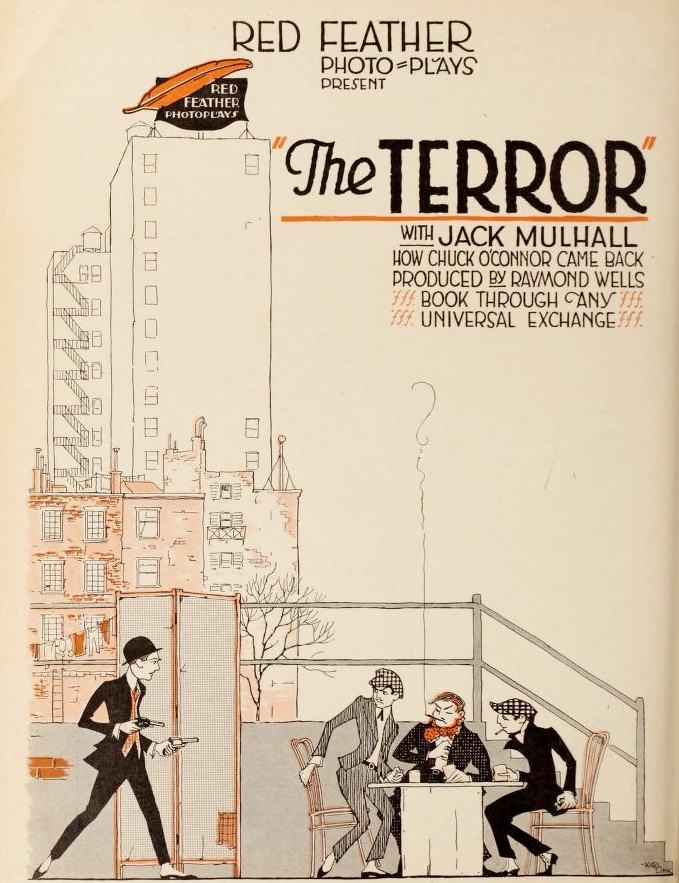
To behold The Terror (1917) is to witness a nascent cinematic language grappling with the heavy architecture of Christian redemption and the burgeoning grit of the American crime procedural. In an era where cinema was still defining its moral parameters, director Raymond Wells and writer Fred Myton delivered a narrative that feels remarkably modern in its psychological complexity, even if its thematic resolution leans into the sentimentalism of the period. This isn't merely a tale of a 'bad man gone good'; it is a sophisticated exploration of how institutional corruption—both in the police force and the criminal underworld—cannibalizes the individual soul.
The protagonist, Chuck Connelly (portrayed with a brooding intensity by Hugh Hoffman), is introduced not as a villain, but as a man pushed to the edge of his own humanity. The initial act of violence—the killing of his sister’s assailant—is a masterclass in narrative economy. It establishes Chuck’s capacity for lethal action while grounding it in a fierce, albeit primitive, sense of familial loyalty. However, the film quickly subverts the 'heroic protector' trope. By introducing crooked detectives who use this act of defense as leverage, the script plunges Chuck into a quagmire of moral compromise. Unlike the more whimsical protagonists found in Dimples, Chuck is a figure of genuine pathos, trapped in a cycle of escalating criminality.
The syndicate Chuck is forced to join represents a macrocosm of the 'Gilded Age' rot. It is a 'protected organization'—a phrase that carries a chilling weight in 1917, implying a collusion between the law and the lawless. This environment is far removed from the courtly intrigues of In the Palace of the King or the fairy-tale stakes of The Princess's Dilemma. Here, the stakes are measured in graft, blood, and the cold efficiency of the electric chair. Chuck’s ascent within the gang is paradoxically his descent as a human being, a metamorphosis that Hoffman conveys through increasingly rigid posture and a haunted gaze.
The introduction of Annie Mangan and the Salvation Army serves as the film’s spiritual fulcrum. In the early 20th century, the Salvation Army was a frequent cinematic symbol of radical urban reform, often depicted as the only light in the 'dancehall' darkness. When Chuck seeks Annie out, he isn't just looking for a lover; he is looking for an exit strategy for his conscience. The juxtaposition of the smoke-filled dancehall with the austere, hopeful environment of the Salvation Army home highlights the binary world Chuck inhabits. This thematic tension between the hypnotic allure of sin and the difficult path of virtue is a recurring motif in silent era dramas, seen in various forms in Ipnosi or the Danish import Værelse Nr. 17.
However, the true turning point isn't Annie’s preaching, but a moment of profound, wordless connection. When Chuck enters the District Attorney’s house to deliver a threat, he is confronted by the DA’s three-year-old daughter. The child’s trust—her simple act of leaning on his knee—functions as a mirror in which Chuck finally sees the monster he has become. It is a moment of 'theological horror' for the character; he realizes that his soul is no longer compatible with the world of the innocent. This use of a child as a moral compass was a hallmark of Universal’s early output, often showcased in promotional shorts like All for the Movies, yet here it feels less like a gimmick and more like a visceral psychological fracture.
While The Terror shares some DNA with the high-society dramas of the time, its heart beats with the rhythm of the street. It lacks the whimsical escapism of The Adventures of a Madcap, opting instead for a gritty realism that anticipates the film noir movement of the 1940s. The film’s preoccupation with 'squaring oneself with God' and the impossibility of simple forgiveness mirrors the heavy moral weight found in Den Vanærede. Chuck’s struggle is not just with the law, but with the metaphysical weight of his past—a theme echoed in the proto-horror elements of Black Friday.
Furthermore, the tension of the 'hitman with a heart' subplot brings to mind the hostage dynamics of Held for Ransom. Yet, The Terror distinguishes itself through its focus on the 'Magdalen' figure—Chuck’s sister—who becomes the mistress of the crime boss, Jim Canford. This subplot adds a layer of sordid realism regarding the limited options for women in the urban underclass, a theme explored with even more focus in A Factory Magdalen and Maternity. The sister’s eventual role in warning Chuck provides a crucial bridge for his redemption; she is the one who allows him the opportunity to 'square himself,' even as she herself remains mired in her circumstances.
The final act of The Terror is a masterclass in suspense. As the gunmen surround the DA’s home, the film shifts from a character study into a high-stakes thriller. Chuck’s decision to break through the library window is a symbolic breaking of his ties to the gang. The library—a place of law, knowledge, and civilization—becomes the battleground where the 'terror' of the underworld is finally confronted. Unlike the serialized cliffhangers of The Seven Pearls, the violence here feels final and consequential.
When Chuck grabs the DA and his daughter and hurries them upstairs, he is not just saving their lives; he is preserving the innocence he lost. The shootout is frantic and visceral. Chuck, mortally wounded, becomes a martyr for a cause he only recently understood. This sacrificial ending is reminiscent of the rugged moral codes found in On the Night Stage, though it carries a more urban, claustrophobic weight. The presence of Annie and his sister at his deathbed provides the film with its final 'soteriological' beat—the idea that through death, the ledger can finally be balanced.
From a technical standpoint, the collaboration between Fred Myton and Raymond Wells results in a narrative that eschews the theatrical stageyness of many 1917 productions, such as The Seats of the Mighty. The pacing is deliberate, allowing the moments of quiet—like the child in the library—to resonate before the explosive finale. The cast, particularly Jean Hersholt in one of his earlier roles, brings a level of gravitas that elevates the material above standard pulp fare. Hersholt, who would later become a legend of the screen, already displays the nuanced character work that would define his career.
The film’s legacy lies in its refusal to offer a 'happily ever after' for its protagonist. In the world of The Terror, redemption is not a free gift; it is a transaction paid for in blood. This somber conclusion may have challenged audiences of the time, but it ensures the film’s lasting power as a piece of art. It suggests that while one can 'square oneself with God,' the earthly consequences of one's actions are inescapable. The 'terror' of the title refers not just to the gunmen or the electric chair, but to the terrifying realization of one's own capacity for evil—and the equally terrifying price of reclaiming one's soul.
'The Terror' remains a haunting, essential piece of silent cinema. It bridges the gap between the moralistic melodramas of the early 1910s and the cynical, atmospheric crime films that would follow. With a powerful central performance by Hugh Hoffman and a script that refuses to pull its punches, it is a visceral reminder that the journey toward the light often begins in the deepest shadows. A must-watch for historians of the genre and those who appreciate a narrative that treats redemption with the gravity it deserves.
IMDb 6.5
1933
Community
Log in to comment.