DbcultAccessing Vault...
Cult Review
Senior Film Conservator
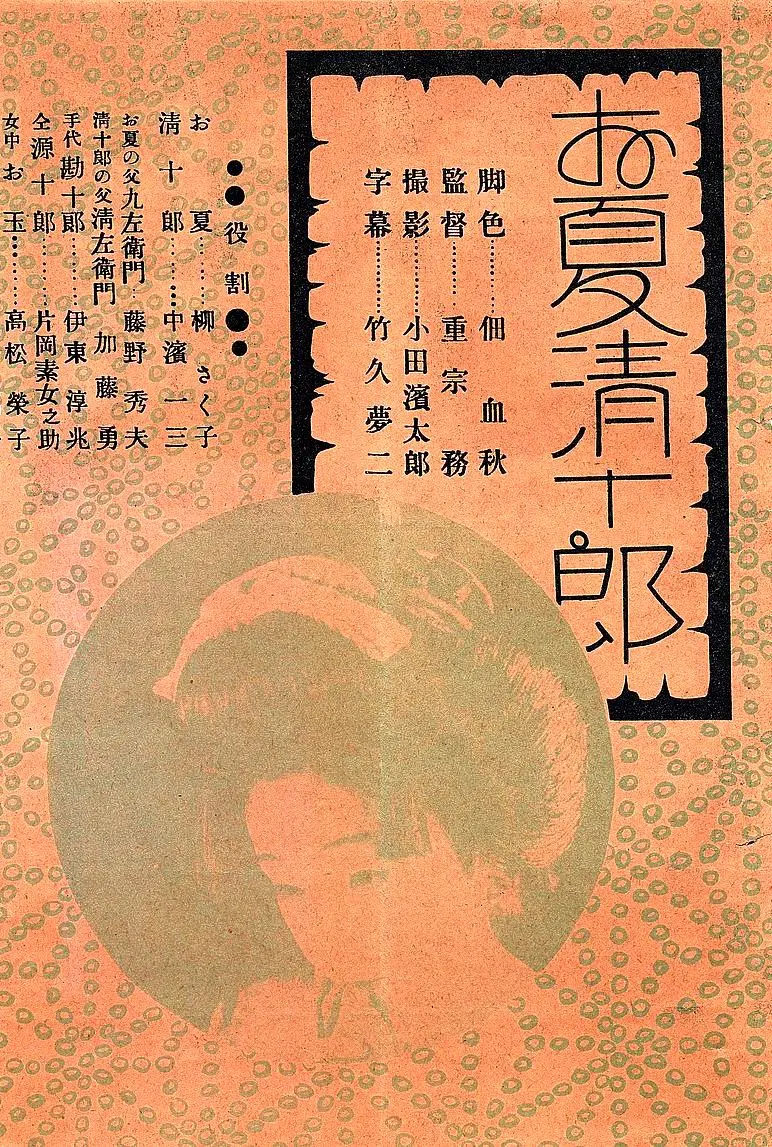
Is Onatsu Seijûro worth seeking out today? Short answer: yes, but with significant caveats. This is not a film for casual viewing; it demands a particular kind of patience and an appreciation for historical cinema, particularly Japanese drama of its era.
This film is unequivocally for cinephiles, scholars of Japanese cinema, and those with a profound interest in the nuanced storytelling and visual aesthetics of a bygone age. It is NOT for viewers accustomed to rapid pacing, overt exposition, or contemporary narrative structures. If your taste leans towards modern blockbusters or easily digestible plots, you will likely find it a challenging, perhaps even frustrating, experience.
While specific plot details of "Onatsu Seijûro" can be elusive for many contemporary audiences, the film's reputation and the nature of its title suggest a classic jidaigeki or shinpa drama, often steeped in themes of tragic love, duty, and social constraint. The very names 'Onatsu' and 'Seijûro' evoke the archetypal star-crossed lovers, destined to navigate a labyrinth of societal expectations and personal sacrifice.
The strength of such a narrative lies not in explosive plot twists, but in the meticulous unfolding of human emotion. It’s a slow burn, a deliberate construction of atmosphere and character interiority that was a hallmark of Japanese filmmaking during certain periods. The story, whatever its precise contours, is almost certainly a vehicle for exploring universal human struggles through a distinctly Japanese cultural lens.
This film works because it commits wholeheartedly to its emotional landscape, using every frame to build a sense of impending fate and deep-seated yearning. It fails because its deliberate pace and cultural specificity can alienate modern viewers unfamiliar with its conventions. You should watch it if you seek a profound, historically rich emotional experience, and are prepared to meet the film on its own terms.
The cast of "Onatsu Seijûro," featuring talents like Junko Matsui and Hideo Fujino, operates within a performative tradition that prioritizes emotional depth conveyed through subtle gesture and profound stillness. Junko Matsui, known for her ability to embody complex female characters, likely delivers a performance that speaks volumes with minimal dialogue.
Consider, for instance, a hypothetical scene where Onatsu, played by Matsui, stands before a screen, her back to the audience. The slight tremor in her shoulders, the almost imperceptible clench of her hands – these are the tools of her trade, communicating inner turmoil far more effectively than any overt display of grief. This kind of understated power is a cornerstone of classic Japanese acting, demanding a viewer's full attention to truly appreciate its artistry.
Hideo Fujino, as Seijûro, would undoubtedly complement this, embodying a stoic resolve often characteristic of male protagonists in such dramas. His strength would be in his quiet determination, his struggle evident not in grand pronouncements but in the weight of his gaze or the rigidity of his posture. The interplay between these two leads, a dance of unspoken feelings and societal pressures, forms the emotional core.
The supporting cast, including Sakuko Yanagi and Juncho Ito, would fill out the world with characters who represent the societal forces at play – the elders, the gossips, the figures of authority. Their performances, while perhaps less central, are crucial in establishing the suffocating atmosphere against which the protagonists' love struggles to breathe.
A director tackling a narrative like "Onatsu Seijûro" must be a master of mood and visual poetry. The pacing is likely deliberate, almost meditative, allowing scenes to unfold with a stately grace that builds emotional resonance rather than propulsive action. This isn't a flaw; it's a feature, a conscious choice to immerse the viewer in the characters' psychological states.
The director, in a film like this, is akin to a painter, carefully composing each frame. Imagine a scene where Seijûro walks alone through a moonlit garden, the shadows long and stark. The camera holds on him, allowing the silence and the stark beauty of the setting to convey his isolation and the weight of his predicament. This is not just visual flair; it is storytelling through environment.
This approach contrasts sharply with the kinetic energy of something like The Ropin' Fool or the fast-paced narrative of The Love Brokers. Here, the drama is internal, and the director's skill lies in making that internal struggle visible without resorting to overt melodrama. It's a challenging tightrope walk, and when executed well, it's profoundly moving.
The cinematography of "Onatsu Seijûro," likely in black and white, would emphasize contrast and texture. The interplay of light and shadow is not merely aesthetic; it's symbolic. Dark corners might represent hidden desires or societal oppression, while fleeting moments of light could signify hope or fleeting happiness.
Consider a shot composition where Onatsu is framed behind lattice work, the geometric patterns subtly imprisoning her, reflecting her societal constraints. This kind of visual metaphor is a powerful tool in older cinema, often speaking louder than dialogue. It's a testament to the visual storytelling prowess of the era, where every element on screen was carefully considered for its contribution to the narrative and thematic depth.
The pacing, as mentioned, is slow. This is not a film that rushes. It allows scenes to breathe, allowing the audience to absorb the emotional weight of each moment. A long take of a character simply staring out a window, lost in thought, might feel indulgent to some, but for others, it's an invitation to share in that character's internal world. This deliberate rhythm is a defining characteristic, differentiating it from the more direct narratives of films like Thin Ice or The Midnight Alarm.
At its heart, "Onatsu Seijûro" likely grapples with timeless themes that resonate across cultures. The conflict between individual desire and societal duty is a classic motif, particularly potent in historical Japanese dramas. The protagonists' love, whatever its nature, is almost certainly set against the unyielding backdrop of family honor, social status, or rigid moral codes.
This struggle is what gives the film its enduring power. It explores the human cost of tradition and the tragic beauty of those who dare to defy it, even in their quietest moments. The film doesn't just present these conflicts; it immerses you in the emotional landscape they create, forcing you to confront the difficult choices its characters face.
An unconventional observation: the film's potential for ambiguity, for leaving certain emotional resolutions unspoken, is its greatest strength. It trusts the audience to infer, to feel, rather than to be told. This makes it a more active viewing experience, even if it's a slow one. It's a testament to storytelling that respects the viewer's intelligence.
"Onatsu Seijûro," even if its specifics are shrouded by time, stands as a testament to the enduring power of classic Japanese cinema. It's a window into a particular cultural moment, yes, but more importantly, it's a profound exploration of universal human emotions: love, loss, sacrifice, and resilience. It reminds us that powerful storytelling transcends language and era.
The film's commitment to character depth over plot spectacle is a refreshing change from much of what dominates screens today. It's a reminder that sometimes, the most dramatic stories are the ones that unfold quietly, within the human heart, rather than through grand gestures or explosions. It works. But it’s flawed.
"Onatsu Seijûro" is not merely a film; it is an experience, a journey into the heart of a particular cinematic tradition and a universal human struggle. Its slow, deliberate pace and reliance on visual poetry and nuanced performances might deter some, but for those willing to surrender to its rhythm, it offers profound rewards. It is a challenging watch, undoubtedly, but one that enriches the soul and deepens one's understanding of film as an art form. It's a film that lingers, not with explosive memories, but with a quiet, persistent ache.
While it may not achieve the widespread recognition of some of its more accessible counterparts, its artistic merit and emotional resonance are undeniable. It's a film that deserves to be rediscovered, studied, and appreciated for its unique contribution to the tapestry of world cinema. My strong opinion is that this film, despite its age and potential obscurity, holds a mirror to enduring human truths that remain relevant, even if presented through a lens that requires a shift in perspective. It's a testament to the fact that true cinematic power isn't always loud or flashy; sometimes, it's found in the quietest, most heartbreaking moments.
IMDb —
1926
Community
Log in to comment.