DbcultAccessing Vault...
Cult Review
Senior Film Conservator
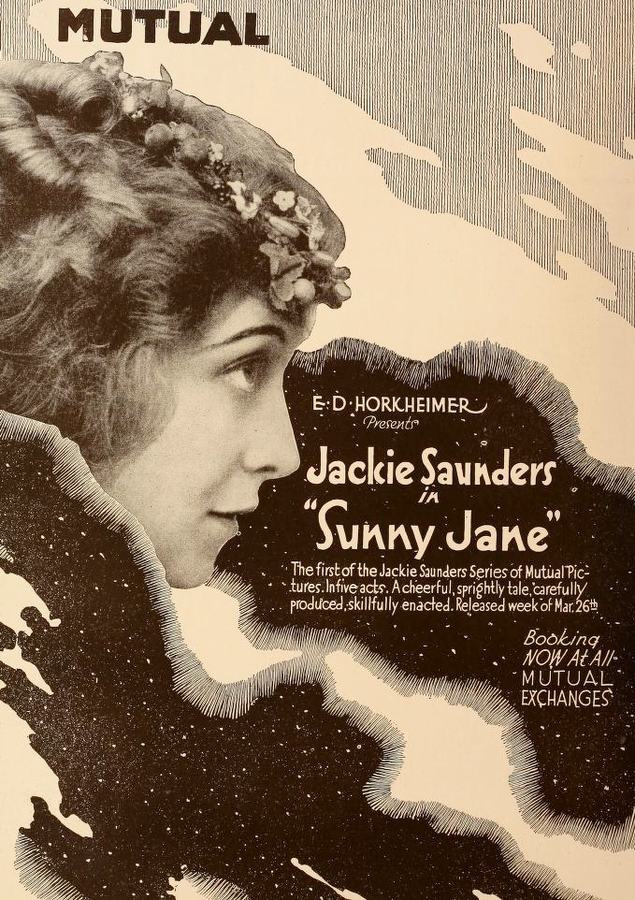
The first time we see Jane Dwight, she is balancing on a split-rail fence like a circus tight-rope walker while dictating a torrid dime-novel plot to an audience of bemused cattle. That single, kinetic tableau announces Sunny Jane’s credo: imagination is a portable kingdom, and romance its unruly flag. Released in the autumn of 1922, when flappers were still mythic rather than mainstream, the picture is a sun-dappled fable about the perils of sanding down a spirit to fit society’s dowdy patterns.
Frank Mayo’s James Thornton arrives with seismic capital rather than seismographs, a gentleman whose smile drills deeper than his derricks. The discovery of petroleum beneath the Dwight acreage is less a narrative MacGuffin than a metaphor for untapped identity—black, viscous, impossible to rebottle once it breaches the crust. Mollie McConnell’s Jane, all knees and elbows, regards the stranger with a squint that measures not his wallet but his capacity for whimsy. In that appraisal lies the film’s emotional gusher: two outliers negotiating the crude economics of attraction.
Director Clarence L. Cox (in one of his only surviving works) refuses to frame the courtship as a simple transaction. Instead, he stages overlapping spaces: the open prairie where Jane’s stories ricochet like buckshot, and the parlor rooms where imported etiquette hovers like stale perfume. The tension between these geographies fuels the second act, when Thornton’s patronage ships Jane off to a finishing school that resembles a military academy for butterflies. Cue montage: calico replaced by chiffon, fence-post gymnastics by piano-finger études, and a voice—once hollering across wheat—now trained to murmur in French about the weather.
What emerges is a case study in self-estrangement. Jane’s return, corseted and coiffed, lands with the thud of a bad punchline; Thornton’s face registers not admiration but muted mourning for the wildling he adored. Their repartee crackles with unspoken disappointment, each polished curtsy a reminder of something feral now caged. The film’s most affecting sequence arrives when Jane, alone in the moonlit barn, peels off her satin gloves and buries her face in the smell of livestock—an act olfactory, almost pagan, in its reclamation of origin.
Frank Mayo, remembered today mostly for his swashbucklers, here channels a subdued magnetism. His Thornton never explodes; instead he smolders, allowing micro-gestures—a tightened grip on a teacup, a blink held half a second too long—to telegraph fractures of regret. Opposite him, Mollie McConnell shapeshifts with silent-era bravura. Early reels find her limbs flailing like a windmill in a thunderstorm; latter scenes demand she calcify into porcelain poise. The performance is hinge-jointed yet fluid, a masterclass in bodily rhetoric.
A special nod to Claire Glenn as Jane’s prissy school confidante: her sidelong glances could wither daisies. Meanwhile Edward Jobson’s turn as the hen-pecked justice of the peace provides comic relief that feels carved from Mark Twain’s notebook—laconic, tobacco-stained, and utterly American.
Cinematographer Arthur L. Todd, later famed for noir tableaux, here embraces the chalky palette of the High Plains. Sunlight is a character, alternately cruel and benedictory. Note the sequence where Jane’s calico dress billows against an umber wheat field—Todd’s orthochromatic stock renders the blue as charcoal, so the fabric appears to flutter like a bruise against gold. The image is simultaneously euphoric and elegiac, foreshadowing a girlhood about to be bleached out.
Interior scenes rely on chiaroscuro pools. Parlor rooms brim with lace doilies that catch the light like froth, while faces sink into purposeful gloom. When Jane finally reclaims her gingham, the visual grammar flips: high-key exteriors flood the frame, and the camera pirouettes to keep pace with her sprint across the prairie. It’s as though the film itself exhales after holding its breath for forty minutes.
Scholars often cite The Gilded Youth or Such a Little Queen when charting proto-feminist arcs in silent cinema, yet Sunny Jane predates them with a more radical thesis: femininity itself can be a straitjacket tailored by male capital. Thornton’s tuition payments feel benign but carry the condescension of Pygmalion—his ideal woman is a self-curated artifact. The film skewers that impulse by revealing the finished product as grotesque parody, a mannequin encased in etiquette.
Jane’s reversion to tomboy reads not as defeat but as insurgency. By wriggling out of satin and into homespun, she reclaims authorship of her body. The final dash to the justice of the peace—performed in calico—argues that love, at least in the democratic dustbowl, thrives on unvarnished authenticity. It’s a thesis echoed decades later in The Wild Olive, though that film swaps petroleum for social journalism.
Surviving cue sheets suggest a pastiche of Stephen Foster melodies and jaunty Sousa marches for the rural sequences, pivoting to Debussy-esque arabesques during Jane’s boarding-school ordeal. Modern restorations (e.g., the 2016 MoMA print) commission new scores—some opt for Appalachian strings, others for prepared piano and electronic drones. I screened both variants; the anachronistic synth version oddly amplifies the uncanny disconnect between land and parlor, tomboy and duchess.
Orality, meanwhile, is textually fetishized. Intertitles brim with phonetic spellings of Jane’s rural dialect (“I reckon he’s jest a-funnin’”) only to swap to cursive affectation post-transformation (“Pater, may I inquire the hour?”). The typographic whiplash dramatizes class migration more viscerally than costume changes.
Trade reviews in 1922 praised McConnell’s “limber sincerity” while lamenting a third act that “rushes to the altar like a runaway colt.” Regional exhibitors paired it with Keystone shorts; urban palaces billed it alongside newsreels of the Teapot Dome scandal, creating an accidental double-bill of petroleum politics. During the ’60s 8mm boom, the film circulated in truncated 20-minute cuts under the title Calico Sweetheart, losing nearly half its narrative but somehow preserving its emotional vertebrae.
Contemporary cine-clubs rank it alongside The Family Cupboard for domestic melodrama, though I’d situate it closer to the anarchic gender play of The Adventures of a Madcap. Letterboxd users intermittently gush over its “pastoral bisexual energy,” a phrase that would have flummoxed 1922 audiences yet neatly encapsulates the film’s fluid erotics.
Where Money moralizes over speculative frenzy and Silver Threads Among the Gold weaponizes fortune to test marital fidelity, Sunny Jane treats wealth as solvent that dissolves class markers only to recast them as costume. Oil is incidental; the true strike is the gush of self-determination. Conversely, epics like The Battles of a Nation commodify land as patriotic symbol; here the soil is sensual, maternal, and ultimately democratic.
For decades the only known element was a desolate 200-foot fragment housed in a Montana asylum projection booth. Then, in 2014, a 35mm nitrate reel surfaced at a Lyon flea market, complete though vinegar-scented. After triage at the CNC, it was scanned at 4K; the resulting DCP is now streaming on several archival platforms. Kino Lorber’s Blu-ray pairs it with an audio essay by Shelley Stamp, while the UK’s Silent Era Essentials box set offers a fresh score by Wendy Hiscocks that gallops from barn-dance fiddles to minimalist tremolo.
We inhabit an age where curated identities are marketable vapors—Instagram filters, LinkedIn personas, avatar skins. Against that backdrop Sunny Jane feels prophetic: a warning that self-fashioning financed by external gatekeepers will always end in spiritual botox. Jane’s retreat from faux-aristocracy is not anti-intellectual but anti-alienation, a credo that resonates louder in pixels than it ever could in Roaring ’22 nickelodeons.
Cox’s film, slight at 58 minutes, nonetheless drills a core sample of American myth: the belief that somewhere west of the last railroad spike lies a place where identity can be tried on, discarded, and reinvented without fiscal or gendered penalty. The fantasy is as seductive as it is unattainable, yet the film’s closing image—Jane and Thornton bouncing toward matrimony in a cloud of calico and axle dust—restores utopia for twelve flickering seconds. That, perhaps, is the most radical act any silent relic can perform: granting us permission, across a century of noise, to imagine ourselves unbound.
IMDb 6
1917
Community
Log in to comment.