DbcultAccessing Vault...
Cult Review
Senior Film Conservator
For those with a genuine interest in the very earliest days of synchronized sound cinema, specifically the Vitaphone process, Hit of the Show offers a fascinating, if often clunky, glimpse into a pivotal moment in film history. It’s a must-see for film historians, students of early musicals, and dedicated fans of Joe E. Brown who want to witness his transition to talkies. However, if you're looking for a polished narrative, sophisticated camera work, or even consistently clear sound, you will likely find its charms limited. Modern audiences accustomed to seamless storytelling and dynamic visuals may struggle with its static direction and often-stiff performances, making it a challenging watch for casual viewers.
Released in 1928, Hit of the Show arrives at the precipice of the sound revolution, and it wears its Vitaphone origins on its sleeve. The film is less a smooth narrative experience and more a showcase for the technology itself, a series of vaudeville acts strung together by a thin plot. This isn't a criticism so much as an observation of its purpose. The sheer novelty of hearing dialogue and musical numbers must have been electrifying for audiences at the time. Today, that novelty has worn off, revealing the growing pains beneath.
The sound quality is, predictably, inconsistent. Dialogue often sounds tinny, and the musical numbers, while impressive for their era, lack the spatial depth we now take for granted. There are moments where the sound seems to drop out slightly, or background noise becomes unexpectedly prominent, reminding you constantly of the rudimentary recording techniques. It’s a historical artifact, not a polished product.
The cast navigates the awkward transition from silent film acting to the demands of spoken dialogue with varying degrees of success. Gertrude Olmstead, as the aspiring star Daphne, delivers a performance that feels caught between two worlds. Her expressions are often broad, a carryover from silent cinema where emotions had to be telegraphed visually, but her spoken lines sometimes feel stiff, as if she’s enunciating carefully for the microphone rather than delivering natural speech. This isn't entirely her fault; the technology often forced actors to remain relatively stationary, limiting their physical expression.
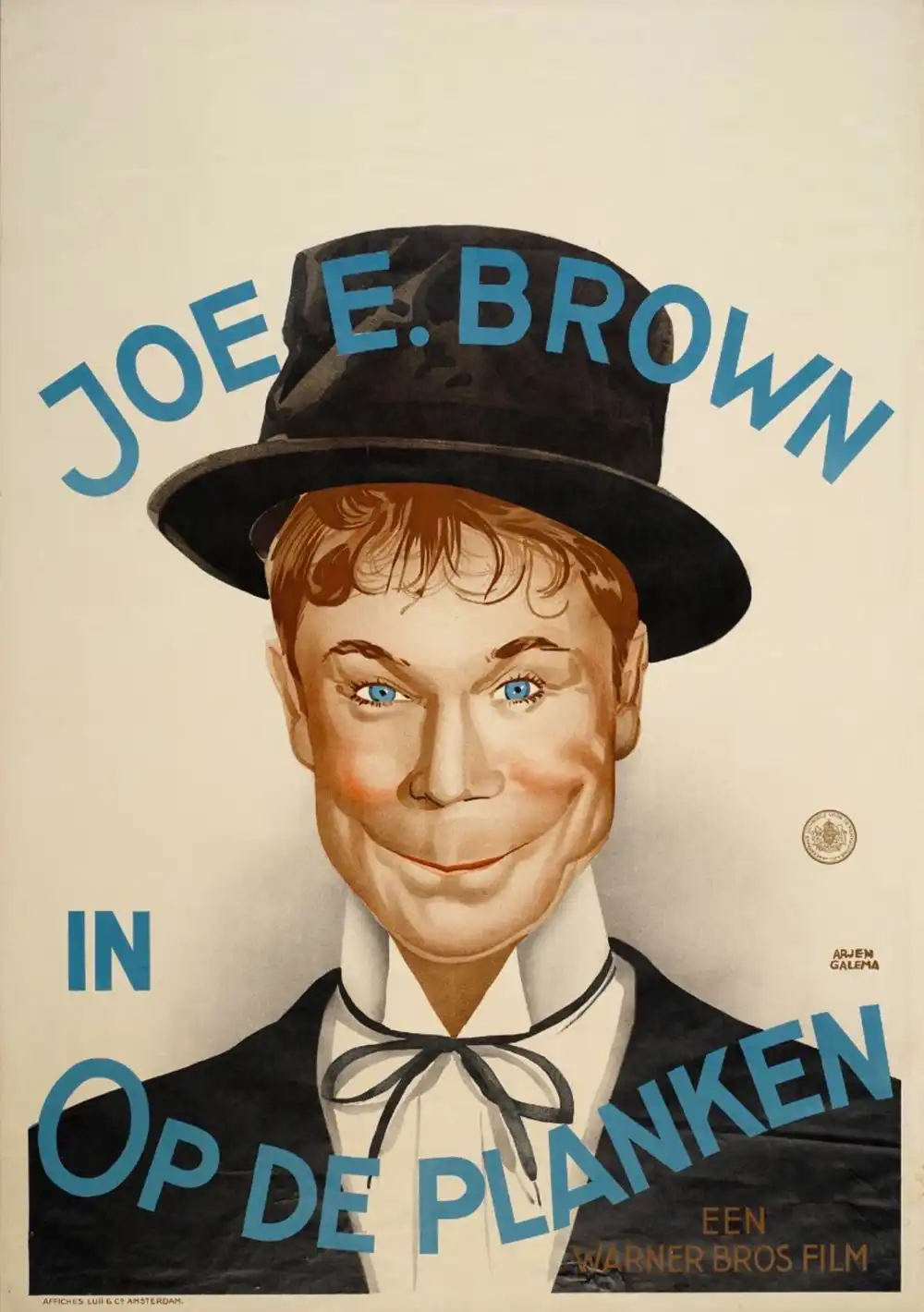
The real draw here for many will be Joe E. Brown, who brings his trademark wide-mouthed grin and energetic physical comedy to the screen. Even within the constraints of early sound recording, Brown's presence is undeniable. His comedic timing, particularly in a scene where he attempts to impress a producer with a series of exaggerated facial contortions and vocalizations, stands out. You can see the raw talent that would make him a star, even if the sound system doesn't quite capture the full force of his booming laugh. He's a natural, adapting to the new medium with more ease than many of his peers, injecting much-needed levity into the proceedings.
Other supporting performances are largely forgettable, serving more as plot devices than fully realized characters. William Bailey, as the villainous theatrical manager, leans heavily into silent-era melodrama, his sneers and menacing glances feeling a bit out of place once he starts speaking.
The pacing of Hit of the Show is undeniably sluggish by modern standards. The camera is often static, mimicking a stage play, which was a common characteristic of early talkies trying to figure out how to integrate sound without elaborate camera movements. Scenes tend to play out in long takes, with actors entering and exiting the frame as if on a proscenium. This creates a sense of detachment, making it difficult to feel fully immersed in the story.
The film’s visual style is functional rather than artistic. Lighting is generally flat, designed to illuminate the actors and sets rather than create mood or depth. The sets themselves are typical for the era – a mix of somewhat lavish theatrical backstages and more mundane boarding house rooms. There’s a particular musical number involving a chorus line dressed in vaguely futuristic, sequined costumes that feels like an attempt at spectacle, but the static camera limits its impact. The editing is straightforward, mostly cutting between dialogue partners or from a wide shot to a closer view of a performer during a song. There’s little of the dynamic cutting that would soon become standard.
Hit of the Show is not a lost masterpiece, nor is it a particularly engaging film for a casual viewing. It is, however, an essential piece of the puzzle for anyone studying the birth of the talkie. It’s a film that shows the industry figuring itself out in real-time – the struggles, the compromises, and the occasional flashes of brilliance that hint at the cinematic future. You watch it not for its narrative power or artistic merit, but for the sheer audacity of its existence and the historical context it provides.
Think of it less as entertainment and more as an educational experience. If you’ve enjoyed other early sound experiments like The Right to Love or even some of the more ambitious silent features that were retrofitted with sound, this will fit right into your historical viewing queue. Otherwise, it’s probably best left to the specialists.

IMDb 5.9
1914
Community
Log in to comment.