DbcultAccessing Vault...
Cult Review
Senior Film Conservator
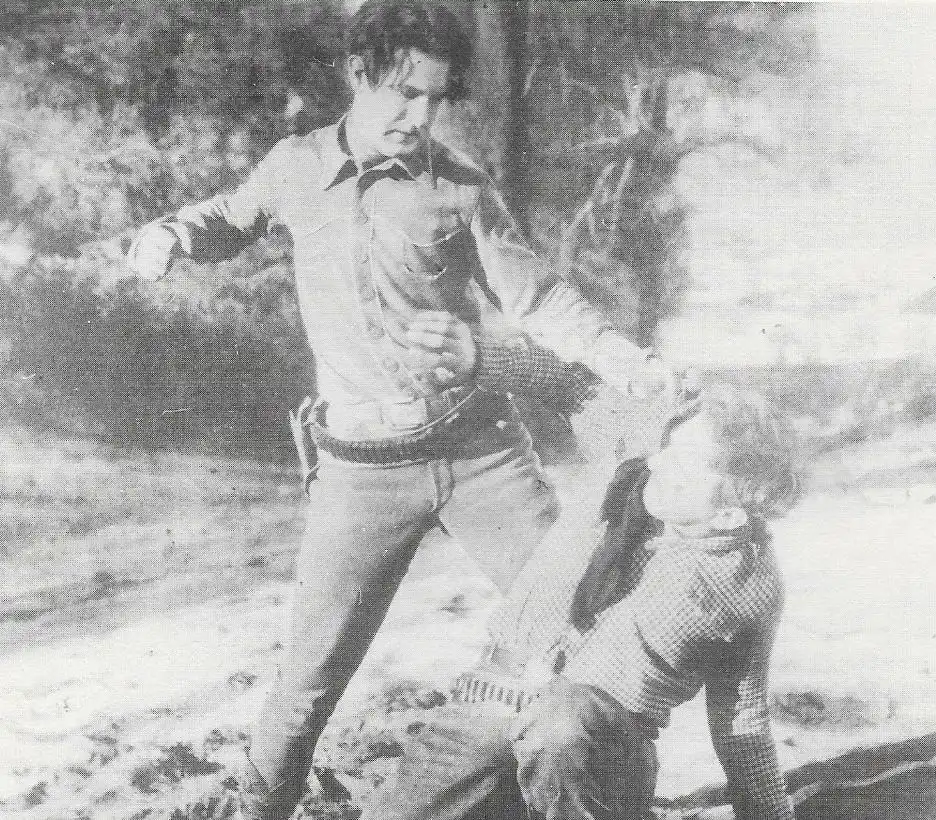
Alright, so you're thinking about digging up Rainbow Range. Let's be real: this isn't a movie you stumble upon by accident unless you're truly dedicated to the archives of early Westerns. Is it worth watching today? For most people, probably not. This is for a very specific crowd: the kind of person who genuinely enjoys the dusty, slightly unpolished charm of films from this particular era, or anyone with a deep, abiding love for genre history. If you're looking for anything resembling modern pacing, nuanced performances, or even consistently competent filmmaking, you're going to hate it. But if you can appreciate a film for what it is—a product of its time, with all its beautiful, weird flaws—then maybe, just maybe, there's something here for you.
Right from the jump, you're hit with the low-budget feel. Not just 'low budget' like an indie film today, but 'early cinema, figuring things out' low budget. The sets are sparse, often just a single wall with a door, and the 'town' feels more like a collection of props than a lived-in place. It’s charming in its own way, like watching a stage play through a keyhole, but it also means the world never quite feels real.
Al Ferguson, bless his heart, is definitely trying. He's got that stoic cowboy thing down, but sometimes it veers into just plain stiff. There's a scene early on where he's supposed to be delivering some kind of warning to a group of shady characters in the saloon, and his lines come out in this flat, almost rehearsed cadence. You can practically hear him thinking about the next word. His eyes, though, they've got something. A sort of weary determination that occasionally breaks through the wooden delivery.
Cheyenne Bill, on the other hand, is a bit more natural, even if his character feels a little underwritten. He has this easygoing swagger that feels more authentic than some of the more theatrical performances around him. Their chemistry? It's... fine. They stand next to each other, they talk, they ride horses. It's not exactly a dynamic duo, but they get the job done. You wish they had more to work with, though. A little more banter, maybe a moment where they genuinely connect beyond the plot points.
The pacing is another thing. It's not exactly slow in a contemplative way; it's slow because sometimes, nothing much is happening. There's a shot of them riding across a landscape that goes on for what feels like an eternity. The camera just holds, and holds, and holds. You start to notice the dust on the lens, or maybe a small bird flying in the background. It's not bad, exactly, but it definitely makes you feel the passage of time in a very particular way. Then, suddenly, there's a jump cut to a new scene, and you're left wondering if you missed something crucial in the transition.
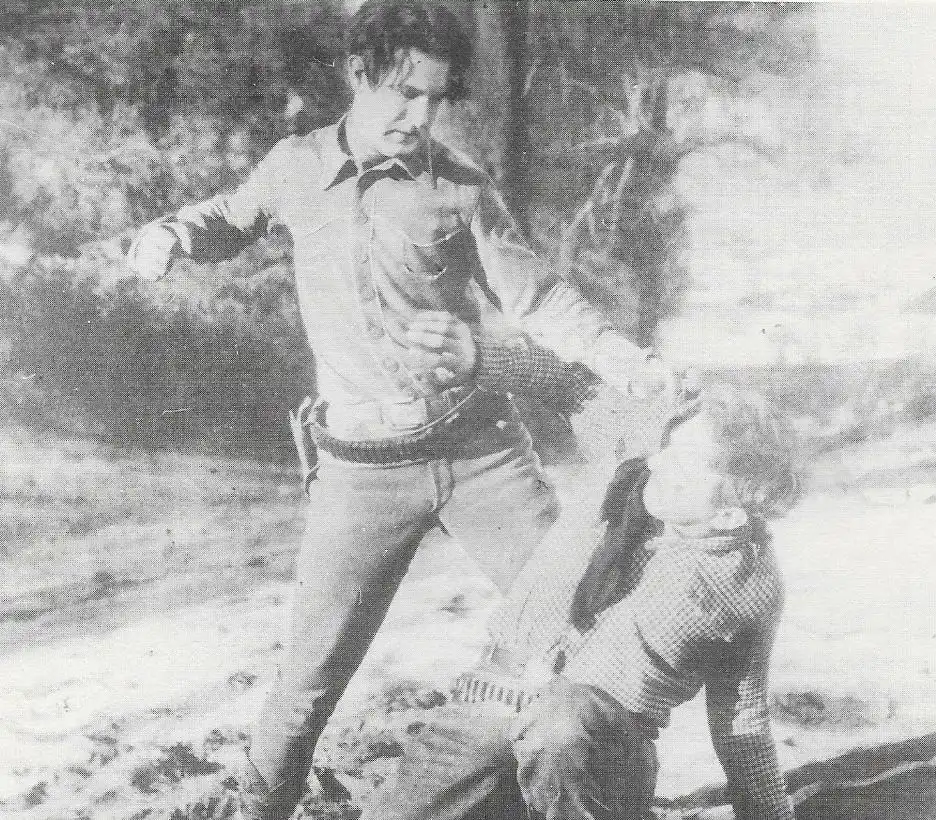
Some of the editing choices are truly baffling. There's a 'tense' moment where a character is about to draw, and the cut to the reaction shot of another character is just a beat too late, or too early. It throws off the rhythm. You can almost feel the editor in the room trying to make sense of the footage they had. And the fight scenes! Oh man. They're clunky. Punches often miss by a good foot, and the sound effects are so clearly added in post that they almost become comical. It's less a fight and more a choreographed dance where everyone is a little out of step.
One detail that stuck with me: the costumes. Al Ferguson's hat always looks a little too clean, a little too new for someone who's supposed to be out on the range. It's a small thing, but it pulls you out of it. Like he just picked it up from the wardrobe department five minutes before the shot. And the villain's mustache? It's a work of art, but it feels like it belongs in a cartoon. A good mustache, though. Very villainous.
There are these little flashes, though, where the film accidentally works. A wide shot of the 'Rainbow Range' itself, with its painted backdrop mountains, manages to convey a sense of vastness, even if it's clearly artificial. It's not grand, not like The Great Gamble's more ambitious outdoor photography, but it has a certain quiet dignity. And a specific moment where a horse, not even one of the main ones, just decides to stop and stare directly at the camera. It’s probably an accident, but it feels like a moment of genuine, unscripted life in a film that otherwise feels very much by the numbers.
You find yourself laughing at things that probably weren't meant to be funny. A dramatic reveal that falls flat, an overzealous musical cue, a character who walks away from a conversation mid-sentence. It’s part of the experience. You're not just watching a movie; you're watching a piece of history that's trying its best, and sometimes failing spectacularly, but always with a certain earnestness.
So, should you watch Rainbow Range? Only if you're in the mood for a very particular kind of movie night. One where you're willing to forgive a lot, chuckle at the rough edges, and appreciate the effort more than the execution. It’s a curiosity, a relic. Not a masterpiece, not even a particularly good movie by modern standards, but it’s got a pulse, however faint, and sometimes that's enough.
IMDb 5.3
1934
Community
Log in to comment.