DbcultAccessing Vault...
Cult Review
Senior Film Conservator
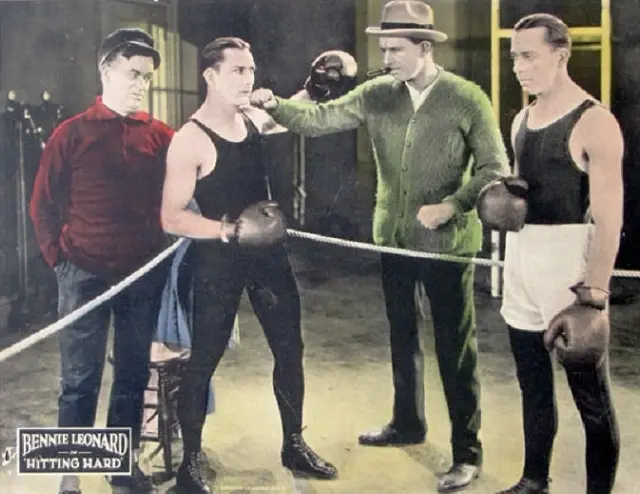
Is Hitting Hard a knockout for modern audiences? Short answer: No, it is a decision win that barely clears the scorecard, primarily valuable as a historical artifact rather than a gripping narrative. This film is for the boxing purist and the silent film historian who wants to see a real-life legend in motion. It is absolutely not for someone looking for the high-octane pacing of modern sports dramas or the psychological depth of a Scorsese ring-side epic.
If you are looking for a masterpiece of silent cinema comparable to The Golem, you will be disappointed. However, for those fascinated by the intersection of real-world sports and early Hollywood, Hitting Hard offers a rare glimpse at Benny Leonard, one of the greatest technical boxers to ever live. The film is worth watching if you can appreciate the physical language of a champion, but as a piece of dramatic storytelling, it often feels as stiff as a fighter who stayed in the ring one round too many.
This film works because: The fight choreography is grounded in the actual mechanics of 1920s boxing, providing an authenticity that many contemporary silent dramas lacked.
This film fails because: Benny Leonard, while a genius in the ring, possesses the screen presence of a mahogany wardrobe, making the romantic subplots feel forced and hollow.
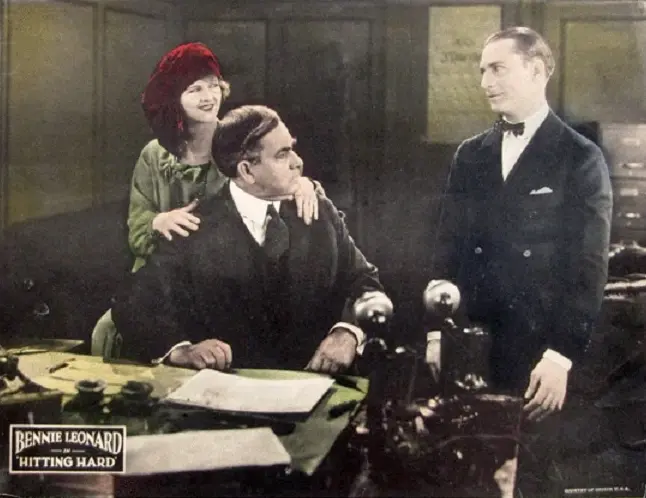
You should watch it if: You are a student of sports history or want to see how the 'Ghetto Wizard' translated his ring IQ into the visual medium of the 1920s.
Benny Leonard was not an actor. He was a tactician. In Hitting Hard, this reality is painfully obvious every time the camera lingers on his face during a non-combat scene. In the 1920s, it was common for sports icons to transition to the silver screen, much like the transition seen in The Alaskan, where rugged masculinity was the primary selling point. Leonard’s performance is a fascinating study in physical confidence versus emotional discomfort. When he is in a boxing stance, he is a god. When he is holding a teacup or courting Diana Allen, he looks like he's waiting for the bell to save him.
One specific scene highlights this disparity perfectly. Early in the film, Leonard’s character is introduced to a group of socialites. The way he adjusts his collar and shifts his weight reveals a man who is hyper-aware of his own body but completely lost in the social choreography of the elite. This isn't just bad acting; it’s an accidental piece of character development that reflects the actual social divide of the era. He is a laborer in a world of leisure.
The writing by Sam Hellman is serviceable but relies heavily on the tropes established in films like Beloved Jim. We have the underdog, the corrupt promoter, and the virtuous woman who represents a 'better' life. Hellman doesn't try to reinvent the wheel. He simply puts the wheel on a faster cart. The dialogue intertitles are punchy, often echoing the slang of the New York gyms, which adds a layer of grit that keeps the film from becoming too sentimental.
However, the pacing suffers under the weight of its own conventionality. We know exactly where the story is going from the moment Frank Evans appears on screen as the antagonist. Evans plays the heavy with a sneering efficiency, but there is no nuance to his villainy. He is a cardboard cutout designed to be punched. Unlike the more complex character dynamics found in The Half Breed, Hitting Hard is content to stay in its lane as a straightforward morality play.
Technically, the film is a product of its time—and not in a way that pushes boundaries. The cinematography is largely static. There are no sweeping tracking shots or innovative angles. The camera sits at a respectful distance, much like a spectator at Madison Square Garden. This lack of visual flair is particularly noticeable when compared to the expressionistic visuals of European imports from the same period. It feels more like a recorded play than a cinematic exploration.
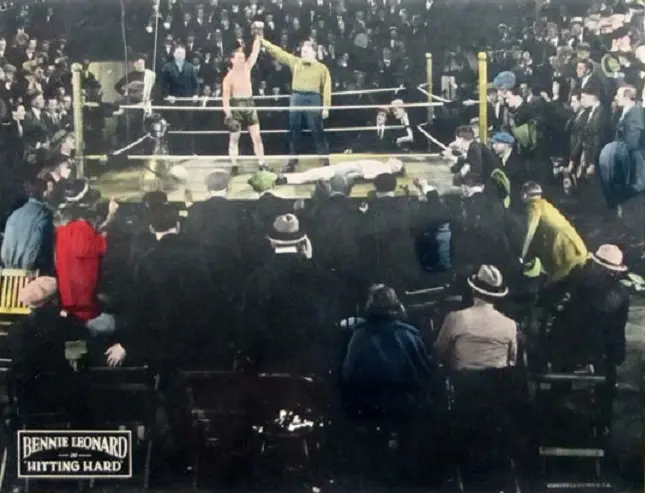
Where the direction does succeed is in capturing the speed of the fight. The final bout is choreographed with a level of detail that puts other 1925 dramas to shame. You can see Leonard’s footwork—the way he pivots to create angles. It’s a masterclass in boxing, even if it’s a mediocre class in filmmaking. The editor manages to keep the rhythm of the punches consistent with the musical accompaniment of the era, creating a percussive experience that almost makes up for the languid second act.
For the casual viewer? No. It’s too slow. It’s too predictable. It lacks the visual panache of something like The Midnight Girl. But for the cinephile, there is a brutal simplicity here that is refreshing. It doesn't try to be anything other than a showcase for its lead. It hits. Then it misses. Then it lands a final hook that leaves you feeling satisfied, if not enlightened.
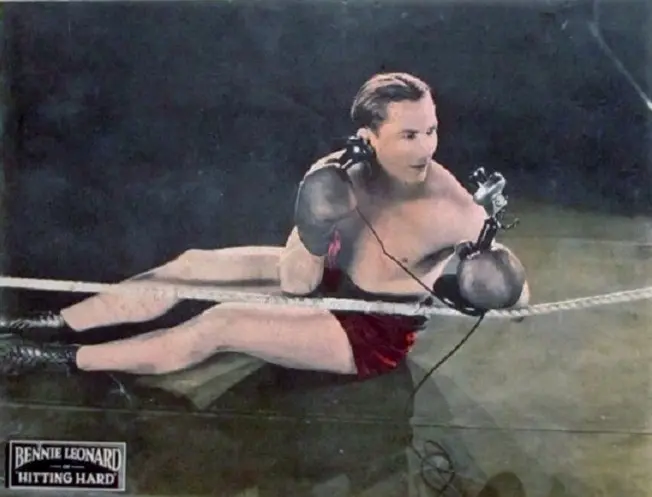
The film’s biggest flaw is its refusal to engage with the darker side of the sport. It sanitizes the ring, making it a place of noble struggle rather than the desperate, bloody business it was in 1925. If you want a film that explores the psychological toll of violence, you won't find it here. This is a PR piece for Benny Leonard’s reputation as a clean-cut champion.
Pros:
- Authentic 1920s boxing choreography.
- Strong supporting performance by Tammany Young.
- Fascinating historical context of Jewish-American sports icons.
Cons:
- Lead performance lacks emotional range.
- Static camera work feels dated even for 1925.
- The romantic subplot is entirely chemistry-free.
Hitting Hard is a lightweight contender in the heavy-hitting world of silent cinema. It survives on the strength of Benny Leonard’s name and his physical prowess, but it fails to leave a lasting mark on the heart. It is a fascinating relic, a piece of sports history captured on celluloid, but it lacks the soul of a true classic. It works. But it’s flawed. If you go in expecting a championship fight, you’ll leave feeling like you watched a decent sparring session. It’s worth a look for the curiosity factor, but don't expect it to change your life.
IMDb —
1916
Community
Log in to comment.