DbcultAccessing Vault...
5.9/10
Senior Film Conservator
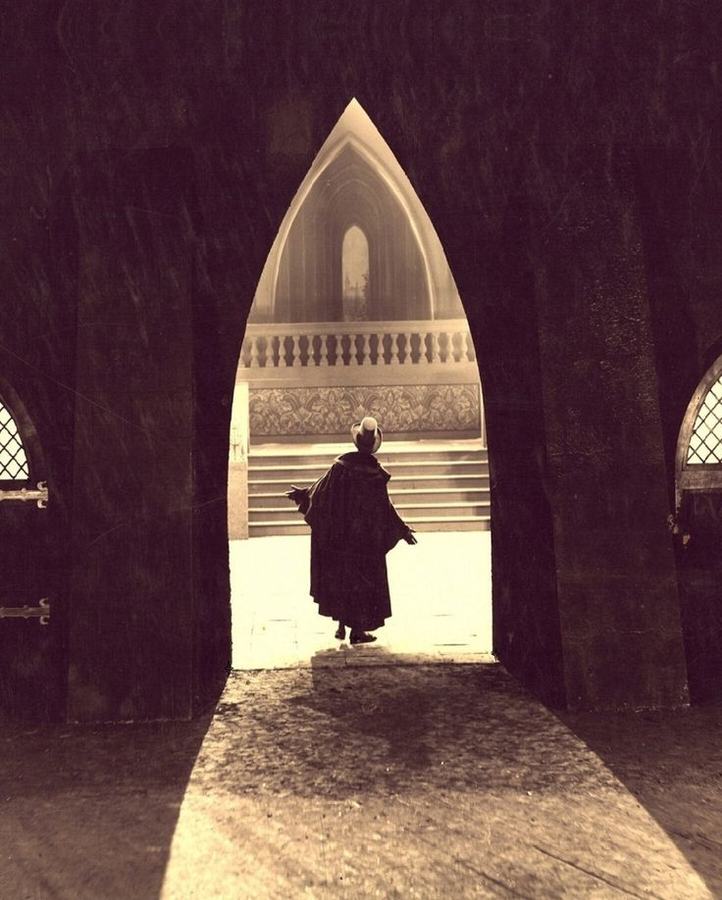
A definitive 5.9/10 rating for a film that redefined the boundaries of cult cinema. Hoffmanns Erzählungen remains a cornerstone of transgressive art.
In the annals of early German cinema, few works resonate with the prophetic artistic fervor of Richard Oswald’s 1916 masterpiece, Hoffmanns Erzählungen. This isn't merely a film; it's an incandescent journey into the very heart of E.T.A. Hoffmann’s literary genius, a visual symphony that dares to challenge the prevailing rationalist currents of its era. Long before the full bloom of German Expressionism, Oswald, alongside co-writer Fritz Friedmann-Frederich, conjured a world where the boundaries between reality and the spectral blur with unsettling elegance, creating a cinematic experience that feels both ancient and astonishingly modern.
The very essence of Hoffmann’s work, his lifelong intellectual combat against the cold, mechanistic worldview of the Enlightenment, finds its most potent cinematic articulation here. Oswald doesn't just adapt a story; he translates a philosophy. The narrative, if one can even call it that in a conventional sense, unfurls as a series of fragmented, dream-like episodes, each one a testament to the author’s fascination with the uncanny, the grotesque, and the deeply psychological. It's a cinematic precursor to the later, more overt explorations of the subconscious that would define the avant-garde movements of the 1920s.
Richard Oswald, a prolific director whose output often grappled with the darker facets of human nature, proves himself a remarkably astute interpreter of Hoffmann. His direction here transcends mere storytelling, delving into a profound visual language that speaks volumes without a single intertitle needing to bear the full weight. The cinematography, while rudimentary by today's standards, masterfully employs shadow and stark contrast to evoke a sense of perpetual disquiet. It’s a world where every corner might conceal a specter, every smile a sinister intent. This aesthetic choice is foundational, laying groundwork for the distorted realities and psychological landscapes that would soon become synonymous with German cinematic identity.
Unlike the more straightforward, often melodramatic narratives prevalent in contemporary cinema, such as the social realism found in Ingeborg Holm, Oswald's film actively resists easy categorization. It is a work that demands engagement on a deeper, more symbolic level, inviting viewers to grapple with its ambiguities rather than simply consume its plot. This deliberate subversion of conventional narrative structure is one of the film's most compelling aspects, placing it firmly ahead of its time.
The cast assembled for Hoffmanns Erzählungen is a veritable who's who of early German acting talent, each performer contributing to the film’s rich tapestry of psychological unease. At the forefront, Werner Krauss delivers a performance that is nothing short of mesmerizing. Already a formidable presence, Krauss, who would later achieve iconic status in films like The Cabinet of Dr. Caligari, imbues his roles with a chilling intensity and a theatricality perfectly suited to Hoffmann's heightened realities. His portrayal is a masterclass in silent film acting, conveying volumes with a mere glance or a subtle shift in posture, embodying the very essence of the uncanny that permeates the film.
The supporting cast is equally instrumental in constructing this elaborate illusion. Ernst Ludwig, Ressel Orla, and Andreas Van Horn navigate the film's surreal landscape with commendable commitment. Orla, in particular, often embodies the ethereal or the tragically beautiful, a recurring motif in Hoffmann's tales of doomed love and artificiality. Karl Swoboda, Thea Sandten, and Nelly Ridon contribute to the film’s varied characterisations, lending credence to its carnival-like atmosphere where archetypes and grotesques mingle freely. Even director Richard Oswald takes a role, as does Ruth Oswald, demonstrating a deep personal investment in the project.
Other notable performances include those by Louis Neher, Hans Lanser-Ludolff, Ferdinand Bonn, and Kurt Wolowsky, each contributing to the film's rich ensemble work. The presence of actors like Lupu Pick, Erich Kaiser-Titz, Kathe Oswald, Alice Hechy, Ernst Pittschau, Friedrich Kühne, Max Ruhbeck, Sigmund Nunberg, and Paula Ronay further underscores the depth of talent involved, collectively creating a world that is both captivating and profoundly disturbing. Their exaggerated gestures and expressive facial work are perfectly attuned to the silent medium, transforming the stage into a canvas for raw, unadulterated emotion and psychological states.
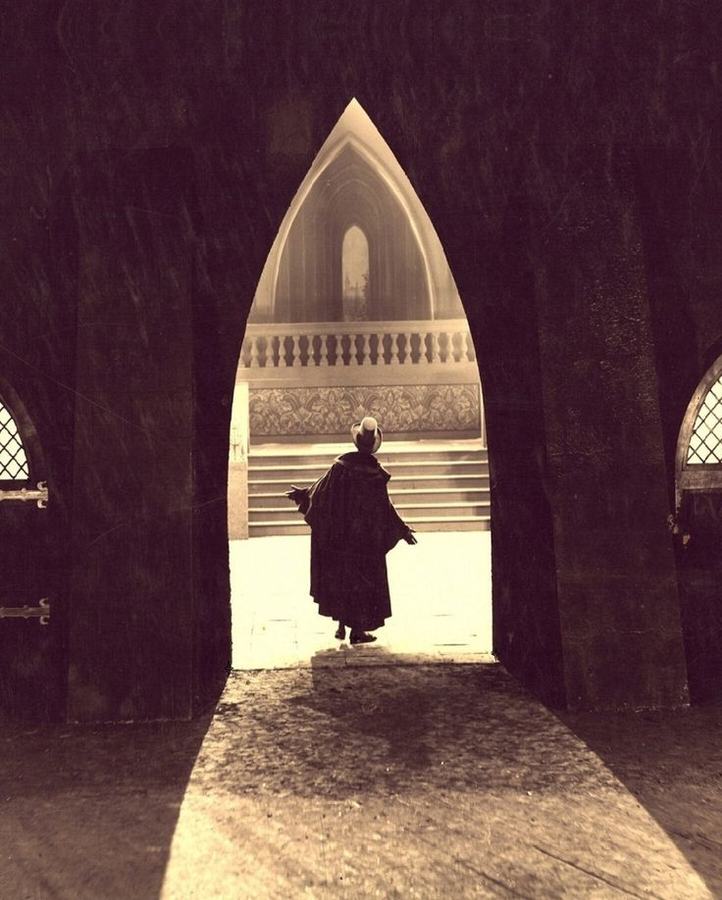
What truly sets Hoffmanns Erzählungen apart is its audacious embrace of the grotesque and the fantastic. The film is replete with carnival-like scenes, where reality is stretched and contorted, anticipating the stylistic hallmarks of Expressionist cinema. These sequences are not mere diversions; they are integral to the film's philosophical core, serving as vivid manifestations of Hoffmann’s belief in the hidden, often sinister forces lurking beneath the veneer of everyday life. The revelation of ‘nature morte’ – inanimate objects imbued with a disturbing, almost sentient quality – is a recurring motif, challenging the viewer to question the very fabric of existence.
The sets and costumes, though perhaps less overtly stylised than those seen in later Expressionist works, possess a palpable theatricality. They are designed not to mimic reality but to evoke an internal, subjective truth. This approach allows the film to delve into the psychological fragmentation of its characters, exploring themes of delusion, obsession, and the fragility of the human mind. It's a journey through the labyrinthine corridors of consciousness, where dreams and nightmares coexist, and sanity is a precarious state.
E.T.A. Hoffmann’s literary techniques, particularly his use of irony, the fantastic, and the blurring of subjective and objective realities, are translated into a compelling visual language by Oswald and Friedmann-Frederich. The episodic structure, rather than feeling disjointed, contributes to the dream-like quality, mirroring the fragmented nature of memory and fantasy. Each tale – whether it concerns mechanical dolls, sinister reflections, or lost love – serves as a metaphorical exploration of the human condition, often tinged with a profound sense of melancholic longing.
The film’s brilliance lies in its ability to take these complex literary ideas and render them accessible, yet no less profound, through the nascent art of cinema. It’s a testament to the power of adaptation when handled with such reverence for the source material’s spirit, rather than just its plot points. This is not a film that merely tells a story; it embodies an entire literary and philosophical tradition, projecting it onto the silver screen with audacious vision.
Hoffmanns Erzählungen stands as a monumental work in the history of German cinema, a vital bridge between the theatrical traditions of the late 19th century and the revolutionary cinematic movements of the 1920s. Its influence, though perhaps not as overtly documented as that of later Expressionist masterpieces, is undeniable. It demonstrated the potential of film to transcend simple narration, to explore psychological depths, and to create visually arresting worlds that reflect internal states rather than external realities.
For contemporary viewers, rediscovering this film is like unearthing a hidden gem. It offers a unique glimpse into the intellectual and artistic ferment of pre-Weimar Germany, a period ripe with experimentation and a yearning for new forms of expression. The film's enduring power lies in its timeless themes: the allure of the artificial, the danger of unchecked rationalism, and the eternal human quest for meaning in a world often devoid of it. It challenges us to look beyond the surface, to question what is real, and to embrace the beautiful, terrifying chaos of the imagination.
In an era where cinema was still finding its voice, Richard Oswald’s Hoffmanns Erzählungen spoke volumes, not just through its images, but through the very spirit of its creation. It remains a testament to the power of art to articulate the ineffable, to give form to the formless, and to remind us that the most profound truths often reside in the shadows, just beyond the reach of reason.
IMDb —
1916
Community
Log in to comment.