DbcultAccessing Vault...
Cult Review
Senior Film Conservator
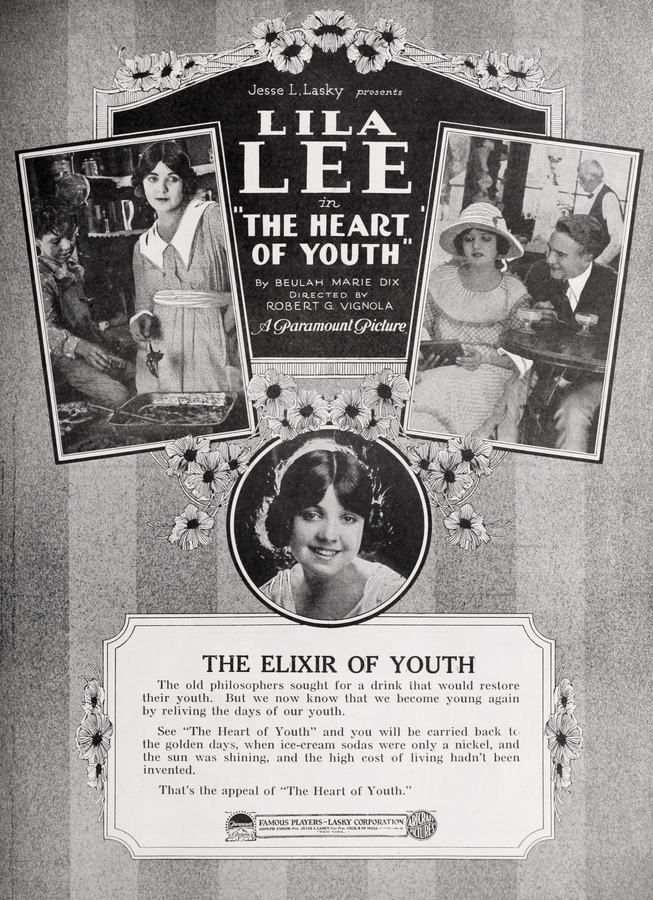
Stepping back into the cinematic landscape of 1919, one encounters 'The Heart of Youth', a film that, despite its silent origins, speaks volumes about timeless human predicaments: the irrationality of inherited feuds, the burgeoning power of young love, and the often-chaotic path to reconciliation. Directed with a keen eye for both pastoral beauty and dramatic tension, this picture, penned by the prolific Beulah Marie Dix, offers more than just a glimpse into early American filmmaking; it provides a compelling narrative framework that continues to resonate with audiences who appreciate the foundational stories of our culture. Its simplicity belies a profound engagement with themes that persist through generations, showcasing how even the most entrenched animosities can yield to the tender, yet formidable, forces of compassion and connection.
The film opens by immersing us in a seemingly idyllic rural setting, a landscape that should foster peace and community but is instead scarred by a deeply ingrained generational dispute. At its core lies the Darchat-Whipple household, represented by the spirited Josephine Darchat, living under the watchful, if somewhat burdened, eyes of her Whipple grandparents. Their existence, while outwardly serene, is perpetually overshadowed by a bitter rivalry with the wealthy Prendergast family. The focal point of this long-standing animosity is a vital spring, a source of life-giving water that ironically becomes a wellspring of contention, carving a metaphorical and literal divide between the two estates. This elemental dispute over resources is a classic narrative device, immediately establishing the stakes and grounding the personal drama in a tangible, economic reality. It's a conflict as old as civilization itself, echoing the foundational struggles over land and livelihood that have shaped human history, and in 'The Heart of Youth', it serves as the fertile ground for both despair and eventual hope.
Amidst this backdrop of entrenched hostility, a delicate romance blossoms, defying the inherited animosity. Josephine, portrayed with a vibrant earnestness by Vera Sisson, finds herself drawn to Russ Prendergast, the son of the formidable Calvin Prendergast. Guy Oliver imbues Russ with a quiet strength and sincerity, making his affections for Josephine believable and heartfelt. Their clandestine meetings and stolen glances are imbued with the classic tension of forbidden love, a trope that, while ancient, feels fresh and urgent in Sisson and Oliver's portrayal. Their relationship is a beacon of potential reconciliation, a testament to the idea that personal connection can transcend the arbitrary boundaries of family feuds. However, their path to happiness is anything but smooth, constantly threatened by the escalating tensions that define their families' interactions. The audience is invited to invest emotionally in their plight, hoping that their youthful optimism and genuine affection can somehow bridge the chasm of bitterness that separates their kin.
The initial, simmering dispute over the spring takes a more volatile turn through a series of escalating incidents, many of which are instigated by the innocent, yet destructive, mischief of children. A pivotal moment occurs when children from a camp situated on the Prendergast land, in an act of youthful exuberance or perhaps thoughtlessness, infiltrate the Whipples' kitchen. Their attempt to make molasses candy turns into a chaotic mess, leaving the Whipple household in disarray. This seemingly minor transgression, while not malicious in intent, serves as a significant catalyst, further inflaming the already strained relations between the families. It highlights how easily small incidents can be magnified when a foundation of mistrust already exists, transforming playful antics into perceived acts of aggression.
The situation is further complicated by a prank that directly impacts Josephine and Russ's delicate romance. Russ, in a gesture of affection, leaves Josephine flowers accompanied by a heartfelt love note. However, the mischievous children, in an act that can only be described as a misguided attempt at humor, substitute the romantic offering with an old cook's false hair. This cruel jest, intended perhaps as lighthearted fun, has devastating consequences for the young lovers. Josephine, misinterpreting the gesture as a deliberate slight or mockery from Russ, is deeply hurt and ceases to speak to him. This particular incident brilliantly illustrates the fragility of communication and the ease with which misunderstanding can sabotage even the most sincere intentions, especially when external forces, however innocent, interfere. The silent film medium excels here, relying on the actors' expressions and the clarity of the intertitles to convey the emotional weight of Josephine's wounded pride and Russ's bewildered distress. It’s a moment that resonates with the universal experience of miscommunication in relationships, amplified by the external pressure of the family feud.
The narrative builds to a critical juncture, demonstrating how a series of minor provocations can culminate in a truly destructive act. The final straw for Josephine comes when the younger Prendergast children, perhaps mirroring the adults' ingrained animosity, hide the Whipple family cat. This act, whether a genuine prank or a deliberate torment, pushes Josephine beyond her emotional limits. The cat, often a symbol of home and comfort, represents a direct affront to her family's sanctity. Her reaction is swift, impulsive, and devastating. In a fit of righteous anger and despair, Josephine takes matters into her own hands, destroying the dam that channels the precious spring water to the Prendergast property. This is a monumental act of defiance, a direct attack on the Prendergasts' livelihood, and it signifies a complete breakdown of any semblance of civility between the families. The destruction of the dam is not merely an act of sabotage; it's a primal scream against the perceived injustices and provocations, a desperate attempt to reclaim agency in a situation that feels spiraling out of control. It marks the film's 'point of no return,' where the conflict transcends mere bickering and enters a realm of potentially irreversible damage.
The consequences are immediate and dramatic. The Prendergasts, incensed by the loss of their water supply, retaliate by hiring thugs, transforming the rural landscape into a battleground. This escalation into physical violence is a stark reminder of how quickly personal feuds can devolve into broader societal conflict, drawing in external elements and threatening the peace of an entire community. The Whipples, supported by their loyal neighbors, bravely stand their ground, leading to a sprawling, chaotic fight that engulfs both properties. The visual spectacle of this melee, even in a silent film, would have been impactful, conveying the raw, desperate energy of a community tearing itself apart. It's a powerful depiction of the destructive cycle of vengeance, where one act of aggression begets another, spiraling outwards with potentially tragic results.
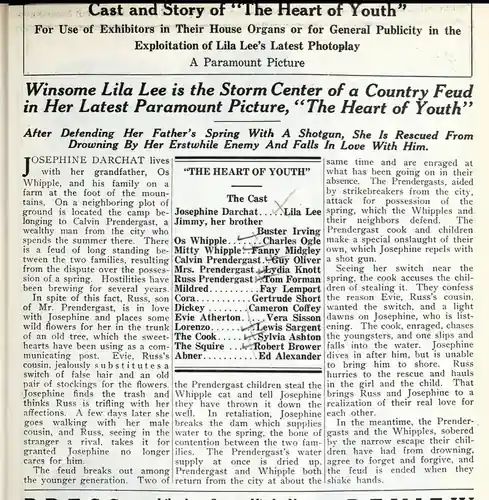
The tumultuous fight reaches its crescendo with a moment of profound peril that paradoxically becomes the catalyst for peace. In the midst of the brawling, a young Prendergast child finds himself in mortal danger, teetering on the brink of drowning. It is Josephine, the very architect of the dam's destruction, who, witnessing the child's plight, instinctively casts aside her anger and rushes to his aid. Her selfless act of courage, transcending the bitter feud, highlights the inherent goodness that can emerge even in the most hostile environments. However, in her heroic effort, Josephine herself becomes imperiled, caught in the very waters she unleashed. It is Russ Prendergast, her estranged lover, who then steps forward, demonstrating his own heroism by rescuing Josephine from the churning waters. This double act of salvation is a powerful symbolic moment, underscoring the film's central message: that shared vulnerability and mutual aid can dissolve the most entrenched animosities.
The sight of their children in danger, and the subsequent acts of bravery and rescue, serves as a stark, sobering mirror for the warring families. The violence dissipates, replaced by a collective realization of the futility and danger of their prolonged feud. The families, witnessing the near-tragedy and the selfless actions of Josephine and Russ, finally reconcile. It's a cathartic moment, where the weight of generations of animosity is lifted, replaced by a fragile, yet profound, sense of peace. The lovers, Josephine and Russ, are reunited, their bond strengthened by the crucible of shared crisis and heroism. Their love, once a source of secret rebellion, now becomes a symbol of the newly forged harmony between their families. The film concludes with a charming, almost whimsical, touch: the missing Whipple cat, discovered safe within a well, returns to the rejoicing family, a final, comforting symbol of order restored and a community healed. This resolution, while perhaps idyllic, provides a satisfying emotional closure, affirming the power of forgiveness and the enduring strength of the human spirit to overcome division.
In the realm of silent cinema, the burden of conveying emotion and narrative falls heavily on the actors' physical expressiveness and the director's visual storytelling. Vera Sisson, as Josephine Darchat, delivers a compelling performance, transitioning seamlessly from youthful vivacity to wounded pride, and ultimately to courageous resolve. Her gestures and facial expressions are nuanced, allowing the audience to deeply empathize with her character's journey. Guy Oliver, as Russ Prendergast, provides a strong, anchoring presence, his earnestness and quiet determination a perfect foil to Josephine's more fiery temperament. The supporting cast, including Sylvia Ashton as one of the elder Whipples and Fanny Midgley, contribute significantly to the film's texture, embodying the stubbornness and eventual relief of the older generation. Their performances, without the aid of dialogue, manage to communicate the weight of their long-held grudges and the profound impact of the reconciliation.
The direction, though uncredited in the given information, skillfully utilizes the cinematic techniques of the era. The camera work effectively captures both the intimate moments of romance and the expansive chaos of the climactic brawl. The use of intertitles is judicious, providing necessary plot exposition and character dialogue without overwhelming the visual narrative. The pacing is well-managed, building tension gradually through the series of escalating incidents, culminating in a dramatic and emotionally resonant climax. The film's ability to maintain narrative clarity and emotional depth without spoken words is a testament to the artistry of silent-era filmmaking, showcasing how skilled practitioners could craft compelling stories through purely visual means. The setting, with its rustic charm, plays a crucial role, almost becoming a character itself, reflecting the changing moods of the narrative from pastoral tranquility to tumultuous conflict.
The screenplay by Beulah Marie Dix is a masterclass in crafting a classic narrative arc. Dix, a prolific writer of the era, understood the mechanics of drama, particularly in the silent medium. Her script for 'The Heart of Youth' is a testament to her ability to weave together themes of love, conflict, and redemption with clarity and emotional impact. She skillfully develops the characters, giving them believable motivations and allowing their actions to drive the plot forward. The progression from minor squabbles to a full-blown feud, punctuated by the innocent yet impactful mischief of children, demonstrates a keen understanding of narrative escalation. Dix's work here, much like in other period dramas, showcases a penchant for stories that explore the complexities of human relationships against a backdrop of societal constraints or inherited burdens. Her ability to infuse moral lessons and character growth into an engaging story is a hallmark of her enduring legacy.
The thematic core of 'The Heart of Youth'—a love story intertwined with a bitter family feud leading to eventual reconciliation—finds echoes in various other cinematic and literary works. While the specific context varies, the universal appeal of overcoming division for the sake of love and peace remains potent. One might draw parallels to films exploring similar themes of deeply entrenched societal or familial conflict, such as Blue Blood and Red, which likely delves into class or lineage-based divisions, or even Westerns like The Raiders of Sunset Gap, where territorial disputes often ignite violent family rivalries. The idea of vengeance, a driving force in the early stages of the Whipple-Prendergast conflict, is a central motif in films like Vengeance, though 'The Heart of Youth' ultimately pivots towards forgiveness rather than prolonged retribution. Even the romantic drama Gladiola, from a similar era, might share sensibilities regarding the challenges faced by lovers in a restrictive social environment. What distinguishes 'The Heart of Youth' is its charming blend of pastoral setting, youthful exuberance, and a resolution driven by a crisis that forces a re-evaluation of long-held animosities, rather than external forces or a tragic end.
At its heart, 'The Heart of Youth' is a profound exploration of the human capacity for both stubbornness and compassion. The film masterfully demonstrates how inherited grudges can fester and escalate, often fueled by minor provocations and misunderstandings, especially when the lines of communication break down. The children's pranks, while seemingly innocuous, serve as poignant metaphors for how even small acts can ignite larger conflicts when a foundation of mistrust already exists. However, the narrative ultimately champions the transformative power of empathy and selfless action. Josephine's bravery in saving the Prendergast child, and Russ's subsequent rescue of Josephine, shatter the walls of animosity that had separated their families for so long. These acts of heroism are not just plot devices; they are symbolic gestures that underscore the film's core message: that true reconciliation often arises from shared vulnerability and the recognition of our common humanity. The final image of the reunited lovers and the safe return of the beloved cat beautifully encapsulates the restoration of harmony, not just between two families, but within the broader community. It's a hopeful message, conveyed with elegance and emotional sincerity, reminding us that even the deepest divisions can be healed when the 'heart of youth' — with its inherent capacity for love, forgiveness, and courage — is allowed to lead the way.
In an era defined by rapid technological advancements and societal shifts, 'The Heart of Youth' stands as a charming testament to the enduring power of classic storytelling. It may be a silent film from over a century ago, but its themes are as relevant today as they were in 1919. The struggles of young love, the destructive nature of feuds, and the ultimate triumph of reconciliation are universal human experiences that transcend time and medium. For modern audiences, it offers a fascinating glimpse into the artistry and emotional depth achievable in silent cinema, proving that a lack of spoken dialogue does not equate to a lack of voice or impact. The film invites us to reflect on our own inherited biases and the potential for compassion to bridge divides. It's a cinematic experience that, while requiring a different kind of engagement, richly rewards those who seek out its quiet wisdom and heartwarming message. A truly timeless piece, it reminds us that the fundamental narratives of the human heart remain eternally compelling.
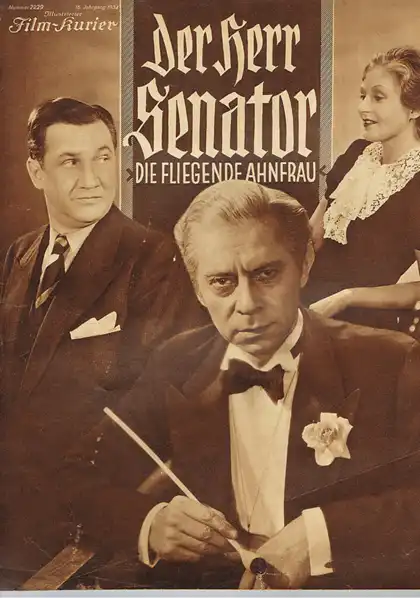
IMDb 5.4
1934
Community
Log in to comment.