DbcultAccessing Vault...
Cult Review
Senior Film Conservator
The Alchemy of Misfortune and Power
A Socio-Political Allegory in Soot-Black and Gold
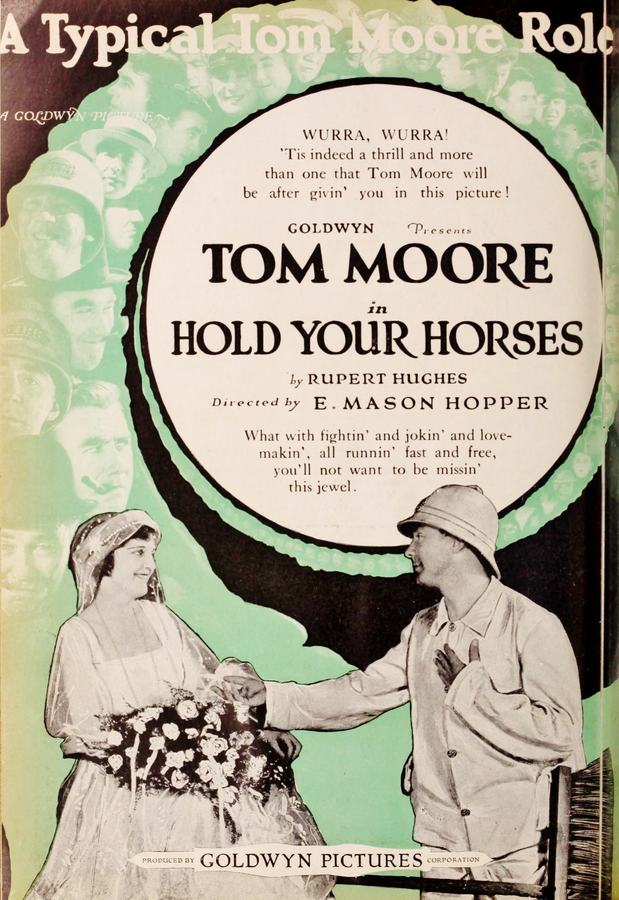
Hold Your Horses is not merely a film about a man who discovers he can command the world with a red flag—it is an interrogation of how systems of power construct themselves through spectacle and vulnerability. Bertram Grassby’s direction, though grounded in the visual language of 1920s cinema, employs a rhythm that feels disturbingly modern: Canavan’s red flag wavers like a stock ticker in a casino, each wave a calculated bet on chaos. The scar, that horseshoe-shaped anomaly, becomes a Chekhov’s gun of the soul; it is both a wound and a weapon, a reminder that trauma can be monetized. The film’s first act, where Canavan is trampled by the very horses he later tames, is a masterclass in visual metaphor. The camera lingers on his contorted face as hooves descend, and the scar’s first appearance—a jagged, almost ornamental mark—hints at the grotesque beauty of his future dominion.
Acting as Archaeology of Class
Sylvia Ashton’s Beatrice: The Belle as Barometer
Sylvia Ashton’s performance defies the limitations of the silent screen. Beatrice Newness, initially a cipher of aristocratic aloofness, is rendered with such nuance that her eventual capitulation to Canavan feels less like a narrative twist than an inevitable collision. Her scenes with Mortimer E. Stinson’s Dan are charged with a silent dialectic—her hands flutter like trapped birds, his gestures are club-like and deliberate. The chemistry between them is not romantic but transactional; she sells her disdain for his crude charm, a trade dictated by the red flag’s omnipresence. When she tires of him, her exits are not graceful but theatrical, as if she understands the performance nature of their union. The final act, where the red flag erases her revulsion, is a chilling commentary on the fragility of self-perception in the face of manufactured reality.
Cinematic Alchemy: The Red Flag and the Horseshoe
The Visual Language of Absurdist Control
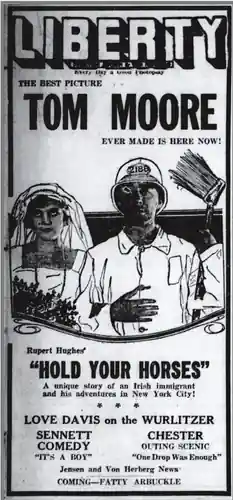
The red flag, wielded with the precision of a Maestro’s baton, is the film’s most potent visual motif. Each wave distorts the world around Canavan: crowds part like the Jordan River, rival politicians crumble into caricatures, and even the horses—those original agents of his trauma—bow to his will. The flag’s crimson hue, echoing the blood of his trampling, becomes a symbol of control through violence. The scar, meanwhile, is framed as a paradox: a mark of weakness that is also a talisman. In one haunting sequence, close-ups of Dan’s chest reveal the scar pulsating in sync with his heartbeat, a visual heartbeat of his tyranny. The film’s editing—juxtaposing the scar’s grotesque intimacy with the flag’s grandiose symbolism—creates a dissonance that lingers long after the credits roll.
Comparative Context: A Carnival of Power
Hold Your Horses in the Pantheon of Silent Spectacle
While The Edge of the Law and The Red Viper explore similar themes of influence and illusion, Hold Your Horses distinguishes itself through its unflinching embrace of absurdity. Unlike the noir-inflected cynicism of A Gentleman of Leisure, this film is a dark comedy, where the line between satire and horror blurs. The film’s treatment of class—Dan’s ascent from laborer to czar—echoes the Marxist undertones of The Men She Married, yet here the critique is more subversive: power is not a ladder but a carnival ride, and Canavan is both the ringmaster and the punchline. The influence of Det gamle Købmandshjem is visible in the meticulous construction of social hierarchies, but Grassby’s film is more audacious in its visual metaphors, turning the red flag into a literal and figurative scepter.
Legacy and Labyrinth: A Film Ahead of Its Time?
The Enduring Relevance of Canavan’s Carnival
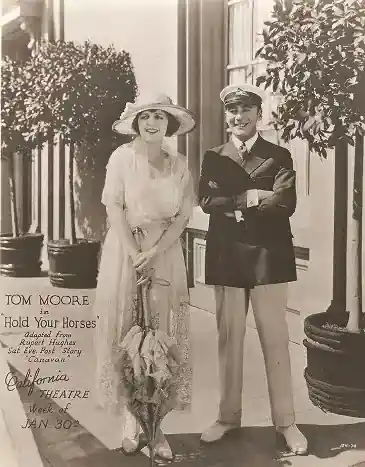
Hold Your Horses is a film that resists easy classification. It is part allegory, part farce, and part dystopian vision. The red flag’s power—the ability to bend perception—is eerily prescient of modern media manipulation, a theme later explored in The Greatest Thing in Life and Der Vampyr, yet Grassby’s approach is uniquely tactile. The film’s climax, where Beatrice’s transformation under the flag’s influence, feels like a warning: when reality is curated, authenticity becomes a relic. The 1926 audience, steeped in the aftermath of war and the rise of mass politics, would have recognized the parallels between Canavan’s flag and the emerging symbols of propaganda. Today, the film’s questions about control and perception are more urgent than ever. Is power an illusion sustained by collective belief? Canovan’s story suggests yes—and that the red flag, like any tool, is only as dangerous as the hands that wave it.
Conclusion: A Mirror Held to the Absurd
The Unsettling Charm of Canavan’s Dominion
Hold Your Horses is not a film for those seeking traditional heroism. It is a study in the seduction of power and the grotesquerie of its mechanisms. Dan Canavan’s journey is a descent into a hall of mirrors, where every reflection is a distortion of what came before. The film’s genius lies in its refusal to moralize; it does not condemn Canavan’s tyranny nor celebrate it, but instead presents it as a transactional inevitability. In a world where perception is reality, where a scar can be a crown, the red flag is both a weapon and a mirror. For modern viewers, the parallels to digital age manipulation are inescapable. Yet the film’s enduring power is in its simplicity: it tells a story of a man and his flag, and in doing so, reveals the carnival of control that shapes us all.
IMDb —
1936
Community
Log in to comment.