DbcultAccessing Vault...
4.6/10
Senior Film Conservator
A definitive 4.6/10 rating for a film that redefined the boundaries of cult cinema. Holding His Own remains a cornerstone of transgressive art.
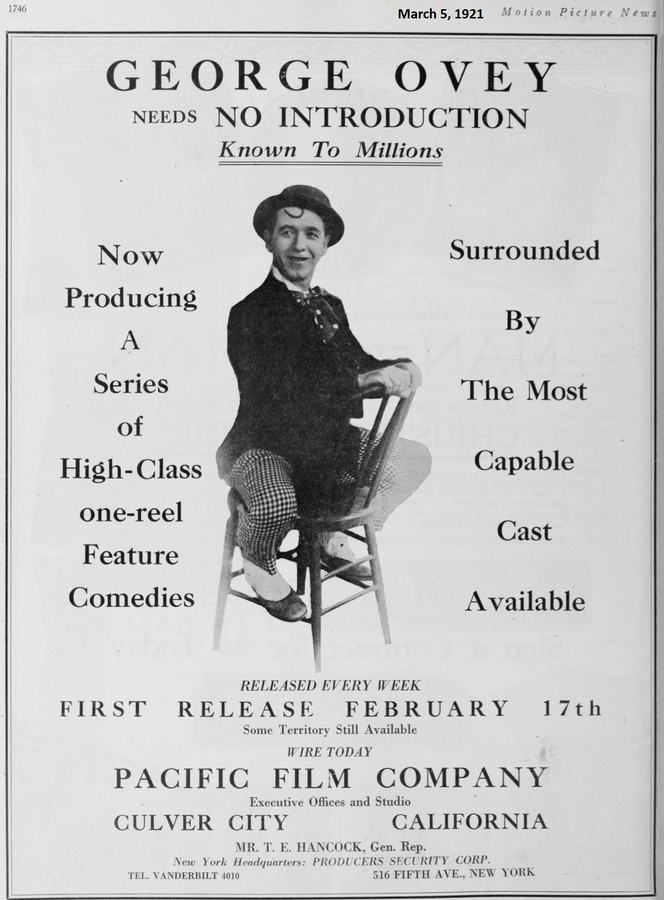
The year 1916 represents a peculiar, fertile nexus in the evolution of cinematic grammar. While the world was embroiled in the mechanical slaughter of the Great War, the fledgling film industry in America was refining the art of the 'short'—a format that demanded an economy of movement and a density of visual gag-telling. Holding His Own, directed with a frantic yet surprisingly precise cadence, serves as a quintessential artifact of this era. It features George Ovey, a performer whose physicality often verged on the acrobatic, yet possessed a nuanced facial elasticity that allowed him to navigate the treacherous waters between buffoonery and pathos.
The opening sequence is nothing short of revolutionary in its casual cynicism. We see the 'long arm of the law' not extended in protection, but curled around a set of dice. By depicting policemen as gamblers, the film immediately aligns the audience with the vagrant. Jerry, our protagonist, is the catalyst that exposes this hypocrisy. When he interrupts the game, it isn’t a moral intervention; it is a collision of two different types of leisure—the illicit gambling of the powerful and the forced idleness of the poor. Unlike the domestic tranquility explored in Dolly's Vacation, here we are thrust into a world of immediate consequence and physical peril.
The chase that follows is a masterclass in the geometry of the silent frame. Ovey uses the environment—fences, alleyways, and the very horizon—as props. His movement is a jagged, rhythmic response to the heavy-footed, predictable trajectories of the pursuing officers. This isn't just slapstick; it is a choreographic representation of class struggle. The officers represent the crushing weight of the state, while Jerry represents the fluid, unpredictable nature of the individual soul. One might find echoes of this kinetic desperation in Put Up Your Hands!, though Ovey brings a specific brand of 'Merry Jerry' levity that softens the sharp edges of the pursuit.
As the setting shifts from the urban periphery to the rural expanse, the film takes on a more deceptive, almost lyrical tone. The introduction of the farm girl—played with a charming, if stereotypical, naivety—allows the film to pivot from a chase comedy to a comedy of manners. Jerry’s 'wooing' is a fascinating display of social camouflage. He adopts the mannerisms of a suitor, a role he clearly does not belong to, in order to bypass the gatekeepers of the pantry. This sequence highlights the performative nature of class; if a hobo can act like a gentleman well enough to earn a breakfast, what then remains of the inherent 'quality' of a gentleman?
This thematic exploration of identity and disguise is a recurring motif in the period, often seen in more dramatic iterations like The Life Mask or the dark, atmospheric The Black Chancellor. However, in Holding His Own, the stakes are refreshingly primal: calories. The hunger of the tramp is the engine of the plot. Every romantic gesture, every batting of the eyelashes, is a transaction. It is a cynical view of romance, yet it is presented with such whimsical lightness that the viewer cannot help but cheer for the deception.
Technically, the film utilizes the bright, high-contrast lighting typical of Southern California productions of the time. The outdoor scenes are bathed in a harsh, unforgiving sunlight that emphasizes the textures of Jerry's tattered clothing and the dusty roads. This realism contrasts sharply with the theatricality of the performances. While films like Tess of the D'Urbervilles sought to use the landscape for tragic foreshadowing, Holding His Own uses it as a playground. The camera remains mostly static, allowing the actors to move through the space with the freedom of stage performers, yet the editing—attributed to the uncredited but skilled cutters at Christie—creates a sense of mounting urgency.
We must also consider the film in the context of its contemporaries. While The Reign of Terror dealt with grand historical upheavals, Ovey’s work focused on the micro-revolutions of the everyday. The film shares a certain DNA with Seeing America Thirst, particularly in its preoccupation with the fundamental needs of the body—thirst, hunger, and the avoidance of pain. There is no pretension here; it is cinema at its most visceral and honest.
George Ovey is often overshadowed by the 'Big Three' of silent comedy (Chaplin, Keaton, Lloyd), but Holding His Own proves that he was a formidable talent in his own right. His 'Jerry' was less sentimental than Chaplin’s 'Tramp' and more grounded than Keaton’s 'Great Stone Face.' There is a scrappiness to Ovey that feels uniquely American—a 'bootstraps' mentality applied to the art of doing absolutely nothing productive. His interaction with George Burton and Arby Arly creates a balanced ensemble, though the camera undeniably loves Ovey’s frantic energy.
Comparing this to A Woman's Woman or The Little Runaway, one sees a clear distinction in the way Christie Comedies handled social outsiders. Jerry isn't looking for redemption or a return to the fold; he is looking for the next meal and the next escape. This lack of moralizing is what makes the film feel surprisingly modern. It doesn't judge Jerry for his laziness or his deceit; it celebrates his ingenuity in a world that has no place for him. Even in the more experimental or international works of the era, such as I millepiedi or Die Silhouette des Teufels, the focus on the individual's struggle against the clock and the law remains a universal touchstone.
Ultimately, Holding His Own is a testament to the power of the short-form comedy. It manages to weave a tale of social subversion, romantic comedy, and high-speed chase within a fraction of the runtime of a modern feature. It captures a moment in time when the world was changing rapidly, and the only way to survive was to keep moving. Whether Jerry is dodging the law or 'dabbling'—much like the characters in Dabbling in Art—he remains an icon of resilience. He reminds us that even when the dice are loaded against us, there is always a way to hold one's own.
For those who enjoy the intricate social dynamics of I'm Ringing Your Party or the lighthearted bird-like skittishness of The Jay Bird, this film is an essential watch. It is a vibrant, flickering window into a lost world of celluloid ghosts, where the stakes were simple, the movements were complex, and the laughter was hard-won. The film’s final moments, while perhaps lacking the grand emotional crescendo of The Love That Lives, provide a satisfying closure to a day in the life of a man who lives by his wits alone. It is a minor masterpiece of the silent era, deserving of a place in the pantheon of great American slapstick.
IMDb 6.4
1928
Community
Log in to comment.