DbcultAccessing Vault...
7.2/10
Senior Film Conservator
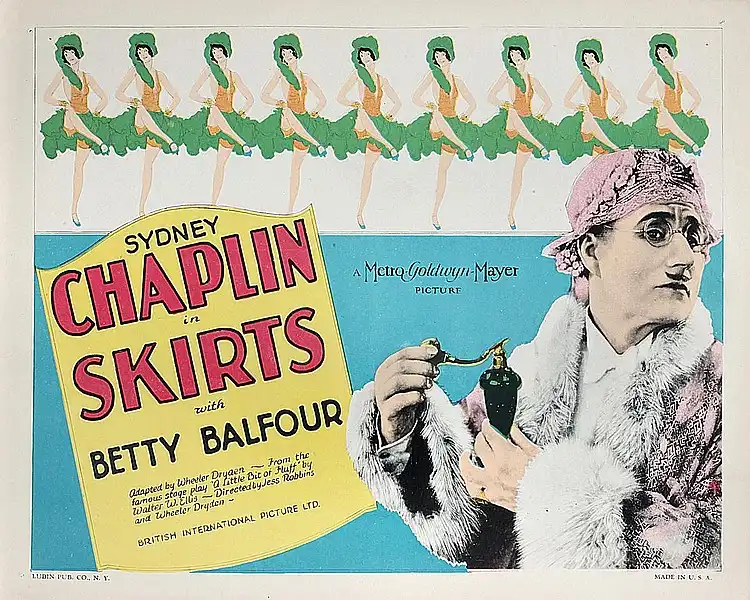
A definitive 7.2/10 rating for a film that redefined the boundaries of cult cinema. Skirts remains a cornerstone of transgressive art.
Skirts, a 1928 British silent comedy starring the effervescent Betty Balfour, is a film best approached with specific expectations. For dedicated silent film aficionados, particularly those curious about the comedic stylings of Balfour – often dubbed Britain's Mary Pickford – it offers enough charm and historical interest to warrant a watch. However, casual viewers accustomed to modern pacing, more refined comedic timing, and sophisticated narrative structures will likely find its energy flagging, its humor broad, and its central premise stretched thin. It’s a period piece that feels very much of its period, for better and for worse.
At the heart of Skirts, and indeed its primary draw, is Betty Balfour. She plays Mrs. Smith, the ostensibly oblivious wife, with a captivating blend of wide-eyed innocence and a subtle, knowing glimmer that suggests more intelligence than her husband gives her credit for. Balfour’s physical comedy is precise without being overly theatrical, a difficult balance in silent cinema. There’s a particular moment where she’s trying to discreetly observe her husband’s suspicious behavior through a keyhole, her entire body language – the slight crouch, the exaggerated concentration – speaks volumes without a single intertitle. It’s a performance that grounds the more outlandish elements of the plot, preventing her character from becoming a mere caricature.
Harry McCoy, as the philandering husband, provides a serviceable foil. His character is less a villain and more a bumbling fool, perpetually caught between his desires and his incompetence. McCoy’s exaggerated facial expressions and frantic gestures are typical of the era, and while they occasionally land a laugh, a few reaction shots linger just a beat too long, draining some of the comedic momentum. Clifford McLaglen, as the crook, is suitably menacing but largely one-dimensional, a plot device more than a character.
The film’s pacing is, predictably for a silent feature, uneven. The setup, introducing the central conflict of the necklace and the various parties vying for it, takes its time. While this allows for some character establishment, the comedic payoff often feels delayed. There are sequences, particularly during the early flirtations between the husband and the dancer, where the visual gags repeat without much variation, leading to a sense of comedic fatigue. The film does pick up significantly in its second half, especially during the climactic party scene, where the various plot threads converge into a more frantic, farcical chase.
The tone maintains a generally lighthearted, comedic register throughout, though there are brief, almost blink-and-you’ll-miss-it moments of genuine suspense when the crook is on screen. These shifts are handled with a bluntness typical of the period, occasionally feeling less like intentional tonal layering and more like abrupt scene changes. One such moment, where the crook nearly corners Mrs. Smith in a darkened room, feels genuinely tense, only to be immediately undercut by a broad comedic escape, leaving the audience with a slight whiplash.
For a 1928 production, Skirts boasts some surprisingly lavish sets and costumes, particularly in the opulent party sequences. The flapper-era dresses worn by Balfour and the other female characters are exquisitely detailed, right down to the beaded fringe that shimmers under the stage lights, a subtle nod to the film's title and the era's fashion. The lighting, while mostly functional, occasionally achieves some striking effects, particularly in the aforementioned darkened room scene, where shadows play effectively to heighten the tension.
The cinematography is largely static, relying on well-composed wide shots and medium close-ups to tell the story. However, there are a few inventive camera angles, such as a low-angle shot of the dancer during her stage performance that emphasizes her allure and commanding presence. The editing, while mostly straightforward, includes an abrupt cut during a chase scene that momentarily disorients, almost as if a frame was lost, but it adds a certain frantic charm to the otherwise conventional sequence.
One detail that stands out, and which only someone who has actually sat through the film would notice, is the recurring visual gag of the husband’s attempts to hide his infidelity. He’s often seen fumbling with a small, incriminating note or a piece of jewelry, trying to stuff it into his coat pocket or under a cushion, only for it to comically poke out or be nearly discovered by a passing servant. These small, almost throwaway moments of physical comedy, often playing out in the background of a wider shot, showcase the film's commitment to visual storytelling, even if the humor is broad.
Skirts is a film that relies heavily on the star power of Betty Balfour. Her performance alone elevates what might otherwise be a fairly conventional and forgettable silent comedy. While it offers glimpses into the comedic sensibilities and production values of late 1920s British cinema, its dated humor and inconsistent pacing mean it won't appeal to everyone. If you're a silent film enthusiast, particularly interested in the careers of stars like Balfour or The Triumph of the Rat, it's worth seeking out for its historical value and her undeniable screen presence. For casual viewers, however, there are more accessible and enduring silent comedies that offer a more consistent and engaging experience. Approach it as a historical artifact with a charming lead, and you'll find some enjoyment; expect a laugh-out-loud romp, and you might be left wanting.
IMDb —
1919
Community
Log in to comment.