DbcultAccessing Vault...
Cult Review
Senior Film Conservator
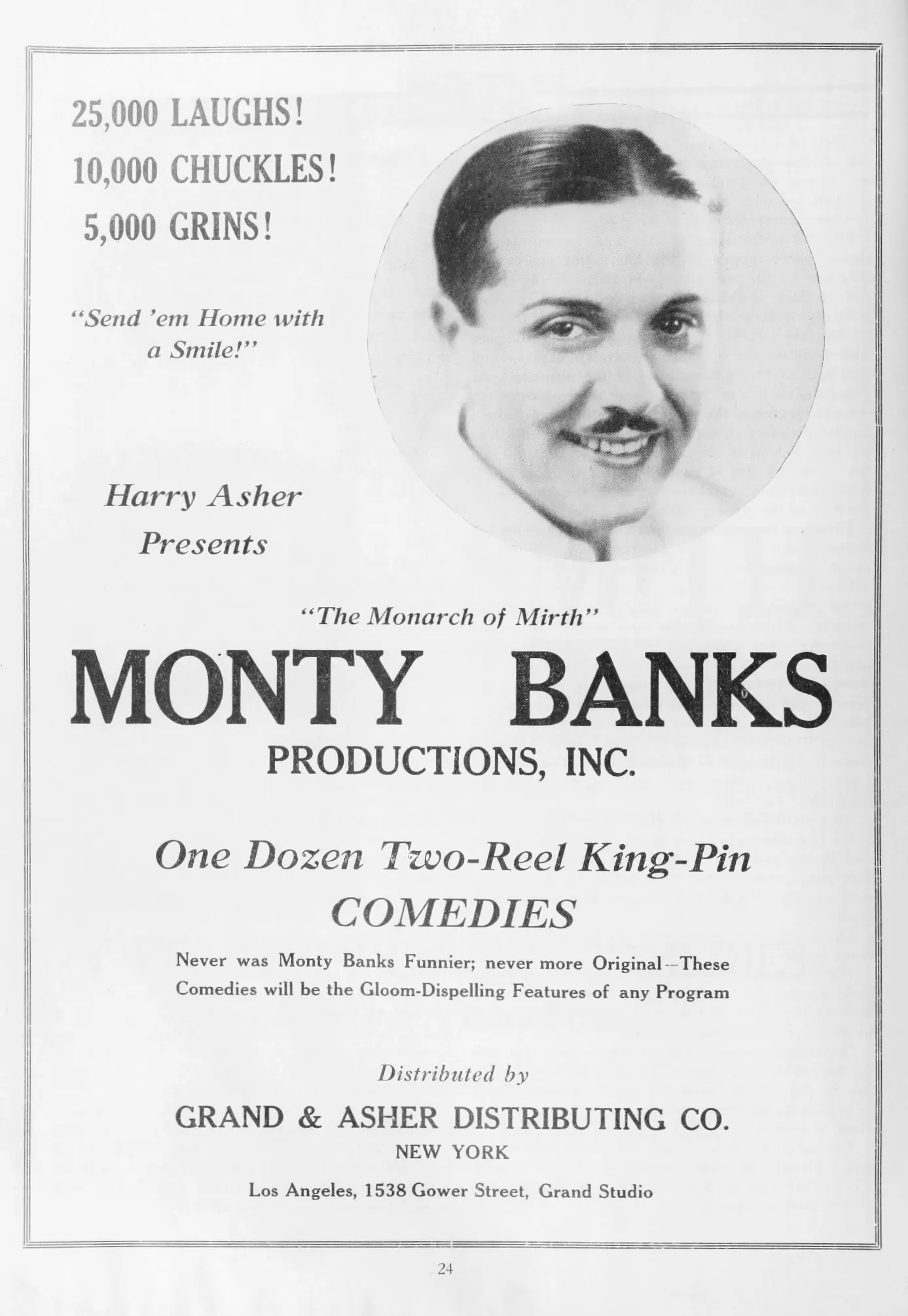
The year 1924 was a curious temporal junction for the motion picture industry, a period where the grammar of visual storytelling was being rewritten with every crank of the camera. Amidst the grand epics and burgeoning dramas, the short-form comedy remained the beating heart of the cinematic experience. Home Cooking, featuring the perpetually frantic and undeniably charismatic Monty Banks, stands as a testament to the era's obsession with domestic friction. To watch Banks is to witness a human being in a state of constant, rhythmic agitation—a precursor to the high-octane physical comedy that would eventually define the genre. Unlike the melancholic grace of Chaplin or the stoic engineering of Keaton, Banks brought an immigrant’s verve and a frantic, wide-eyed sincerity to his roles that felt visceral and immediate.
The premise of Home Cooking is deceptively simple, yet it serves as a fertile ground for Banks' brand of kinetic storytelling. We find our hero in the sanctum of the kitchen—a space that, in the 1920s, was undergoing a radical transformation through electrification and the introduction of 'labor-saving' devices. For Banks, these devices are not tools of convenience but rather malevolent entities waiting for the opportune moment to strike. The film functions as a sequence of escalating skirmishes between man and matter. When he attempts to assist Ena Gregory, who plays his wife with a wonderful mix of exasperation and affection, the results are nothing short of pyrotechnic. The kitchen, usually a symbol of warmth and nourishment, is recontextualized as a site of potential casualty.
This thematic preoccupation with domestic incompetence was a recurring trope, yet Banks elevates it through his specific physicality. While films like An Overall Hero explored the hero's journey through more externalized, public failures, Home Cooking keeps the stakes intimate. The claustrophobia of the set design works in the film's favor; every corner is a hazard, every shelf a potential avalanche. It is this density of obstacles that allows Banks to display his improvisational prowess. He doesn't just fall; he ricochets. He doesn't just burn a meal; he incinerates the very concept of dinner.
Ena Gregory’s role in this production cannot be overstated. In many silent shorts, the female lead was often relegated to a two-dimensional prize or a nagging caricature. However, Gregory brings a certain groundedness to the proceedings. Her performance provides the necessary friction that makes Banks’ antics pop. If he is the lightning, she is the rod that keeps the scene from dissipating into pure abstraction. Their chemistry reflects the changing dynamics of the 1920s household, where the 'New Woman' was often depicted as more capable than her bumbling, albeit well-meaning, counterpart. This dynamic was explored with more dramatic weight in films like The Door Between, but here, it is played for maximum levity.
The interplay between the two actors is a masterclass in timing. There is a specific scene involving the preparation of dough that requires a level of synchronization usually reserved for the ballet. As Banks becomes increasingly entangled in the sticky mass, Gregory’s movements remain fluid and purposeful, highlighting the absurdity of his struggle. It is this contrast between competence and chaos that drives the film's comedic engine, a trope that remains a staple of the sitcom genre to this day.
Technically, Home Cooking is a fascinating artifact of its time. The cinematography is largely static, as was the custom for low-budget shorts, but the framing is impeccable. The director understands the 'rule of thirds' not as a suggestion, but as a framework for mayhem. By keeping the camera still, the film allows the viewer to absorb every nuance of Banks' facial expressions—the frantic darting of the eyes, the subtle quiver of the mustache, the realization of impending doom just seconds before it arrives. This is a sharp contrast to the more experimental visual styles seen in contemporary international cinema, such as the Japanese influence in Miyama no otome, or the darker, more atmospheric lighting of European imports like Trompe-la-Mort.
The lighting in Home Cooking is flat and functional, designed to ensure that no gag is lost in the shadows. This clarity is essential for slapstick. If the audience cannot see the flour on the hero's face or the exact moment the stove begins to smoke, the joke fails. The film relies heavily on the 'repetition and variation' technique—a gag is introduced, repeated with a slight twist, and then finally subverted in a grand crescendo. It’s a rhythmic approach to comedy that mirrors the musicality of the silent era’s live accompaniments.
To truly appreciate Home Cooking, one must place it within the broader tapestry of 1924’s cinematic output. While the public was flocking to see melodramas like The Little Church Around the Corner or the morality plays of Youthful Cheaters, the comedy short provided a necessary catharsis. It was a space where the anxieties of modern life—marriage, technology, social standing—could be laughed at and ultimately conquered through resilience. Banks’ character is an everyman, a figure who, despite his constant failures, never loses his spirit. This resilience is a hallmark of the era, a post-war optimism that refused to be dampened by the complexities of the machine age.
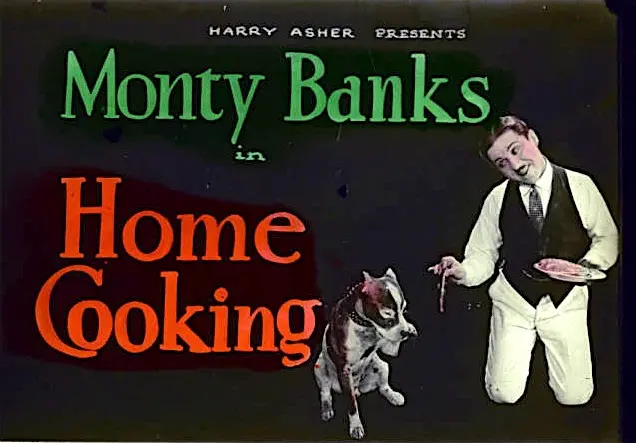
When compared to more narrative-heavy films like The Princess of Patches or the high-society dramas like His House in Order, Home Cooking feels refreshingly unpretentious. It doesn't seek to moralize or to offer a grand social critique. Instead, it focuses on the universal truth that, sometimes, the simplest tasks are the most difficult to master. It shares this DNA with other Banks vehicles like Taxi Please, where the struggle is not against a villain, but against the sheer friction of existence.
Monty Banks is often the forgotten man of the silent era, overshadowed by the 'Big Three.' However, his influence is palpable in the work of later comedians like Jerry Lewis or even the physical comedy of the early sound era. Home Cooking showcases his ability to turn a mundane setting into a playground of absurdity. His movements are jagged, almost puppet-like, suggesting a man who is not quite in control of his own limbs. This 'out of control' persona was a perfect fit for the 1920s, a decade that was itself spinning out of control in terms of social and technological change.
The film also touches on the concept of 'the helper'—a character who causes more damage while trying to be useful. This is a trope that has been mined for decades, from the early shorts of Laurel and Hardy to the modern-day antics of Mr. Bean. In Home Cooking, we see the blueprint for this specific type of comedic tragedy. The hero's motivation is pure; he wants to help his wife. It is this purity of intent that makes his ultimate failure so endearing. We don't laugh at his misfortune because we dislike him; we laugh because we recognize the same bumbling inadequacy in ourselves.
Critics often dismiss slapstick as a 'lower' form of art, yet the precision required to execute the gags in
The film also serves as a fascinating look at 1920s material culture. The set of the kitchen is filled with period-accurate props—the icebox, the wood-burning stove, the specific types of canisters and utensils. For the modern viewer, these items have an antique charm, but for the audiences of 1924, they were the contemporary tools of their daily lives. Seeing Banks struggle with them was a form of satirical commentary on the 'modern' lifestyle. It’s a similar vibe to the domestic satires found in Playmates or even the social observations in Miss Peasant.
In the final analysis, Home Cooking is a compact, punchy, and thoroughly entertaining piece of silent cinema. It doesn't have the grand ambitions of a National Red Cross Pageant, nor does it possess the exotic allure of A Prisoner in the Harem. Instead, it finds its strength in the ordinary. It takes the most basic of human environments—the kitchen—and turns it into a stage for a grand, comedic opera of errors. Monty Banks and Ena Gregory are a delightful pairing, embodying the timeless struggle of the newlywed couple trying to make a house a home, one burnt biscuit at a time.
For those interested in the history of comedy, Home Cooking is essential viewing. It bridges the gap between the primitive 'chase' films of the early 1910s and the sophisticated feature-length comedies of the late 1920s. It is a film that reminds us that while technology changes, the human capacity for making a mess of things remains blissfully constant. If you find yourself in the mood for a cinematic experience that is both a historical document and a genuine laugh-out-loud riot, look no further than this Monty Banks gem. It is a film that, much like a well-prepared meal, leaves you feeling satisfied, even if the chef had to set the kitchen on fire to serve it.
While it may not have the name recognition of Wanted: A Baby, its influence on the structure of the domestic short is undeniable. The pacing is relentless, the gags are inventive, and the performances are pitch-perfect. It is a slice of 1924 that still tastes fresh today, a testament to the enduring power of a well-timed pratfall and the universal hilarity of a man who simply cannot figure out how to bake a cake without destroying his life.
IMDb 4.6
1918
Community
Log in to comment.