DbcultAccessing Vault...
Cult Review
Senior Film Conservator
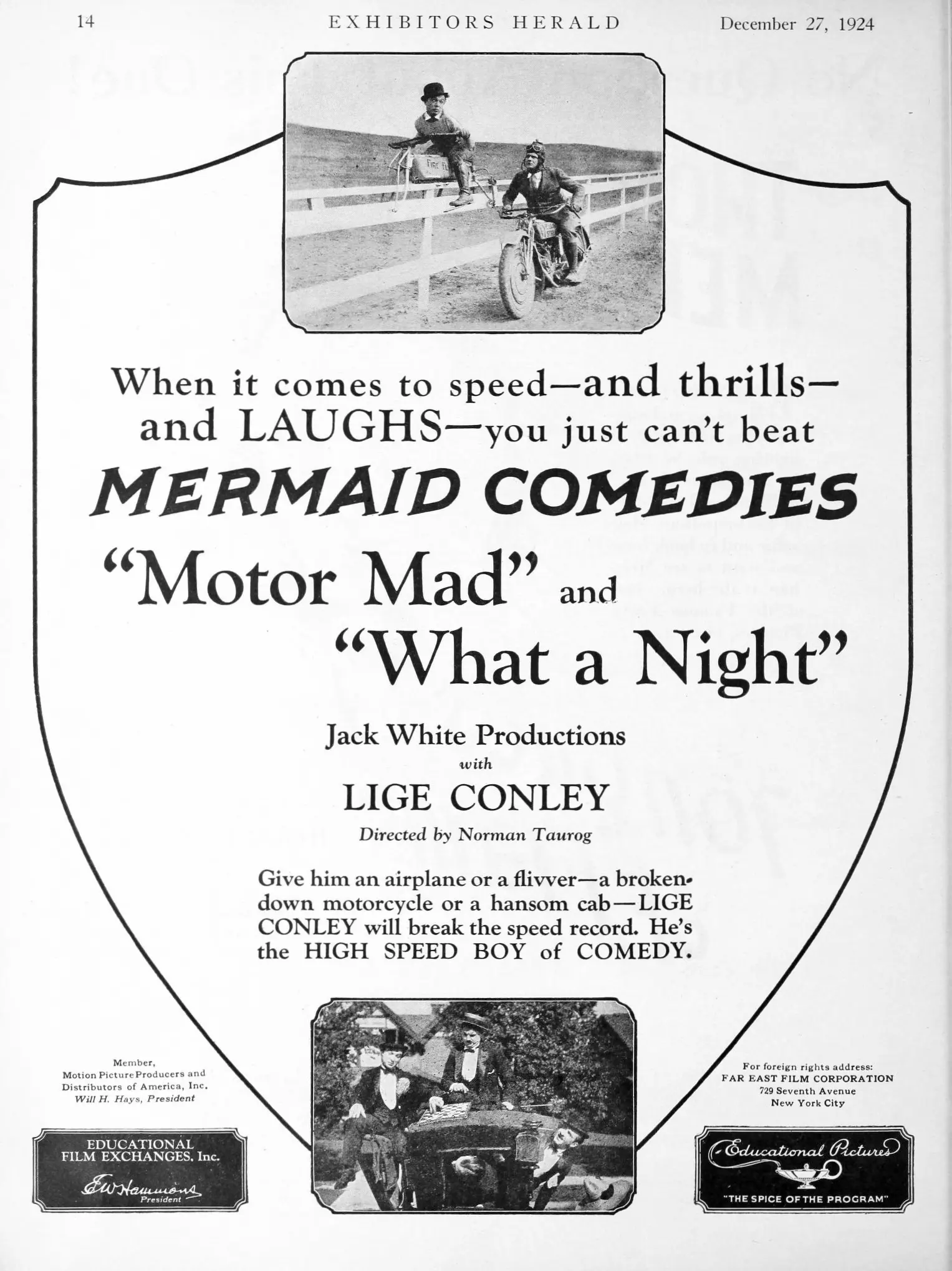
Ah, the silent era. A time when cinematic storytelling relied on exaggerated gestures, expressive faces, and meticulously choreographed physical comedy to convey narratives, emotions, and, most importantly, laughter. Among the myriad gems from this period, a particular short film, What a Night!, stands as a delightful testament to the enduring power of a simple, universally relatable premise. Released in 1928, this film, starring the inimitable Lige Conley, distills the essence of youthful indiscretion and the terror of parental discovery into a masterclass of comedic timing and silent artistry. It’s a film that, despite its age, speaks volumes about the timeless anxieties of a late return home, a narrative thread that continues to weave its way through countless stories even today.
The central conceit of What a Night! is deceptively simple: a young man, Lige, attempts to sneak into his own room in his father's house after a night of revelry, all while desperately trying not to disturb the sleeping family. What unfolds is a magnificent ballet of caution and calamity. Lige Conley, a performer whose physical prowess and comedic instincts were truly remarkable, carries the entire weight of this premise on his shoulders, or rather, through his entire kinetic being. Every tiptoe, every hesitant turn of a doorknob, every wide-eyed glance towards a dimly lit corridor is imbued with a palpable sense of dread and determination. It’s a performance that transcends mere slapstick, elevating itself into a nuanced portrayal of a character caught between youthful exuberance and the looming specter of paternal disapproval.
The film’s brilliance lies in its meticulous attention to the minutiae of the stealth operation. The creaking floorboards become antagonists in their own right, each groan a potential alarm bell. The shadows dance, playing tricks on Lige’s already frayed nerves. The various household objects, normally innocuous, transform into treacherous obstacles: a coat rack becomes a menacing figure, a rug a slippery trap. This environmental comedy is expertly crafted, turning the familiar domestic space into a minefield of potential noise. Conley’s reactions are priceless – the exaggerated wincing, the silent screams of frustration, the moments of frozen panic – all universally understood gestures that require no intertitles to convey their meaning. His ability to communicate so much with just a tilt of the head or a frantic eye movement is a testament to the power of silent acting.
While Lige Conley is undoubtedly the anchor of this comedic voyage, the film also benefits from the contributions of a supporting cast that, even in their brief appearances or implied presences, amplify the comedic tension. Phil Dunham, Louise Carver, Jack Lloyd, Bert Young, Spencer Bell, Joan Meredith, Clem Beauchamp, Otto Fries, and Al Thompson contribute to the broader tapestry of the household, even if many of their roles are to remain blissfully (or perilously) asleep. The fear of waking Phil Dunham's character, presumably the father, is the driving force behind Lige's every cautious move. The implied wrath, the potential lecture, the shattering of the morning's peace – these are the silent threats that propel the narrative forward. The film masterfully uses the audience's own understanding of domestic dynamics to fill in the blanks, making the unseen dangers as potent as any visible obstacle.
Consider the subtle ways the film suggests the weight of the family’s presence. The carefully placed furniture, the closed doors, the general quietude of the house—all these elements build an atmosphere of fragile tranquility that Lige’s clumsy attempts threaten to shatter. It’s not just about physical noise; it's about the disruption of a routine, the breaking of an unspoken social contract within the family unit. This psychological tension, conveyed through Lige’s desperate attempts at silence, is remarkably effective. The cast members, even those who merely occupy a sleeping space, contribute to this atmosphere of impending doom, their slumbering forms representing the potential explosion of parental authority. It's a testament to the director's skill that so much can be communicated with so little explicit dialogue or dramatic interaction.
The genius of What a Night! lies in its universal appeal. Who among us hasn't, at some point, tried to sneak past a watchful parent or silently navigate a sleeping household? The film taps into a shared human experience, a rite of passage that transcends generations and cultural boundaries. This universality is precisely what makes silent comedies so potent, even a century later. They rely on visual gags and relatable situations that do not require translation. Lige Conley's predicament is as understandable to a modern audience as it was to viewers in 1928. The film doesn't preach; it simply presents a scenario and allows the audience to revel in the character's increasingly desperate efforts and inevitable blunders.
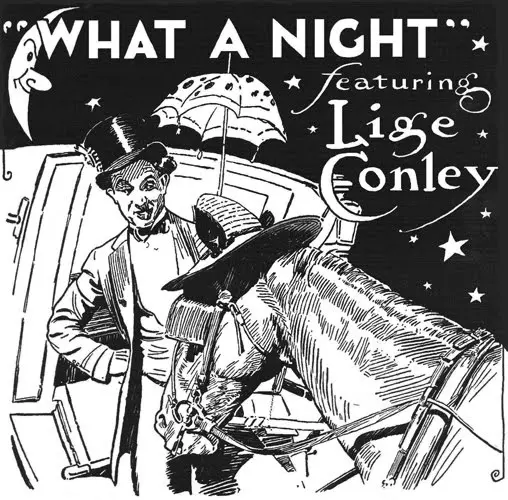
In an era where cinema was still finding its voice, films like What a Night! proved that narratives could be compelling, hilarious, and deeply resonant without a single spoken word. It’s a pure form of storytelling, relying on the visual language of comedy and the expressive power of its performers. This film, much like other classics of the era, reminds us of the foundational principles of cinematic humor: timing, character, and relatable stakes. It eschews complex plots for a focused, high-stakes domestic adventure, proving that sometimes, less is indeed more when it comes to eliciting genuine laughter.
While What a Night! carves its own niche, it also sits comfortably within a rich tradition of silent-era domestic comedies and physical farces. One might draw parallels to the meticulous, often self-inflicted chaos found in the works of Buster Keaton, though Conley’s character here leans more into the frantic, almost panicky energy of a desperate individual rather than Keaton’s stone-faced ingenuity. The film shares a thematic kinship with other narratives centered on societal expectations and personal desires, albeit in a lighter vein. For instance, while a film like The Right to Happiness might explore deeper moral quandaries, What a Night! focuses on the more immediate, everyday ethical dilemma of avoiding parental wrath. The domestic setting, fraught with comedic peril, can be seen as a precursor to the more elaborate family dynamics explored in later films, silent or otherwise.
The film’s focus on a singular, escalating predicament also brings to mind the tightly constructed narratives of shorts like those featuring Charley Chase, where a simple task spirals into an intricate web of complications. The comedic escalation, where each attempt to correct a mistake only leads to a greater one, is a hallmark of this genre, and What a Night! executes it with precision. While films such as The Devil's Double or Tainted Money delve into more serious dramatic territories, What a Night! reminds us of the equally potent power of pure, unadulterated comedic storytelling. It’s a different kind of tension, but tension nonetheless, built on the threat of a giggle escaping at the wrong moment, or a crash echoing through a sleeping house.
The film also serves as a fascinating counterpoint to more adventure-driven silent fare like The West~Bound Limited, demonstrating that thrilling narratives weren't exclusive to trains or grand landscapes; they could be found in the mundane, within the very walls of one's home. The internal struggle and the external comedic obstacles in What a Night! create a unique brand of suspense, a silent thriller of domestic proportions. It’s a testament to the versatility of silent cinema that it could produce such varied narratives, from the profound to the profoundly silly, all with equal mastery. Even in comparison to films that explored deeper psychological states, like The Last Moment, What a Night! manages to explore a common human anxiety, albeit through the lens of humor.
Lige Conley, though perhaps not as widely remembered as some of his silent-era contemporaries, was a performer of considerable talent, and What a Night! offers a compelling snapshot of his abilities. His rubbery expressions, agile physicality, and an uncanny ability to convey an entire spectrum of emotions without uttering a single word are on full display here. The film is a valuable piece of cinematic history, showcasing the craft of silent comedy at its peak, just as the industry was on the cusp of a revolutionary transition to sound. It reminds us that storytelling, at its core, is about connecting with an audience, and visual humor often provides the most direct and powerful conduit for that connection.
This film, like many of its era, serves as a crucial reminder of the foundations upon which modern cinema was built. The techniques of comedic timing, visual storytelling, and character development, honed in silent films, continue to influence filmmakers today. When we observe Lige Conley’s frantic attempts to navigate a dark hallway, we are witnessing the genesis of countless comedic scenarios that would follow in subsequent decades. It’s a film that deserves to be rediscovered and appreciated for its pure entertainment value and its significant contribution to the art of cinematic comedy. The simple premise, executed with such skill and charm, ensures that What a Night! remains a delightful and memorable experience, proving that some laughs are truly timeless.
In an age of complex narratives and CGI spectacles, there's a refreshing simplicity to What a Night! It strips away all extraneous elements to focus on a single, relatable human predicament, delivering punchline after visual punchline with an earnest charm. The film doesn't rely on grand pronouncements or intricate plot twists; its power comes from the sheer comedic force of its protagonist's silent struggle against the forces of domestic tranquility. It’s a small film with a big heart, and an even bigger capacity for silent laughter, inviting viewers to share in Lige's nocturnal anxieties and his ultimately hilarious failures. This little piece of cinematic history is a joyful reminder that true comedy often lies in the simplest of human experiences, magnified and skillfully presented for our amusement.
IMDb —
1925
Community
Log in to comment.