DbcultAccessing Vault...
6.3/10
Senior Film Conservator
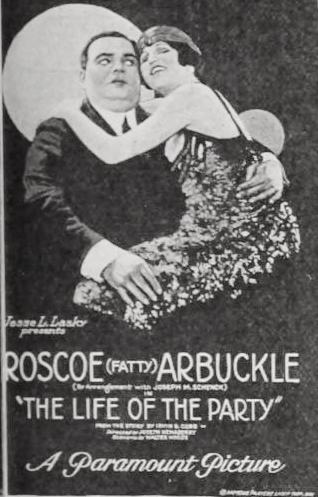
A definitive 6.3/10 rating for a film that redefined the boundaries of cult cinema. The Life of the Party remains a cornerstone of transgressive art.
In the pantheon of silent-era comedy, few figures evoke as complex a legacy as Roscoe 'Fatty' Arbuckle. While his career was tragically curtailed by the machinery of tabloid sensationalism, films like The Life of the Party (1920) remain as vibrant artifacts of a genius that thrived on the intersection of physical dexterity and poignant vulnerability. This film, a sophisticated departure from the frenetic two-reelers of his youth, presents a narrative that is both a comedy of manners and a surrealist nightmare of social displacement. Unlike the gritty realism found in Slander, Arbuckle’s vehicle navigates the levity of the elite with a sharp, satirical edge that feels remarkably contemporary.
The story centers on Algernon Leary, a successful attorney with his sights set on the mayor’s office. Leary is a man of substance—both literally and figuratively—whose life is governed by the rigid protocols of the legal profession. However, the introduction of a charismatic young woman acts as the catalyst for his undoing. This is not the melodramatic peril one might encounter in Madame X; rather, it is a playful, almost predatory invitation into the unknown. The film excels in its depiction of the 'wild adventure' as a series of cascading failures, where every attempt to maintain dignity only further entangles the protagonist in a web of farcical misfortune. The lexical diversity of the visual gags here is astounding, moving from subtle facial contortions to the grandiosity of a blizzard-swept street scene.
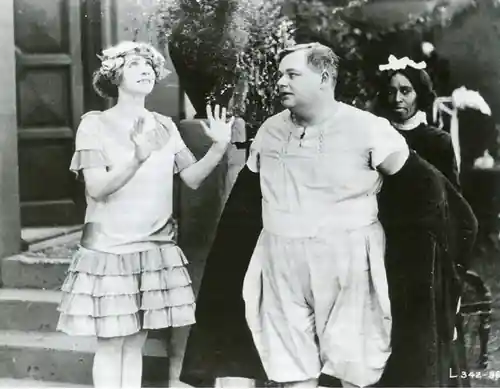
The centerpiece of the film—the costume party—serves as a brilliant metaphorical device. Leary, forced into a child’s romper suit due to a series of clothing-related mishaps, becomes a visual manifestation of his own emasculation and social regression. This sequence mirrors the absurdist logic found in The High Sign, yet it carries a heavier weight of social commentary. As Leary navigates the cold, unforgiving streets of the city in his diminutive attire, the film transitions from a lighthearted romp into a Kafkaesque exploration of identity. The juxtaposition of his large frame against the infantile costume is not merely a sight gag; it is a profound statement on the masks we wear to satisfy societal expectations. The cinematography by Karl Brown captures this isolation with a starkness that occasionally rivals the atmospheric tension of The Heart of the Blue Ridge.
While Arbuckle is the gravitational center, the supporting cast provides the necessary friction to keep the narrative spinning. Jane Wolfe and Viora Daniel offer performances that transcend the 'damsel' or 'shrew' tropes common to the era. They are active participants in Leary’s descent, embodying the unpredictable nature of the modern world. The chemistry between Arbuckle and Frank Campeau is particularly noteworthy, providing a rhythmic cadence to the dialogue cards that feels almost musical. In contrast to the rigid moralism of Under Suspicion, The Life of the Party embraces a moral ambiguity where the 'hero' is often the architect of his own demise, and the 'villains' are merely victims of the same chaotic circumstances.
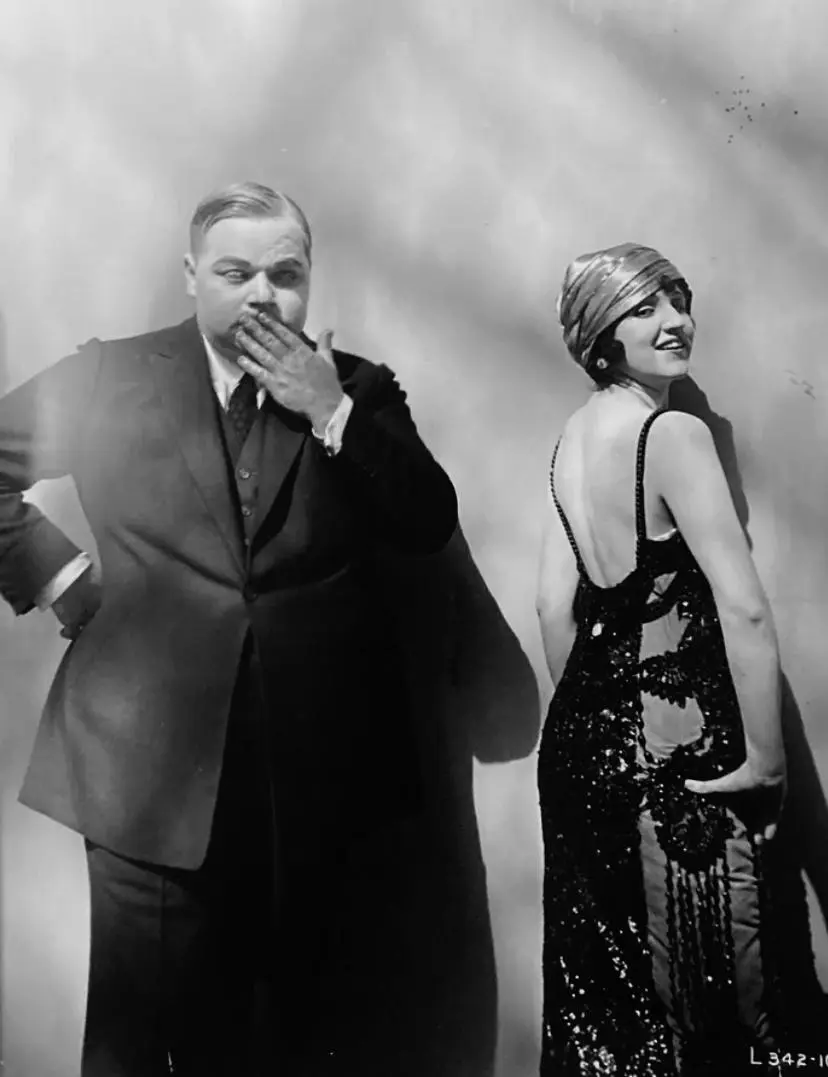
From a technical standpoint, the film is a masterclass in pacing. Director Joseph Henabery, working from a script by Walter Woods and Irvin S. Cobb, understands that comedy requires a delicate balance of tension and release. The editing is crisp, ensuring that the visual jokes land with precision. There is a sophistication in the set design that reflects the opulence of the roaring twenties, yet the film isn't afraid to get its hands dirty in the grit of the alleyways. This duality reminds one of the tonal shifts in The Heiress at Coffee Dan's, where the glitz of the city hides a more complex, often darker reality. The use of light and shadow during the late-night escapades provides a noir-ish quality that predates the genre's formal establishment, suggesting a level of artistic ambition that goes beyond mere entertainment.
Beneath the surface of the slapstick lies a scathing critique of the American political machine. Leary’s ambition to become mayor is framed through the lens of his public image, which is perpetually at risk. The film suggests that political power is a fragile construct, easily toppled by a missing fur coat or an ill-timed costume change. This thematic depth elevates the film above contemporary comedies like The Camouflaged Baby, which focused more on situational irony than systemic critique. By placing a lawyer—the ultimate arbiter of social order—at the center of such disorder, the writers highlight the absurdity of the laws themselves. It is a world where the 'Allies' Official War Review, No. 25' (if we were to look at Allies' Official War Review, No. 25) might represent order, but The Life of the Party represents the inevitable, messy reality of human nature.
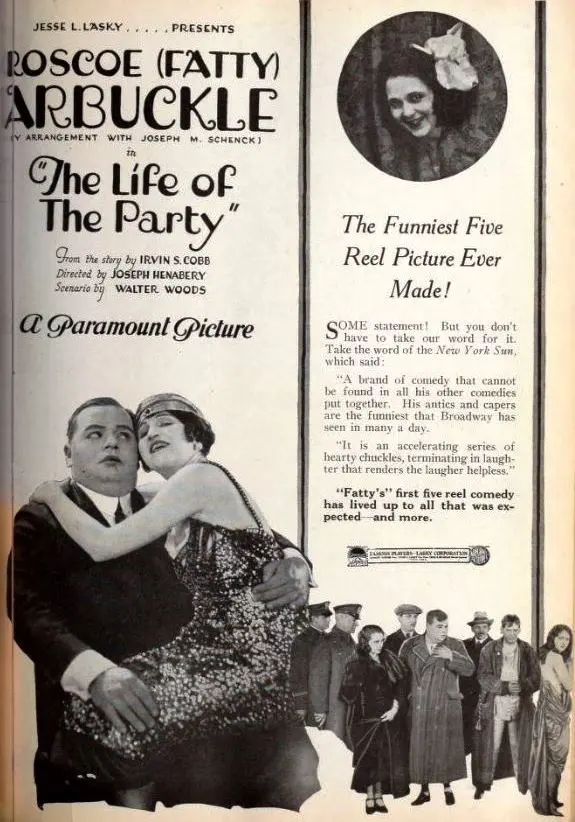
To watch The Life of the Party today is to witness a star at the peak of his powers, blissfully unaware of the storm that would soon engulf his life. There is a joy in Arbuckle’s performance that is infectious, a lightness of spirit that belies his physical size. His ability to convey complex emotions through a simple tilt of the head or a furrowed brow is a testament to his status as a premier silent actor. While some might prefer the overt drama of La loca del monasterio or the adventure of The Lash, there is something uniquely human about Leary’s struggle. He is every man who has ever felt out of place, every professional who has feared being unmasked as a fraud. The film resonates because it taps into the universal anxiety of being 'the life of the party' when one would much rather be invisible.
In the broader context of 1920s cinema, this film stands as a bridge between the primitive shorts of the 1910s and the sophisticated features of the mid-20s. It lacks the pastoral sentimentality of Shadows and Sunshine, opting instead for a cynical, urban energy. It eschews the exoticism of Moora Neya, or The Message of the Spear or the mystery of The Ivory Snuff Box, finding its thrills in the mundane and the domestic. Even when compared to international fare like Die beiden Gatten der Frau Ruth, Arbuckle’s work feels distinctly American in its obsession with success, reputation, and the ultimate fear of public ridicule. It is a documentary of a specific cultural moment, captured with the precision of American Game Trails, but with far more heart.
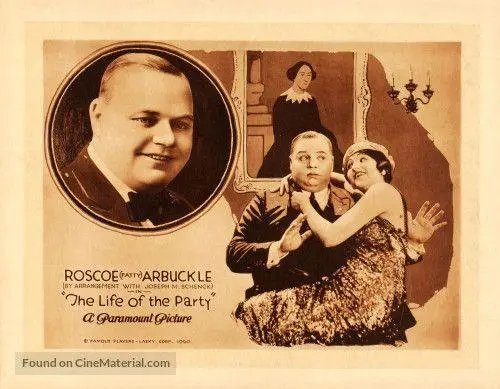
The resolution of the film, while satisfying the requirements of the genre, leaves the viewer with a lingering sense of the ephemeral nature of status. Algernon Leary may have survived his night of terror, but he is fundamentally changed. The laughter he endured has stripped away his veneer of invincibility. This is the true power of Arbuckle’s comedy; it is not just about the fall, but about the realization that we are all, in some way, wearing a romper suit in a blizzard. The film’s enduring appeal lies in this vulnerability. It is a masterpiece of silent storytelling that demands to be seen not just as a historical curiosity, but as a vital, breathing piece of art that continues to challenge our perceptions of comedy and character.
In an era where comedy often relies on the verbal, 'The Life of the Party' serves as a reminder of the power of the image. It is a silent scream of laughter in a world that often takes itself far too seriously, a vibrant explosion of orange, yellow, and blue in a black-and-white world.
IMDb 5.5
1927
Community
Log in to comment.