DbcultAccessing Vault...
Cult Review
Senior Film Conservator
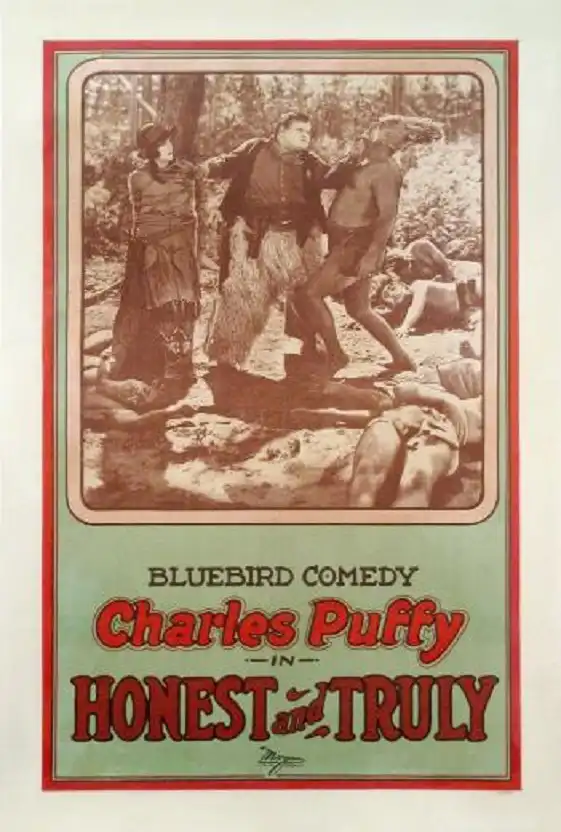
No, 'Honest and Truly' is likely not worth watching for most contemporary viewers. This early silent short, while offering a glimpse into the comedic sensibilities of its era, struggles to sustain its single gag across its runtime, feeling more like a historical curiosity than a genuinely engaging piece of entertainment.
It's a film for dedicated silent cinema enthusiasts, those keen on observing the rudimentary building blocks of screen comedy, or students of Károly Huszár's early work. Anyone else seeking a rich narrative, sophisticated humor, or even consistently effective slapstick will find it a thin, often repetitive experience.
This film works because Károly Huszár commits fully to the physical demands of early silent comedy, transforming a simple premise into a surprisingly energetic performance. His exaggerated facial expressions and broad gestures are perfectly calibrated for the medium, providing the film's sole, albeit fleeting, moments of genuine humor.
This film fails because its central gag – a man pathologically committed to honesty causing chaos – is stretched far beyond its natural lifespan. What begins as a mildly amusing concept quickly devolves into repetitive situations, each variation on the theme feeling less inventive than the last. The narrative offers no real character development or escalation beyond the initial premise, making the already brief runtime feel longer than it is.
You should watch it if you are studying the evolution of screen acting, particularly the transition from stage melodrama to cinematic performance. Huszár’s work here is a good example of how performers adapted to the demands of a new visual medium. It's also suitable for those who appreciate the bare bones of early comedic writing, where a single idea was often the entire script. If you prioritize historical context over consistent entertainment, it might hold some value.
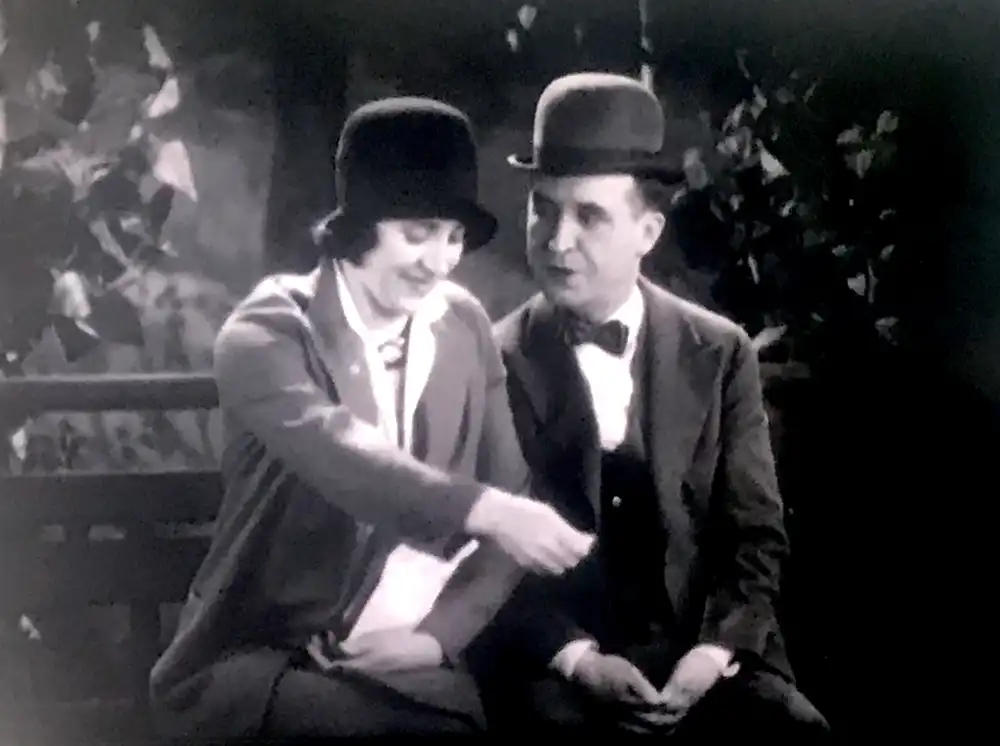
'Honest and Truly' exists as a fragment of an earlier, less refined cinematic world. Directed by Harry Sweet, who also penned the script, it's a film built entirely around a single, rather flimsy comedic conceit: a man, Mr. Bungle (Károly Huszár), suddenly decides to be unflinchingly honest. This isn't honesty in the noble sense, but a kind of pathological candor that immediately alienates everyone around him. The film opens with Mr. Bungle dissecting his wife's breakfast with brutal frankness, a scene that sets the tone for the escalating social awkwardness that follows. It's a simple setup, almost a vaudeville sketch transposed to celluloid, and therein lies both its minor charm and its significant limitations.
Huszár, for his part, throws himself into the role with admirable gusto. His performance is a masterclass in silent film overacting, all wide eyes, frantic gestures, and exaggerated double-takes. When he attempts to correct a miniscule accounting error at his workplace, his contorted expressions convey a man grappling with an internal torment of truth, even as the external reaction from his bewildered colleagues is one of utter confusion. This kind of broad, physical acting was essential for communicating emotion and intent without dialogue, and Huszár delivers it with a palpable, if exhausting, energy. He is the film’s engine, and without his constant movement and facial gymnastics, there would be almost nothing to hold the viewer’s attention.
The film’s primary issue is its lack of narrative invention. Sweet’s script, if one can call it that, essentially repeats the same joke in different settings. Mr. Bungle is honest, chaos ensues. He’s honest again, more chaos. The sequence where he tries to return a lost hat, only for his overly detailed confession of *how* he found it to land him in trouble with the police, feels like the logical conclusion of the premise. Yet, the film continues to circle back to similar scenarios, sapping the humor from an already thin premise. It's less a story and more a series of vignettes illustrating a single point, without the wit or escalating absurdity that might elevate it beyond a mere demonstration. You might find more sustained narrative in something like Protéa, despite its different genre.
Visually, 'Honest and Truly' is as unadorned as its plot. The cinematography is functional, largely static, and focused on capturing Huszár’s performance. Sets are minimal, acting as little more than backdrops for the comedic action. There's no attempt at visual flair or innovative camera work. This isn't a film trying to push the boundaries of the medium; it's content to deliver its simple gag as plainly as possible. This starkness can be refreshing in its directness, but it also means there's little visual richness to compensate for the narrative's shortcomings.
One could argue that the film's primitive nature is part of its charm, a window into a time when narrative sophistication was secondary to the spectacle of moving images and broad physical comedy. However, even within its own era, other films like Father and the Boys often managed to weave more engaging, if still simple, plots around their comedic elements. 'Honest and Truly' feels less like a fully realized comedic short and more like a proof-of-concept for Huszár's comedic persona, a quick sketch rather than a developed piece.
The pacing, while brisk in individual scenes, becomes monotonous across the whole. Each instance of Mr. Bungle's honesty plays out similarly, with predictable reactions from the supporting players. There's no build-up, no real suspense, just a repeating cycle of cause and effect. This makes the film feel longer than its actual runtime, a common pitfall for early shorts that hadn't yet mastered the art of comedic timing and escalation. It's an example of how a good idea can be undermined by a lack of variation, a problem that even later, more polished silent comedies sometimes struggled with, as seen in parts of Bungalow Boobs.
Ultimately, 'Honest and Truly' is a film that demands a specific kind of patience and historical curiosity. Its value lies almost entirely in its archival significance, showcasing an early performance by Huszár and a simple comedic idea. To approach it expecting a polished, engaging piece of cinema is to set oneself up for disappointment. It's a blunt instrument of comedy, occasionally hitting its mark but mostly just thudding against the wall.
'Honest and Truly' is a film that largely exists as a relic, a curio from a nascent art form. Károly Huszár's committed performance is the only real spark, but it's not enough to ignite a truly engaging experience. While it serves as an interesting footnote for those studying the silent era, its repetitive structure and thin premise mean it offers little sustained entertainment for anyone else. It's honest about its limitations, and truly, it's best appreciated as a historical artifact rather than a compelling piece of cinema.
IMDb 5.4
1927
Community
Log in to comment.