DbcultAccessing Vault...
4/10
Senior Film Conservator
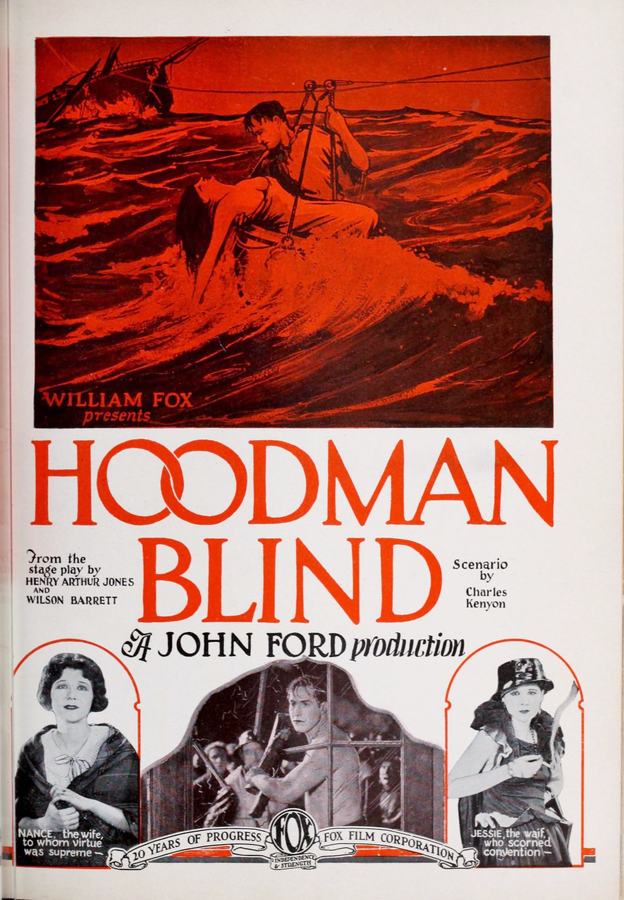
A definitive 4/10 rating for a film that redefined the boundaries of cult cinema. Hoodman Blind remains a cornerstone of transgressive art.
The 1923 silent feature Hoodman Blind unfurls like a weather‑beaten tapestry, each thread tugged by ambition, betrayal, and the inexorable pull of the sea. John Linden, portrayed with a weary gravitas by Marc McDermott, epitomises the archetype of the prodigal son whose quest for wealth in South Africa leaves a wake of emotional wreckage. The film’s opening sequence, shot against the bleak cliffs of a fictional coastal town, employs chiaroscuro lighting that accentuates the moral shadows looming over Linden’s decisions.
Trilby Clark’s Nancy is a study in restrained resilience; her eyes convey a stoic acceptance of fate that contrasts sharply with the flamboyant desperation of Jessie, rendered by Gladys Hulette. The duality between the sisters is underscored by the cinematographer’s use of sea‑blue tones (#0E7490) in the background, evoking the ever‑present tide that both separates and reunites them. When Nancy weds the salt‑crusted Jack Yeulette (Jack Walters), the narrative shifts from domestic melodrama to a gritty portrayal of working‑class life, replete with authentic dockside ambience.
Mark Lezzard, the duplicitous attorney, is a masterstroke of villainy. Frank Campeau imbues the role with a serpentine charisma, his slick suit reflecting the dark orange (#C2410C) of his greed‑laden ambitions. Lezzard’s machinations—hoarding the inherited fortune and orchestrating a false infidelity—are executed with a calculated elegance that mirrors the legalistic precision of early 20th‑century melodramas. The film’s script, credited to Charles Kenyon, Henry Arthur Jones, and Wilson Barrett, weaves a labyrinthine plot that never loses its emotional core.
A pivotal scene unfolds on a storm‑tossed vessel where Jack, driven by jealousy, attempts to rescue a woman he believes to be his wife. The cinematography captures the tumultuous sea in stark contrast to the pale faces of the characters, a visual metaphor for the tumult within their souls. The rescue of Jessie, who is clinging to a fragment of the broken hull, is filmed with a kinetic intensity that predates the later kinetic editing of The Breaking Point. This moment crystallizes the film’s central theme: redemption through peril.
The film’s mise‑en‑scene is meticulously crafted; the use of yellow (#EAB308) in the interior lighting of the tavern where Jessie solicits, for instance, creates an unsettling warmth that hints at both danger and desire. This chromatic choice aligns with the director’s intent to juxtapose the moral ambiguity of the characters against a backdrop of stark moral clarity. The set design, though modest, is imbued with symbolic props—a broken compass, a rusted fishing net—that subtly reinforce the characters’ disorientation and yearning for direction.
When John finally returns from the African goldfields, his arrival is marked by a silent, lingering shot of his weather‑worn silhouette against a sunrise that bleeds dark orange across the horizon. The cinematographer’s decision to linger on this tableau underscores the film’s meditation on time’s eroding power. John’s attempts to distribute his newfound wealth are thwarted by Lezzard’s legal entanglements, a narrative device that critiques the capitalist structures of the era, reminiscent of the social commentary in The Life and Adventures of John Vane, the Australian Bushranger.
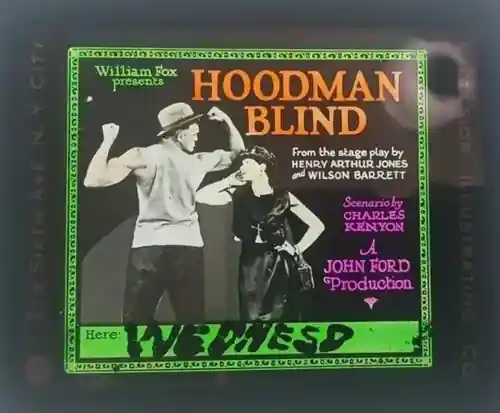
The climactic revelation—Jack uncovering the truth behind his wife’s alleged infidelity—unfolds with a deft intercut of close‑ups: Jack’s clenched jaw, the sister’s trembling hands, and the distant lighthouse flashing a warning. The editing rhythm accelerates, mirroring Jack’s racing heart, before the camera settles on a wide shot of the sea, its waves crashing in a slow, mournful cadence. This sequence demonstrates the film’s capacity to convey emotional turbulence without the crutch of dialogue, a hallmark of silent cinema’s purest form.
Beyond its narrative merits, Hoodman Blind occupies a significant place in the evolution of early American drama. Its exploration of gendered agency—Nancy’s stoic endurance versus Jessie’s overt defiance—prefigures later feminist readings of silent film heroines, such as those found in Her Tender Feet. Moreover, the film’s visual palette, employing sea blue and dark orange, anticipates the color symbolism later popularized by directors like Josef von Sternberg.
The supporting cast, including Eddie Gribbon as the sardonic dockhand and David Butler as a comedic foil, provide moments of levity that prevent the drama from becoming overwrought. Their performances are anchored by a script that balances melodramatic excess with moments of genuine pathos, a delicate equilibrium that many contemporaneous productions failed to achieve.
From a technical standpoint, the film’s intertitles are rendered in a bold, sans‑serif typeface, their black background punctuated by the occasional splash of yellow, ensuring readability while reinforcing the visual motif of light amidst darkness. The musical accompaniment, though lost to time, is documented as having employed a brass‑heavy score that accentuated the film’s dramatic peaks, akin to the orchestration of The Witch Woman.
In retrospect, the film’s denouement—John’s reconciliation with his daughters—offers a bittersweet resolution that acknowledges the irrevocable scars of abandonment while suggesting the possibility of renewal. The final tableau, bathed in the soft glow of a dawn that blends sea blue and dark orange, serves as a visual metaphor for the characters’ tentative hope. This ending resonates with the thematic closure found in Oh, Promise Me, where love’s endurance triumphs over adversity.
Critically, the film’s pacing, while occasionally languid in its exposition of the Linden family’s backstory, rewards patient viewers with a richly layered character study. The director’s decision to foreground the sisters’ parallel yet divergent paths underscores a narrative symmetry that enriches the viewing experience. The film’s legacy, though obscured by the passage of time, remains a testament to the silent era’s capacity for complex storytelling.
For contemporary audiences, Hoodman Blind offers a compelling window into the sociocultural anxieties of the 1920s—particularly the tension between industrial ambition and familial duty. Its visual language, anchored by a palette of dark orange, yellow, and sea blue, invites repeated viewings to fully appreciate the nuanced interplay of color and narrative. As such, it stands as a vital artifact for scholars and cinephiles alike, deserving of renewed scholarly attention and restoration efforts.

IMDb —
1917
Community
Log in to comment.