DbcultAccessing Vault...
Cult Review
Senior Film Conservator
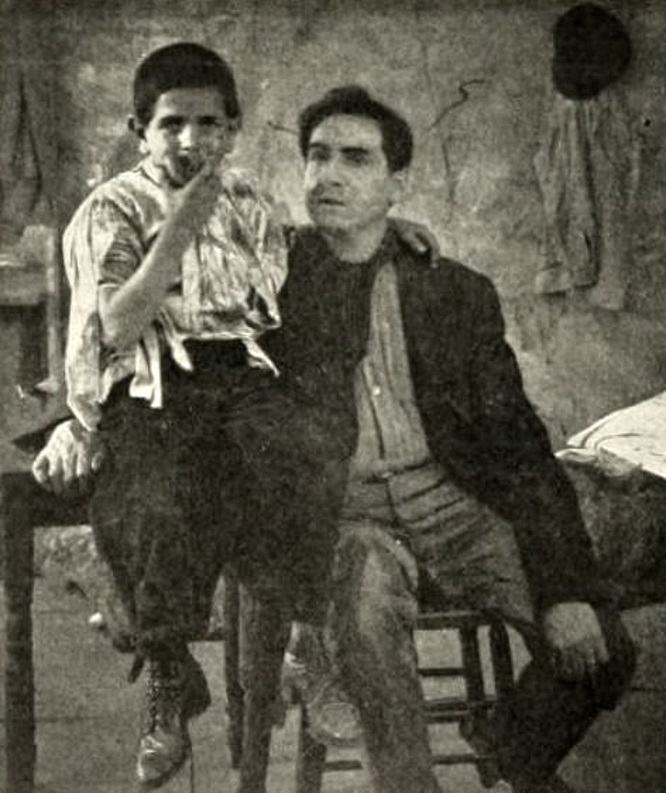
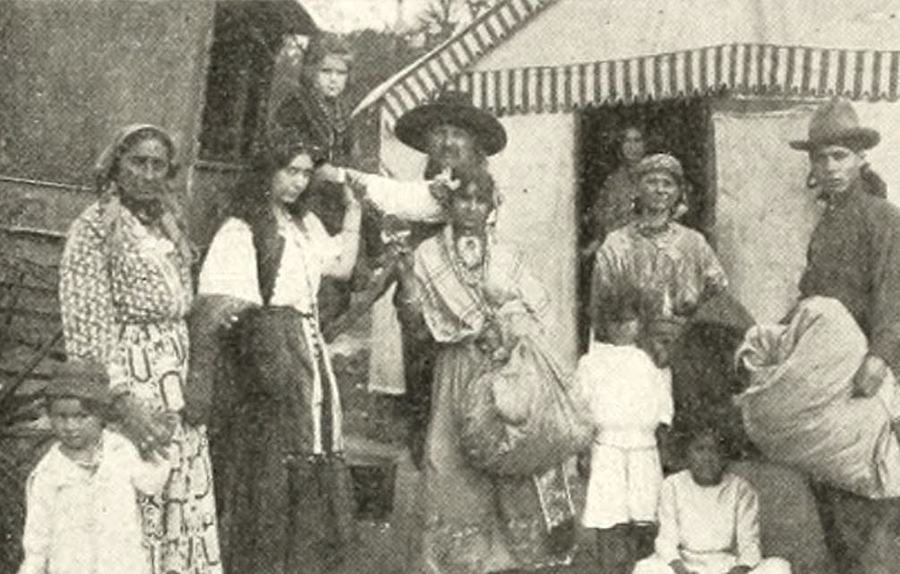
Lantern-light dribbles across the opening shot of Hoodman Blind like hot wax, pooling on the face of a newborn twice-divided: two crimson squalls, one swaddled in damask, the other spirited into the ink-black maw of a caravan. Already the film announces its governing obsession—symmetry as curse.
What follows is less a narrative than a hall of mirrored obsidian. Directors Wilson Barrett and Henry Arthur Jones—both steeped in West-End melodrama—translate their footlight instincts into a grammar of shadows: superimpositions that let fog roll through drawing rooms, irised close-ups that turn human irises into vertiginous whirlpools. The result feels uncannily contemporary, as if someone had spliced a folk-ballad through the nervous system of Oliver Twist and let the foundlings run riot.
Forget CGI—twinning here is achieved via razor-thin mattes and hairsbreadth choreography. The gypsy sister (Betty Harte, all collarbones and sparks) enters from screen-left at precisely the frame where the manor sister (Violet Stuart, glacial poise) exits right; the splice line is hidden in the wooden upright of a hay-wagon, so the eye accepts a single continuous world. When the two finally occupy the same shot, a subtle push-in makes the backdrop flex, as though reality itself winces at the duplication.
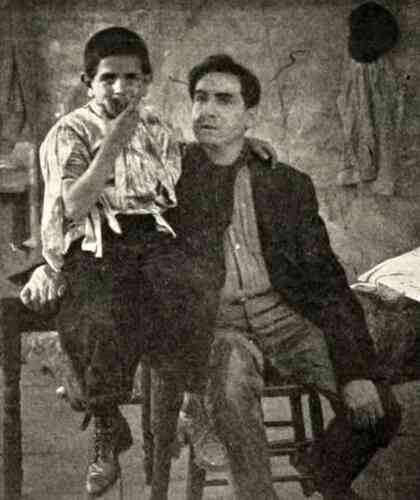
Compare this to the postcard tableaux of From the Manger to the Cross or the static pageantry of With Our King and Queen Through India; Hoodman Blind dares its camera to breathe, to sinew its way through bracken and brocade alike. The effect is proto-Kubrickian: formal rigour married to animal urgency.
Herbert Barrington’s smuggler-cum-romantic foil performs his ardour by letting cigarette smoke veil his face, then suddenly fanning it away—as if love were a thing that could be unveiled yet never quite possessed. James Gordon’s dissolute baronet achieves pathos with a single tic: he incessantly buttons and unbuttons his kid gloves, each snap sounding like a tiny bone breaking.
But the film belongs to Harte and Stuart, whose mirroring extends beyond visage. Harte’s gypsy twin carries her centre of gravity low, knees bent as if always ready to spring from constabulary clutches; Stuart glides on the balls of her feet, perpetually balanced on the social tightrope. When they swap clothes, the posture follows the fabric: Stuart’s spine slackens, Harte’s neck elongates—an exchange of skeletons as much as costumes.
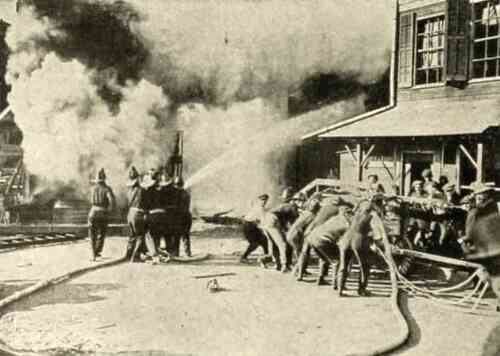
Beneath the penny-dreadful plot lies a serrated critique of Edwardian social taxidermy. The manor house, shot from low angles, looms like a mausoleum propped up by debt; the gypsy encampment, all flare and fiddle, pulses with transactional candour—every kiss bartered, every promise retractable. The film refuses to romanticise either sphere: the aristocracy is cadaverous, the Romany life feral, and both devour women in slightly different sauces.
In this it anticipates the savage ironies of Les Misérables while predating them by a whisker. The twins’ eventual recognition is not a catharsis but a transaction: each must sign the other’s ledger of pain to earn the right to exist. The final shot—two silhouettes merging into one indistinct blur against a sunrise that looks suspiciously like a conflagration—suggests identity is not discovered but forged in the crucible of exchanged suffering.
Though technically black-and-white, the film thinks in colour. Intertitles describe the gypsy girl’s kerchief as "arterial scarlet," the manor girl’s riding habit as "the green of rotting copper." These textual splashes cue the spectator to pigment the monochrome, producing a hallucinatory after-image more vivid than many hand-tinted prints of the era.
Cinematographer René Guissart (later to lens Cleopatra) chiaroscuros every frame until candlelight itself seems culpable. Note the sequence where the twins converge in a ruined abbey: moonlight stripes the nave like prison bars, yet when a match is struck the orange flare obliterates the bars—freedom and incarceration sharing the same visual breath.
Contemporary exhibitors often accompanied Hoodman Blind with a pastiche of Roma violin and parlour-room nocturnes. The clash—plangent glissandi against starch-collared waltzes—mirrors the film’s dialectic. If you stream a version with post-synched folk reel, crank the volume; if silenced, supply your own contrapuntal playlist: Bartók’s "Contrasts" for the camp scenes, Debussy’s "Sarabande" for the drawing-room machinations.
As of this month, the only near-complete 35 mm print resides at Eye Filmmuseum, digitised at 4 K with Dutch intertitles. A Blu-ray from Kino Lorber is rumoured for Halloween. Avoid the 1.2 GB torrent circulating on archive forums—it’s a 1990s TV rip marred by VHS dropouts that swallow crucial facial reactions.
Hoodman Blind is not a relic; it is a dare. It dares you to contemplate whether your self is anything more than a coat tried on in bad lighting, whether love is rescue or ransom. Long after the lights rise, you may find yourself in front of the bathroom mirror, tilting your head first left, then right, searching for the twin you were never told about, half-hoping she’ll nod back.
Verdict: 9.5/10 — A fever-dream of doubles, debts, and destinies that feels both antique and unborn.
IMDb —
1923
Community
Log in to comment.