DbcultAccessing Vault...
Cult Review
Senior Film Conservator
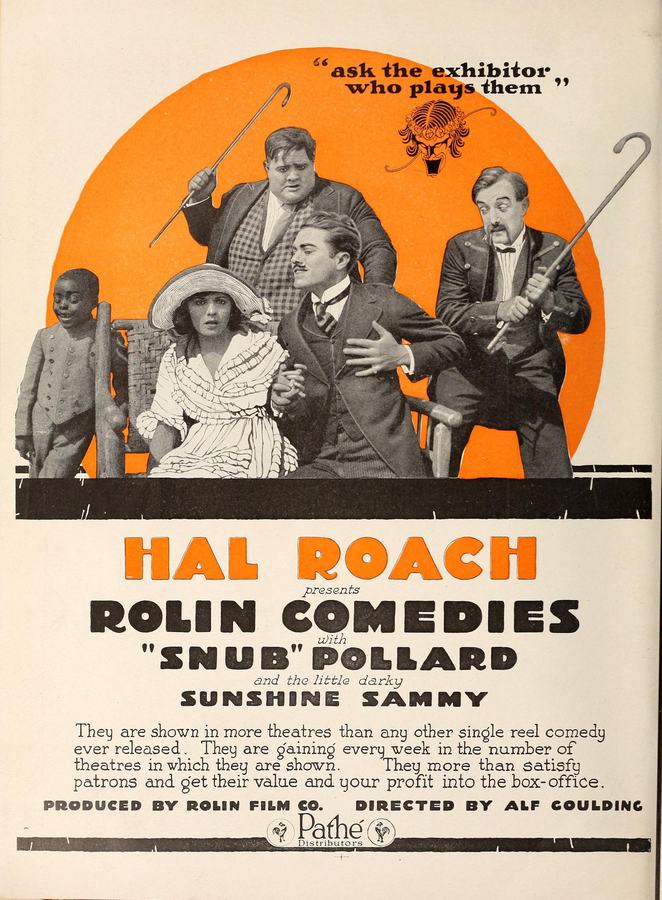
To witness You're Pinched is to step into a temporal vortex where the foundations of modern visual comedy were being poured with reckless abandon. While many contemporary cinephiles might associate the silent era predominantly with the sweeping, often problematic grandeur of epics like The Birth of a Nation, the true heartbeat of the medium often resided in the short-form anarchy of the Hal Roach studios. Here, Snub Pollard—a performer whose physical dexterity was matched only by the eccentricity of his facial hair—crafted a persona that was at once everyman and extraordinary outlier.
The film operates on a premise of deceptive simplicity: the trials and tribulations of a motorcycle policeman. Yet, beneath this utilitarian veneer lies a sophisticated interrogation of the 'machine age.' In 1920, the motorcycle was not merely a vehicle; it was a symbol of precarious progress. For Pollard's character, it serves as an instrument of both liberation and humiliation. The way he interacts with his mount suggests a relationship that is more symbiotic than purely mechanical, a precursor to the man-machine tensions explored in later avant-garde cinema.
Snub Pollard’s performance in You're Pinched is a masterclass in what I would term 'peripatetic comedy.' Unlike the more stoic humor found in The Picture of Dorian Gray, which relies on the internal rot of the soul, Pollard’s comedy is entirely externalized. Every twitch of his mustache, every frantic kick-start of his engine, is a semaphore of desperation. He does not merely play a cop; he plays a man desperately trying to maintain the illusion of being a cop while the universe conspires to unmask his incompetence.
The inclusion of Ernest Morrison (the legendary 'Sunshine Sammy') adds a layer of vibrant energy that was often missing from the more rigid social dramas of the time, such as Tangled Lives. Morrison’s presence reminds us that the Roach comedies were, in many ways, more progressive and inclusive in their casting than the high-brow dramas of the same period. His interactions with Pollard provide a necessary counterpoint to the high-speed chases, grounding the film in a recognizable, albeit heightened, reality.
What distinguishes You're Pinched from its contemporaries is the sheer geometry of its gags. There is a sequence involving a sharp turn and a series of unsuspecting pedestrians that rivals the rhythmic precision of a Tchaikovsky ballet. The editing, though primitive by modern standards, possesses a raw, percussive quality that dictates the viewer's pulse. It lacks the melodrama found in The Way of a Woman, opting instead for a visceral, immediate connection with the audience’s sense of timing.
We see Marie Mosquini, a frequent collaborator in the Roach stable, providing a foil to the masculine chaos. While the 'leading lady' roles in films like The Selfish Woman or Which Woman? often confined actresses to pedestals of moral rectitude, Mosquini in the Roach shorts was often part of the machinery of the joke itself. Her presence in You're Pinched is essential for establishing the stakes of Pollard’s social standing; he is a man of the law, yes, but he is also a man seeking the validation of the community he ostensibly protects.
In the cinematic landscape of the early 1920s, the motorcycle represented a specific type of modernity—unstable, loud, and prone to sudden eruption. This stands in stark contrast to the pastoral, often static imagery found in The Pride of the Clan. In You're Pinched, the vehicle is an extension of Snub's own psyche. When the motorcycle stalls, it mirrors his own social paralysis. When it careens out of control, it reflects the burgeoning chaos of an American society rapidly urbanizing and losing its grip on the slow-paced Victorian values of the previous century.
Consider the thematic resonance when compared to a film like The World's Great Snare. While that film deals with the metaphorical traps of fate, Pollard deals with the literal traps of a city street. His 'snare' is a pothole, a stray dog, or a malfunctioning throttle. There is a profound honesty in this. The film suggests that life’s greatest tragedies are not always grand betrayals, but the persistent, nagging failures of the tools we use to navigate the world.
Critics often overlook Pollard in favor of the 'Big Three' (Chaplin, Keaton, Lloyd), yet his contribution to the grammar of the chase is undeniable. You're Pinched serves as a vital bridge between the pure 'splat' comedy of the early Keystone days and the more narrative-driven shorts of the mid-20s. It shares a certain ruggedness with The Halfbreed, a sense of being filmed on the edge of the frontier—even if that frontier was merely a dusty road in Culver City.
The film’s pacing is relentless. There is no room for the contemplative pauses one might find in Love or the episodic picaresque nature of The New Adventures of J. Rufus Wallingford. Instead, it is a focused, almost obsessive exploration of a single archetype. The motorcycle cop, a figure of authority, is systematically dismantled until all that remains is the human being underneath, covered in grease and dust, yet stubbornly refusing to give up the chase.
From a technical standpoint, the cinematography in You're Pinched is surprisingly sophisticated. The use of mounting cameras on moving vehicles to capture the 'point of view' of the motorcycle was a daring feat for 1920. It creates a sense of immersion that a static stage-bound production like Oh'phelia could never achieve. We feel the rattle of the handlebars; we sense the precariousness of the high-speed turns. This is visceral cinema, designed to elicit a physical response from the spectator.
The lighting, though largely naturalistic as was common for outdoor Roach shoots, manages to highlight the rugged textures of the California landscape. This ruggedness connects the film to the aesthetic of the Western, such as When Big Dan Rides or The Knickerbocker Buckaroo. Pollard is, in many ways, a modern cowboy, trading his horse for a steel steed, but facing the same indomitable spirit of the wild—only now, the 'wild' is the unpredictable nature of internal combustion.
Ultimately, You're Pinched succeeds because it taps into a universal truth: the inherent comedy of the 'official' being humbled. Whether it is the grand tragedy of The Darling of Paris or the simple slapstick of a cop falling off his bike, we are drawn to stories that remind us of the fragility of social constructs. Snub Pollard, with his frantic energy and indomitable spirit, remains a beacon of this comedic philosophy.
In the grand tapestry of silent film, this short might seem like a minor thread, but it is one woven with incredible skill and a deep understanding of what makes us laugh. It is a testament to a time when a man, a motorcycle, and a mustache were all that was needed to create a masterpiece of movement. To watch it today is not just an act of nostalgia; it is an act of rediscovering the pure, unadulterated joy of cinema in its most primal form. The film doesn't just 'pinch' the law; it pinches the audience’s funny bone with a grip that hasn't loosened in over a century.
Reviewer's Note: For those seeking a deeper understanding of the evolution of the comedic chase, a double feature with any of the comparative titles mentioned will reveal a fascinating trajectory of 1920s visual storytelling.
IMDb 6.3
1924
Community
Log in to comment.